

After the Parade, Students Dismantle Award-Winning Rose Float

Overflowing with vibrant flowers and foliage at the 2026 Rose Parade, the Cal Poly Universities Rose Float Jungle Jumpstart won the parade’s highest honor, the Sweepstakes Trophy for most beautiful entry. Two weeks later, it was time for deconstruction and recycling materials.
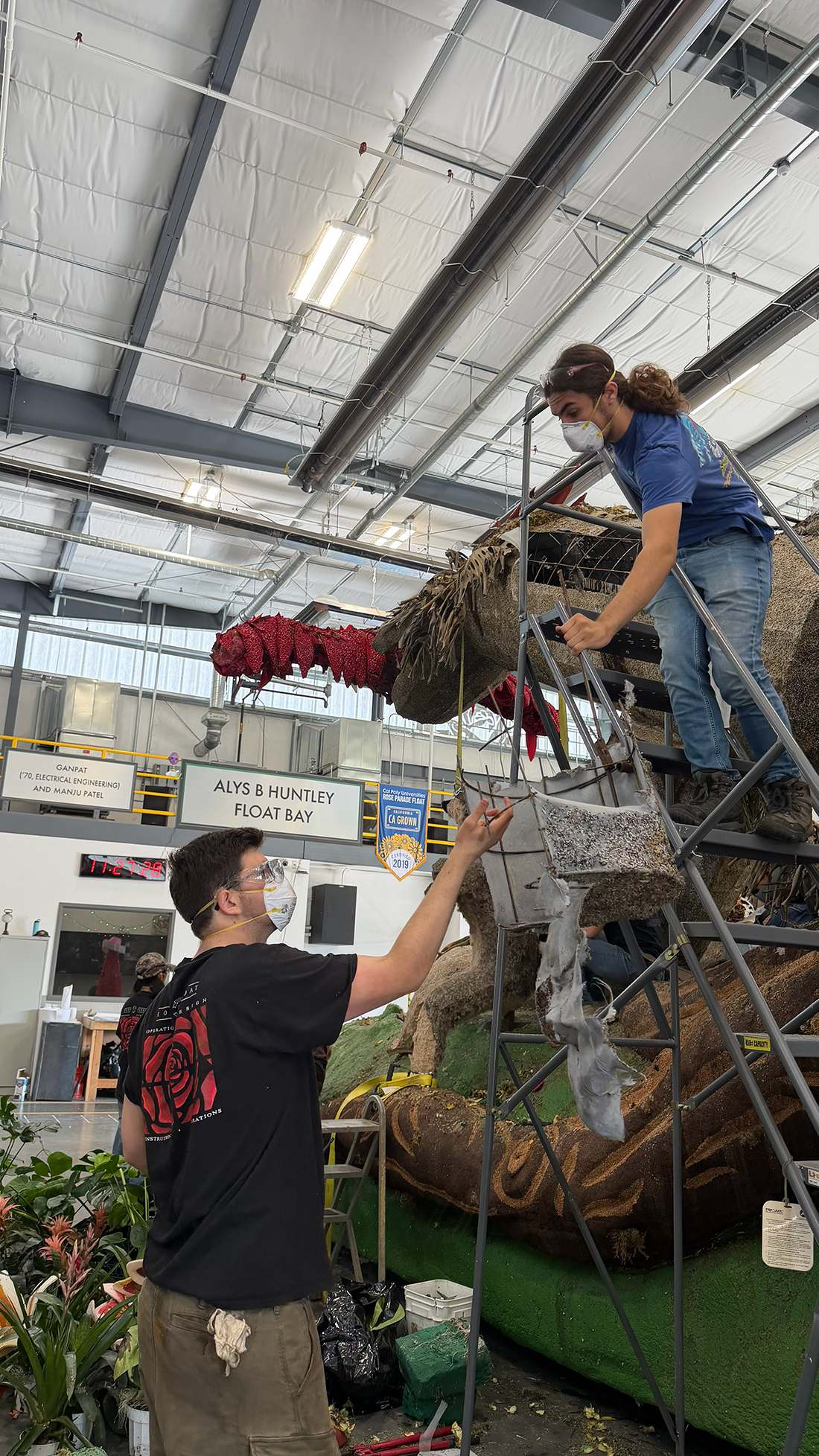 Over two weekends in January, students from the Cal Poly Pomona and Cal Poly San Luis Obispo teams were back in the CPP Rose Float Lab removing plastic vials that once held delicate flowers, wielding pickaxes and otherwise pulling apart a float that took them most of a year to create.
What was once a scene of jungle animals repairing a giant robot on a lush jungle floor was a frenzy of movement as students cut through the robot’s arms of pencil steel with bolt cutters, hacked at the parrot with crowbars and hammers, and removed plants to green waste bins.
Roughly 85-90% of the float and 50% of all florals are recycled or reused.
Because electronic mechanisms can be used year after year, the team dismantles them first, to protect them from being nicked, damaged or lost. Fine metal screening, which covers all of the creatures under the plant décor, cannot be reused and must be cut with bolt cutters and grinders and ripped off by hand. Pieces from the float’s pencil steel skeleton that gets cut are thrown into the metal recycling bin and delivered to a recycling center.
Thick foam, covering the majority of the float’s base, must be taken off, by any means necessary—students wield prybars, pickaxes and dig at it by hand to take off foam that releases green clouds of mold, due to parade day rainy weather. All of the students wear masks or respirators.
“You have to really pull the materials to get leverage and be able to release the foam from the metal skeleton underneath,” says Bailey Beane, a landscape architecture senior and Deco Chair for the 2026 Cal Poly Pomona team.
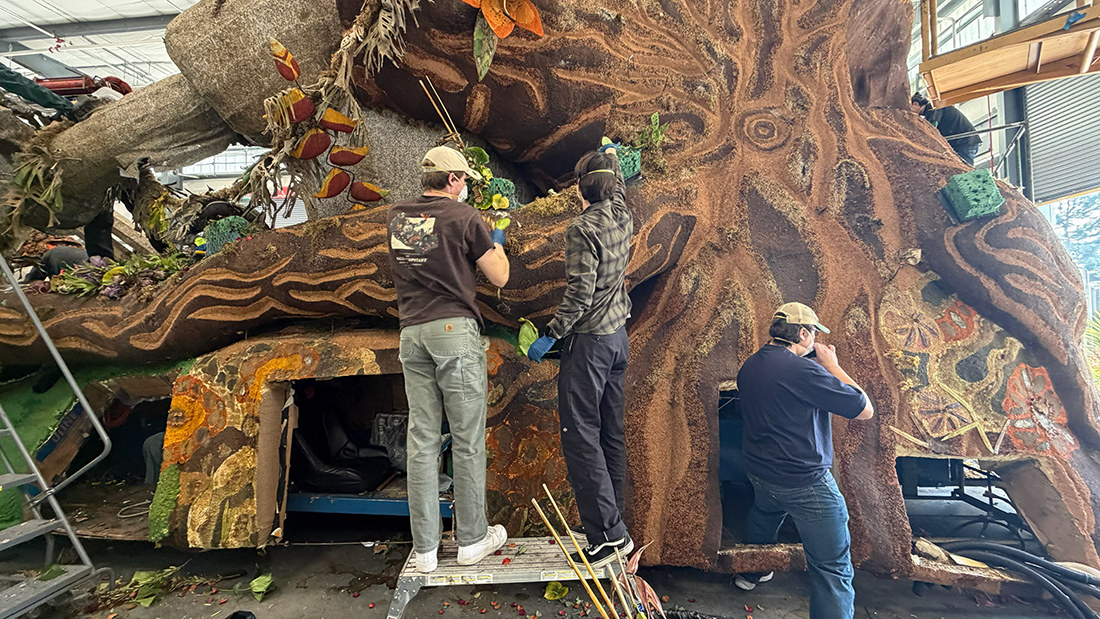 Vials are taken off carefully and dunked in buckets of diluted bleach and water as a wash cycle, before being counted, organized and saved for reuse for the following year. Other parts such as the hydraulic hoses, floral buckets and floral arrangement cages are also saved for the next year’s float. The only thing left after the deconstruction days, or “decon days,” is the chassis – the float’s base frame and engine. Half of the base returns to the San Luis Obispo campus.
Next year’s executive Rose Float team is already stepping into their roles, managing the design contest for the 2027 Rose Float, organizing lab materials and equipment and setting their meeting schedules.