

2026 SGV Economic Forecast: Region Poised for Modest Growth, But Faces ‘Neutral Gear’ Economy
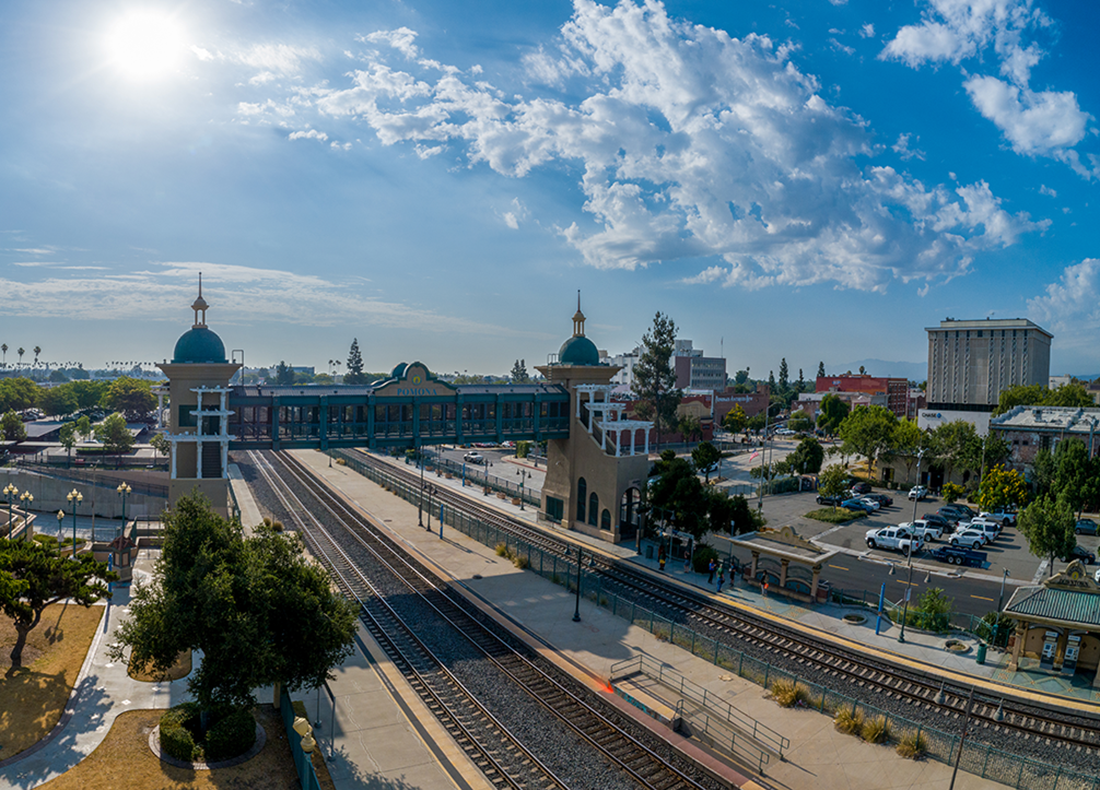
The San Gabriel Valley is poised for modest economic growth in 2026, but a new report warns that persistent uncertainty is slowing momentum and straining small businesses, which make up the vast majority of firms across the region.
The 2026 San Gabriel Valley Economic Forecast, produced in partnership with the San Gabriel Valley Economic Partnership and co-authored by Cal Poly Pomona economists Anthony Orlando and Gerd Welke, will be presented at the 2026 San Gabriel Valley Economic Forecast Summit on Thursday, March 26, at Diamond Bar Center.
The report describes the regional economy as “stuck in neutral” — avoiding recession but constrained by policy uncertainty, supply chain bottlenecks and rising operating costs, even as trade through the Port of Los Angeles remains steady and real estate shows signs of stabilization. It also highlights longer-term risks, including a potential shift toward a wartime economy, infrastructure constraints tied to data centers and battery storage, and the possibility of debt-fueled financial bubbles.
Home to 1.8 million across 31 cities, the San Gabriel Valley is powered by the healthcare, education, manufacturing and technology industries. The region — bounded by Pomona, Claremont and Diamond Bar in the east and La Cañada Flintridge, Pasadena and Monterey Park in the west — is a magnet for international trade from the Pacific Rim, foreign investments, and expanding Asian entrepreneurship and working capital.
Regional Resilience in a Shifting Global Landscape
The 2026 San Gabriel Valley Economic Forecast Summit will feature an expert panel addressing the global context shaping local realities. Representatives from Mexico and Canada — two of the United States’ largest trading partners — will explore the future of international relations and economic diplomacy.
Speakers
- Fiona Ma, CPA, California State Treasurer
- Keynote Address: Ambassador Carlos González Gutiérrez, Consul General of Mexico in Los Angeles
Panel
- Sameer Ahmed, Consul & Trade Commissioner, Consulate General of Canada in Los Angeles
- Jacobeth Hernández Mendoza, Consul for Economic Affairs, Consulate General of Mexico in Los Angeles
- William Powles, Senior Director of International Trade, World Trade Center Los Angeles
- Moderator: Lupe Valdez, Senior Director, Public Affairs, Union Pacific Railroad
Economic Drivers
- Economic policy uncertainty is the biggest near-term problem, making it harder for firms, investors and developers to plan, and weighing especially heavily on business investment.
- Tariffs are hurting, but not breaking, the regional economy. Strong trade flows through the Port of Los Angeles, alongside growing passenger and cargo activity at Ontario International Airport, are reinforcing the San Gabriel Valley’s role as a key logistics and warehousing hub.
- Growth varied significantly by sector and geography across the region. It’s stronger in technology-related industries, finance and healthcare, while retail, agriculture, education and food services are under more pressure.
- Small businesses — which make up 99.9% of California firms — are under the most strain from tariffs, labor shortages, volatile energy prices and high borrowing costs.
Real Estate and Housing
- Real estate conditions are mixed but may be stabilizing. Development may be nearing its low point and beginning to recover, as capital returns to commercial real estate and banks become more willing to issue construction loans.
- Industrial space is rebounding in the East and Lower San Gabriel Valley but weaker in the Upper San Gabriel Valley, which is performing better in office, retail and multifamily. Pasadena is the region’s primary office market, while retail and multifamily remain tight across the region.
- Housing remains severely unaffordable even with lower mortgage rates. Regional home prices were mostly flat in 2025 but held up better than Los Angeles County overall.
- Rebuilding after the Eaton Fire is expected to accelerate in 2026, supporting construction jobs, though rent pressures near the fire zone are likely to persist.