Powwow Anchors and Strengthens Community

Cal Poly Pomona’s powwow is not just an annual event, it’s a space for ceremony, celebration, community and connection.
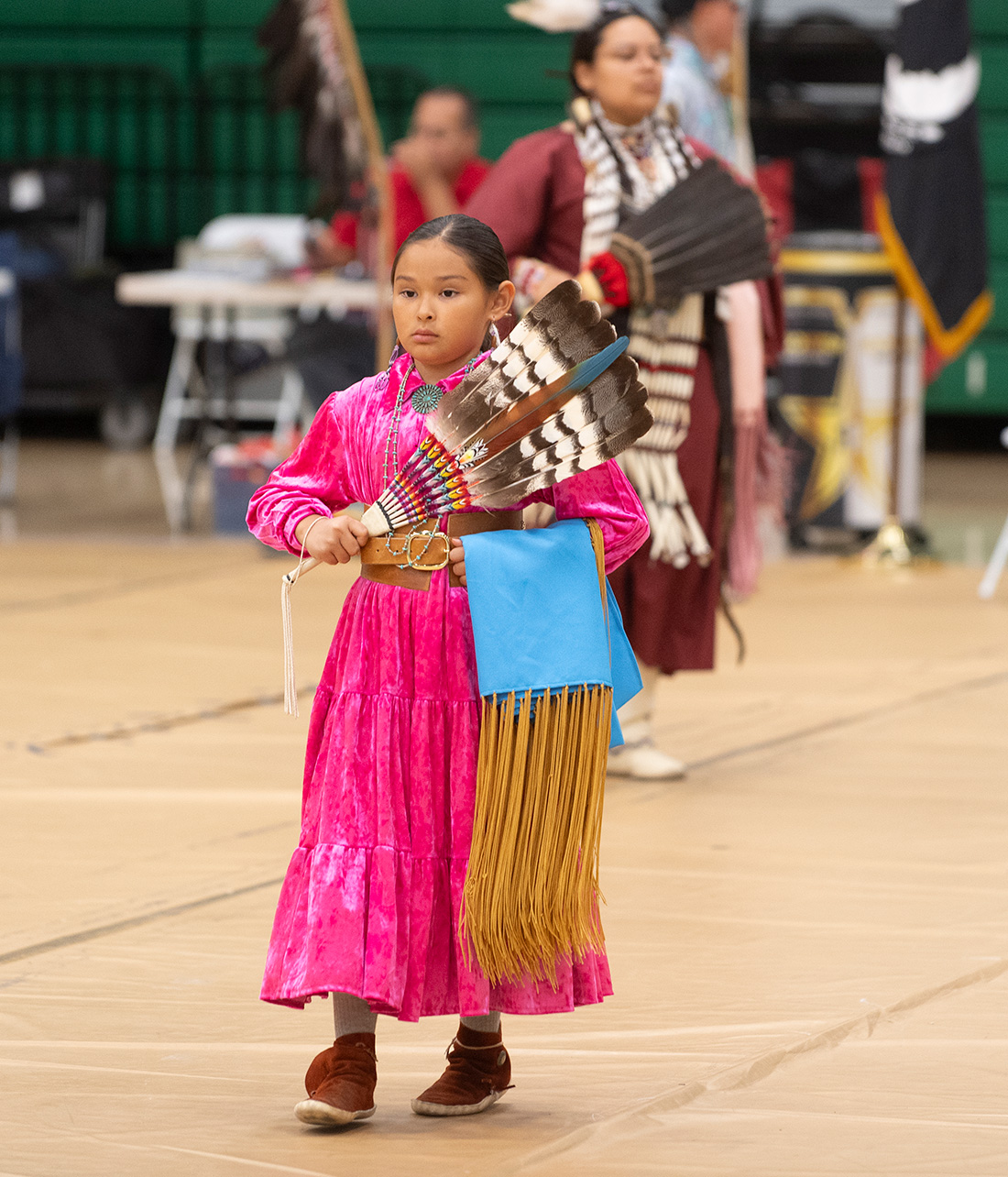
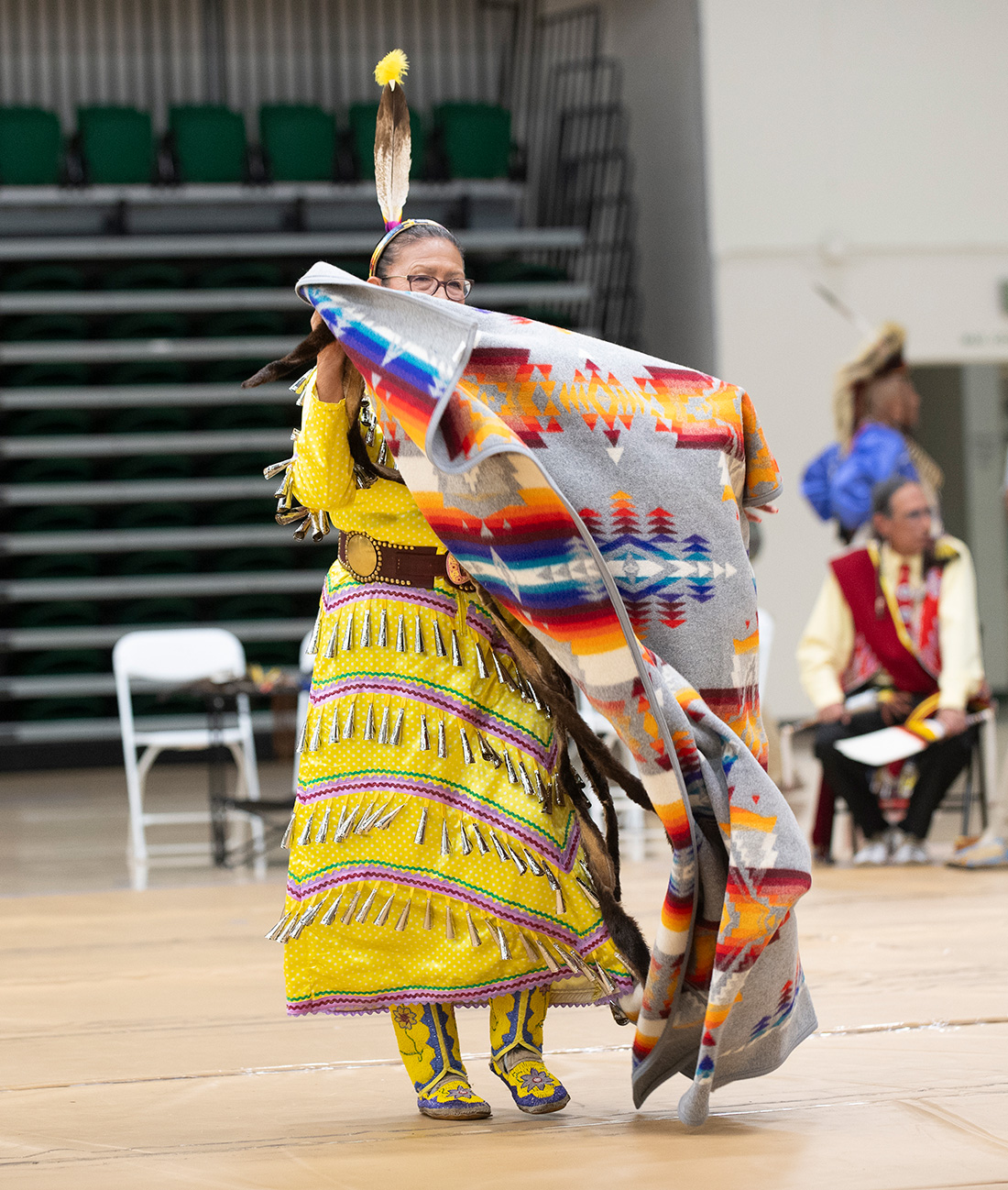
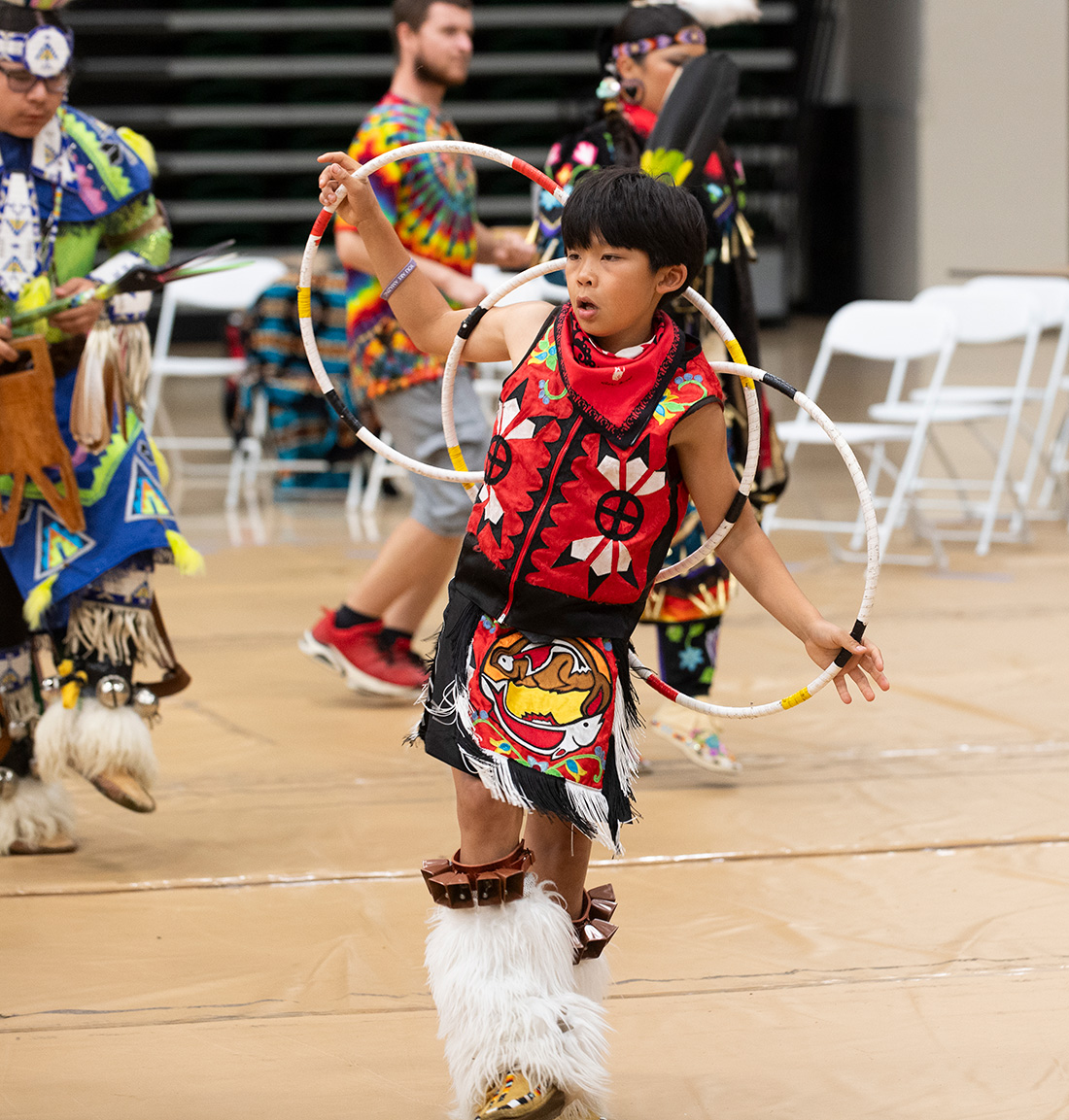
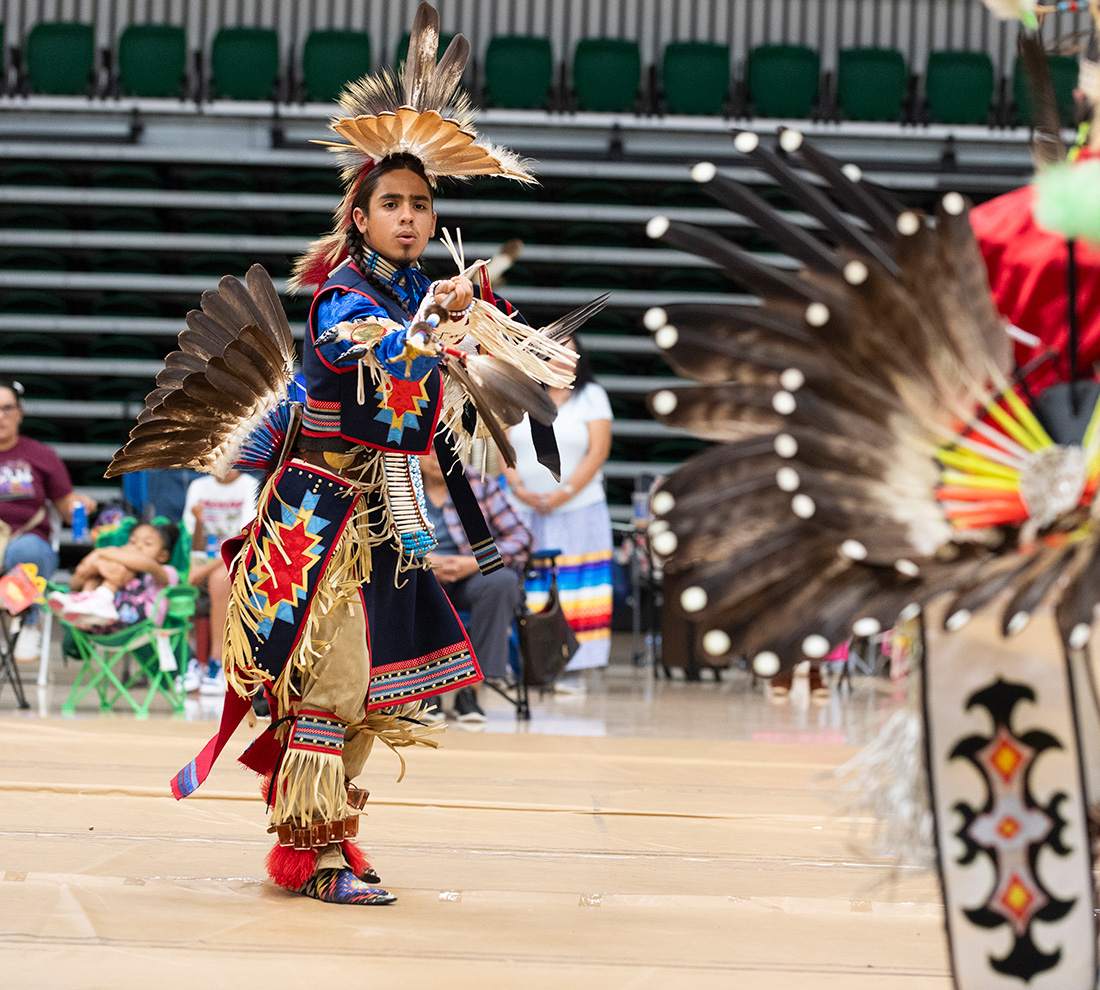
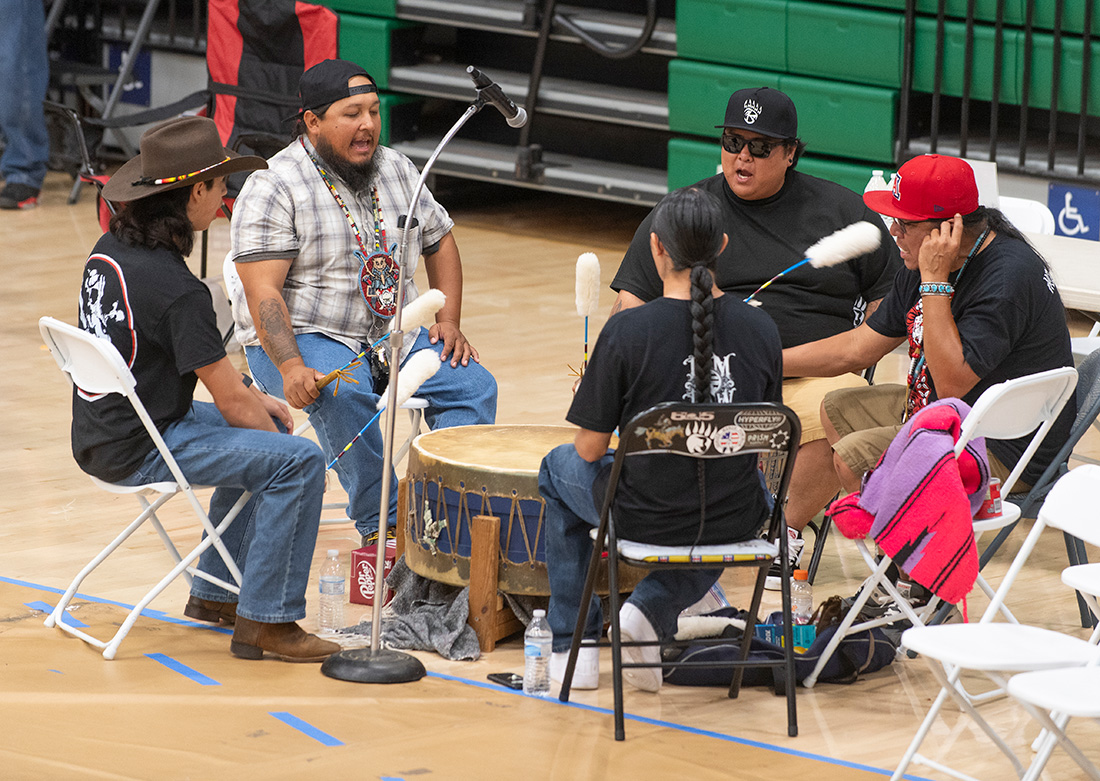
The “Honoring Our Mothers and Mother Earth Powwow,” hosted by Tribal Relations and the Natives Aiming to Inspire Values in Education (N.A.T.I.V.E.) Pipeline Program took place on Saturday, May 9, from 11 a.m. to 7 p.m. in the Kellogg Arena. Throughout the day, traditional Native American songs and dances were performed by several members of local tribes and tribal communities.
Outside the arena, arts and crafts vendors, food vendors and non-profits participated. Several hundred guests attended. Children became fast friends chasing each other with new toys in hand, which were offered during a “give away” dance. Mothers were invited to participate in a special dance in their honor and gifted a pair of beaded earrings handcrafted by CPP students, faculty and staff.
The university has hosted a powwow for several years in collaboration an intertribal powwow committee, the Native American Student Center and Sandy Kewanhaptewa-Dixon (Hopi), tribal liaison and professor of ethnic and women’s studies. Tribal community members really missed it during the pandemic and felt excited to have it back.
The growth of the powwow began with the federal government’s forced concentration of Native American tribes onto reservations and continued during the Native American Relocation Program in the 1950s, which resulted in many Native Americans moving from rural reservations to big cities such as Los Angeles, Chicago, Seattle and Denver. Powwows became a way for displaced Native American populations in large urban areas to gather and build community as well to affirm and share their culture and traditions, according to Tribal Relations Director Desireé Martinez (Gabrielino Tongva).
 “This is a smaller powwow compared to others, which is nice because it allows for more camaraderie and closeness,” she said. “It’s a chance for friends and family to visit, and for the general public to learn in a celebratory environment.” Martinez and Kewanhaptewa-Dixon collaborated on all aspects of this year’s powwow, adding to its success.
Vice President and Chief of Staff Nicole Hawkes gave a welcome address, stating that it is an honor for the university to host the celebration and thanking the community for the opportunity to do so.
“As the most diverse polytechnic university in the nation, and one committed to advancing social and economic mobility, we’re especially grateful for the many contributions of Native American students, faculty, staff and community members who enrich our campus and deepen our understanding of Native American histories, cultural traditions and lifeways,” she said.
She also acknowledged that CPP sits on the traditional homelands of the Tongva people, who have been stewards of the land for generations.
“We honor their history, legacy and continued presence,” she said.
Wildflower Ontiveros (’21, English education) has made it a point to volunteer at the daylong event for the last few years, working the CPP alumni booth to answer questions, connect with attendees, and offer coloring pages for kids.
“This powwow is significant because it brings community members together and gives us a sense of belonging and allows us to feel seen,” said Ontiveros (Gabrielino Tongva). “Due to the ongoing negative effects of colonization and unfair federal policies, Native Americans are underrepresented in college and overrepresented in child welfare, with mental health disparities and in prison, for example.”
She spoke to the importance of cultural events and support offered by the Native American Student Center, where she worked when she was a student on campus, and the N.A.T.I.V.E. Pipeline Program, which offer more opportunities and representation. Ontiveros will pursue a master’s in social work at Cal State Fullerton in the fall and offered a quick-witted reply to a question about she wants to do in the future.
“Everything,” she said with a laugh and nod that showed that she meant it. “Always in support of Native communities.”
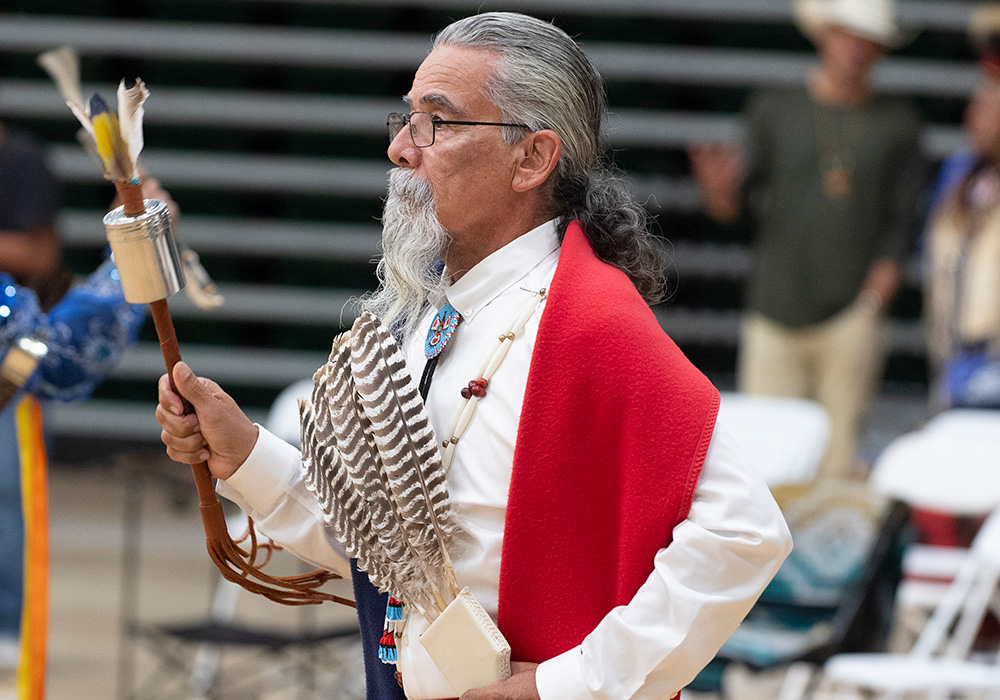
Kim Marcus (’82, accounting), an enrolled tribal member of the Santa Rosa Band of Cahuilla Indians, served as the spiritual advisor of the day and the leader of the Cahuilla Bird Singers. Marcus sees the songs the group performs as sacred and important markers of culture and time.
“These songs are not just songs,” he said. “They’re stories and prayers. They chronicle the history of the Cahuilla People, including the creation and subsequent journey in search of their homelands. They were almost extinct, but thankfully my dad approached our elders and they taught them to us.”
Marcus has dedicated his life to revitalizing Native American culture and empowering youth, first as a counselor with Indian Health Service and later as an educator. Now he serves as an elder in residence at California Indian Nations College and CPP, where he offers workshops during the school year and in the summer with the N.A.T.I.V.E. Pipeline Program.
“This is full circle for me,” he said. “When I was young and a student here, I didn’t know any other Native American students. There wasn’t a center or powwow or any of the resources that the university offers now, and I felt excluded. But now, we are providing pathways and resources. It’s a great joy to be honored in this way and to honor the school. Cal Poly Pomona is my home. It’s good to be home.”