

Micro-Internships Support Conservation, Give Students Real-World Experience

Internships exemplify Cal Poly Pomona’s become-by-doing philosophy, allowing students to get paid, professional experience in their field of study.
In Professor Joan Leong’s Entomology Lab class up to 24 students are taking advantage of a micro-internship sponsored by the Rivers and Lands Conservancy, a private organization that protects southern California natural habitats and open spaces for wildlife and for people. Micro-internships are the shorter-term version of an internship and are project based.
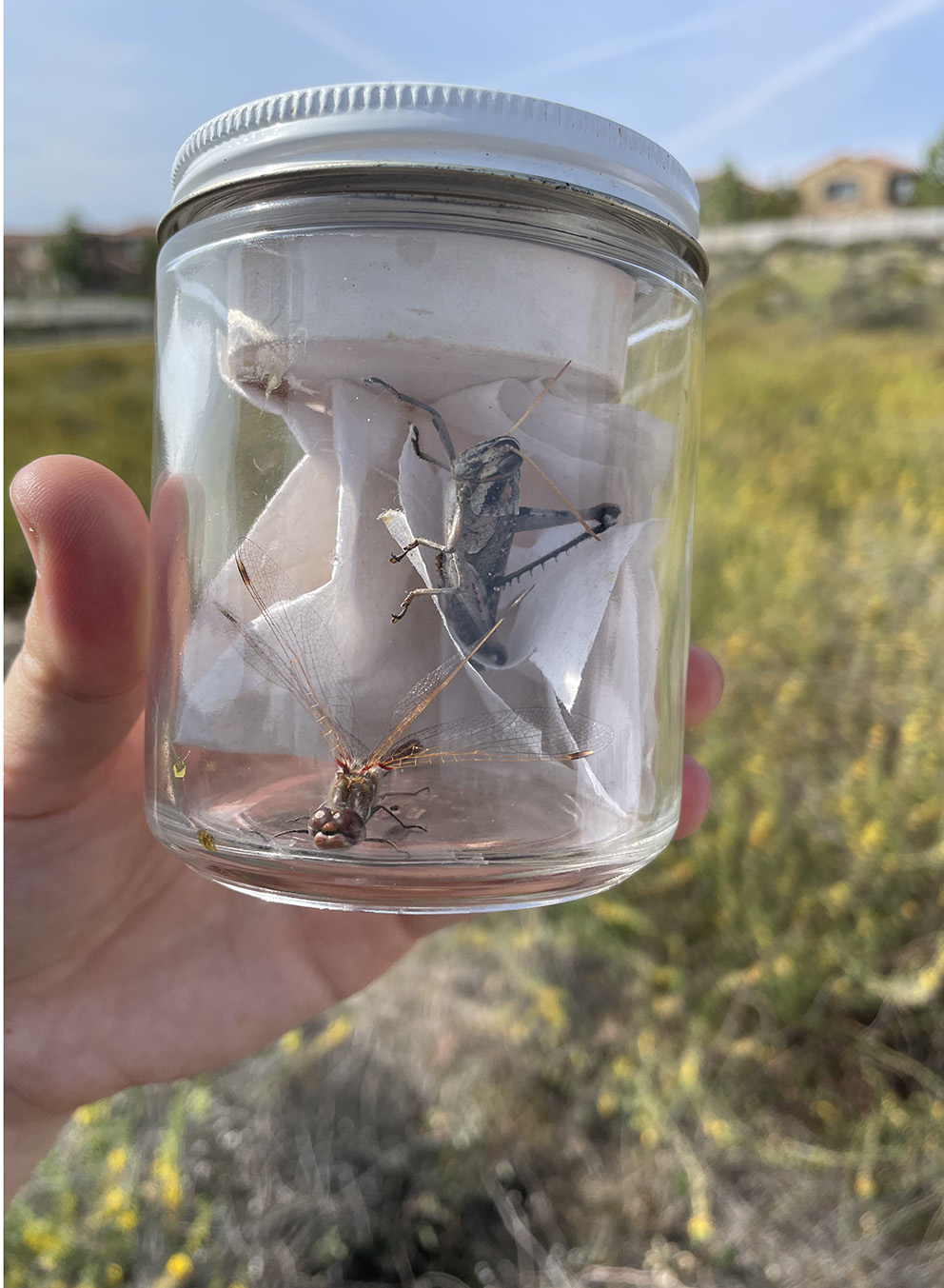 Students will conduct insect biodiversity surveys on Conservancy managed reserves and open spaces. Students collect, identify and curate at least 27 different kinds of insects with the goal of developing a museum-quality pinned collection. This supports the Conservancy’s public outreach and staff training needs. Students will also act as citizen scientists, posting photos of the insects on iNaturalist.
They’re working at Delhi Sand Dunes preserve sites, which are closed to the public, to observe endangered organisms such as the Delhi Sands flower-loving fly (Rhaphiomidas terminatus abdominalis).
“The specimens they collect will help us build a collection display box,” said Conservancy Stewardship Manager Michael Viramontes. “Additionally, the specimens will assist us in providing practice exams when our staff members have to study for their U.S. Fish and Wildlife Service permit exams. An insect identification exam is issued when new staff apply for their permit to survey for the federally endangered Delhi Sands flower-loving fly.”
The conservancy also has a partnership with the city of Riverside where they’ve planted multiple native plant gardens in city parks. Native plants are better at attracting diverse insect species.
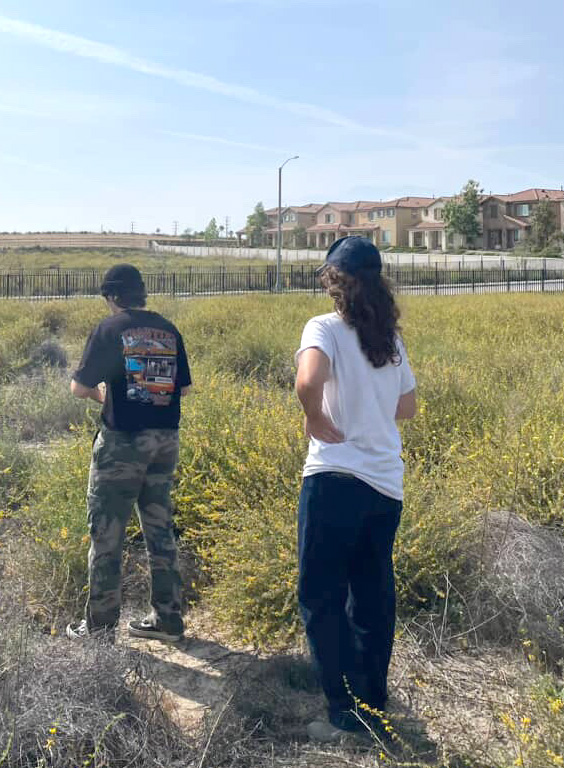 “Students will visit the gardens and use iNaturalist to submit observations of the different plants and insects they find and identify. They will also visit other parts of the park lacking native plants and compare the biodiversity between these areas. If our hypothesis is correct that native plants attract native pollinators, the data collected will assist us in demonstrating to the city, and its constituents, the benefit small native plant gardens can have on local biodiversity,” Viramontes said.
Professor Leong shared how the experience provides valuable career skills.
“They work in teams and are responsible for scheduling and coordinating their work. In the field, they’re learning how to collect, sample, and identify insects,” Leong said. “They’re learning about conservation in natural habitats. The Dune sites are preserves, so they learn about what precautions are needed in protected areas. They’re responsible for securing those areas when they enter and leave.”
The work doesn’t end out in the field.
“After doing their field collections, they work in the lab to identify their insect specimens using taxonomic keys, make labels with correct scientific information and then integrate their findings with their field observations.” Leong added.
Jeremy Flores, a biology student, said he values the opportunity for hands-on learning.
“Working outdoors in the environmental field provides a unique experience every day. It’s one thing to learn about identification characteristics in entomology class but applying them in the field really cements the concepts we learned,” he said.
The micro-internship program was developed by the Office of Academic Innovation.
“Through the generous support of the Michael and Susan Dell Foundation grant, we created course-embedded paid micro-internship experiences for students,” said Program Manager Judy Nguyen. “The micro-internships provide students with short-term (30-40 hours a semester) paid, professional experiences that allow them to apply classroom knowledge to real-world projects.”