
CPP Faculty Receive Inaugural CSU LIFT Awards to Advance Career-Ready Learning
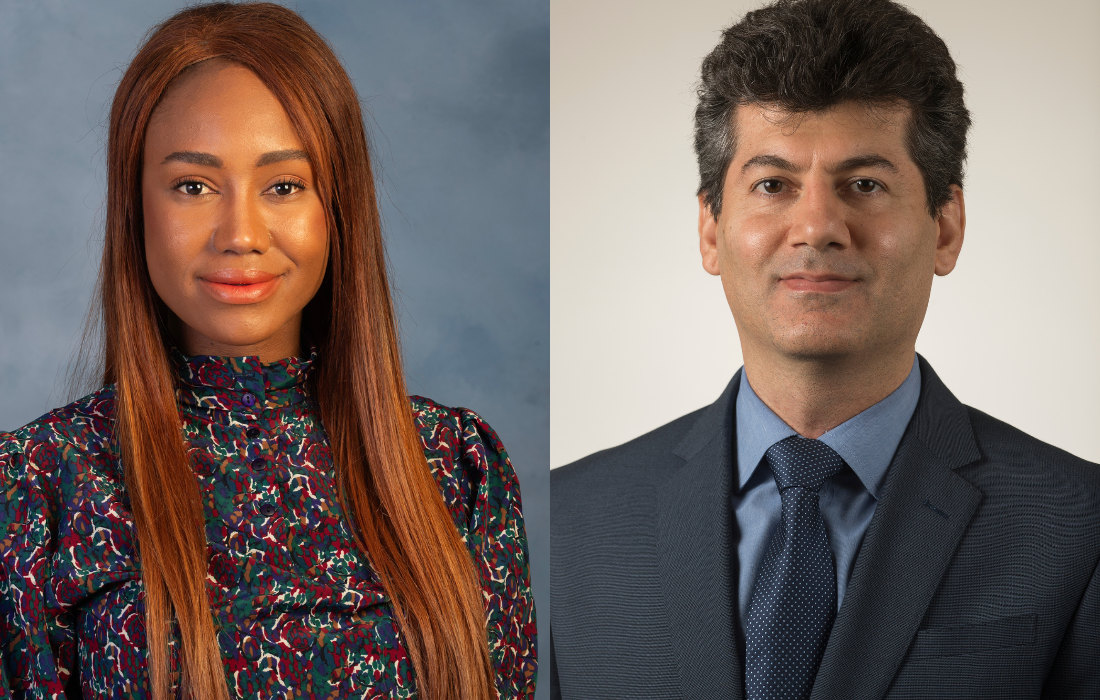
Two Cal Poly Pomona faculty members among the inaugural recipients of the California State University’s Learning Innovation for Future-Forward Teaching (LIFT) awards. They will use their funds to translate classroom lessons into real-world career skills for students.
Ellips Masehian, associate professor in the Department of Industrial and Manufacturing Engineering, and Cindy Cordoba, assistant professor in the Department of Apparel Merchandising and Management, are developing separate projects in engineering and fashion, respectively. Masehian’s project focuses on incorporating Digital Twin technology into engineering courses, while Cordoba’s project focuses on preparing fashion students for sustainability-focused careers. Both projects give students opportunities to apply classroom knowledge in practical settings on their path to becoming and preparing for the workforce.
More than 260 proposals were submitted across the CSU for the inaugural LIFT cohort, making the selection a significant achievement for both faculty members.
Bringing Smart Manufacturing into the Classroom
For Masehian, receiving a CSU-wide award is a major accomplishment.
“It’s an honor for me to be recognized within the whole CSU system,” he said.
Masehian received $29,934 for his project, “Bridging Theory and Practice through Digital Twin-Enabled Smart Manufacturing Across Engineering Curricula.” The project will incorporate Digital Twin technology into five undergraduate courses across aerospace, industrial and manufacturing engineering. It is expected to reach approximately 350 to 400 students annually. Zahra Sotoudeh, a professor in the Department of Aerospace Engineering, is a co-principal investigator on the $7.5 million National Science Foundation Centers of Research Excellence in Science and Technology grant and is responsible for the Digital Twin research thrust.
Digital Twins are virtual models of physical systems that can be used to understand, test and improve how those systems work. His project will use the technology to help students see how tools such as robotics, sensors, artificial intelligence and simulation can work together in modern engineering environments.
The project grew from a need to keep engineering education current as technology continues to evolve. It also addresses a gap Masehian sees in engineering education, where students may learn technologies such as robotics, automation and simulation separately without seeing how they interact in real-world systems.
“Our discipline in our program is very dynamic, especially in the technology sector,” Masehian said.
New technology can make older technology obsolete, creating a need for programs to continually update their curriculum. For Masehian, that also means continuing to learn new things and challenge himself as new technologies emerge.
To bring these concepts into the classroom, the project will create applied-learning modules that are built into existing courses rather than taught as a separate topic. As students move through the courses, they will encounter Digital Twin applications at increasing levels of complexity, from developing robotic simulations to comparing simulations with real systems and eventually integrating sensors, controls and Digital Twin models into Smart Factory activities.
Because the modules will be included in existing courses, those required and the gateway ones, more students will have access to these hands-on experiences. Students will also develop skills such as problem-solving, systems thinking, adaptability, communication and data-driven decision-making while creating projects such as simulations, dashboards and validation reports.
The project will also give students a role in developing the new materials. Four student assistants will help create and test Digital Twin simulations, laboratory exercises and other instructional resources, giving them additional experience in Smart Manufacturing and related technologies.
Students will have opportunities to connect their work with industry expectations. Alumni and industry professionals in areas such as Smart Manufacturing, robotics, aerospace and automation will review selected student projects and provide feedback on their real-world relevance.
The project will be evaluated throughout its implementation, with an independent assessment specialist examining student learning and the effectiveness of the new modules. The team will then use what they learn to refine the materials and share them with other CSU faculty through workshops and a shared repository.
While Masehian’s project focuses on preparing students for the technological changes shaping engineering, Cordoba’s project looks at another industry undergoing significant change: fashion.
Preparing Fashion Students for Sustainable Careers
Cordoba’s project, “From Capstone to Career: Embedding Sustainability Career Readiness Across AMM Senior Courses through Role-Based Learning, Internship Preparation, and Scholarship Pathways” received $17,100. The project will incorporate sustainability-focused career preparation into three apparel merchandising and management courses, with an estimated 135 to 155 students benefiting during the 2026-27 academic year.
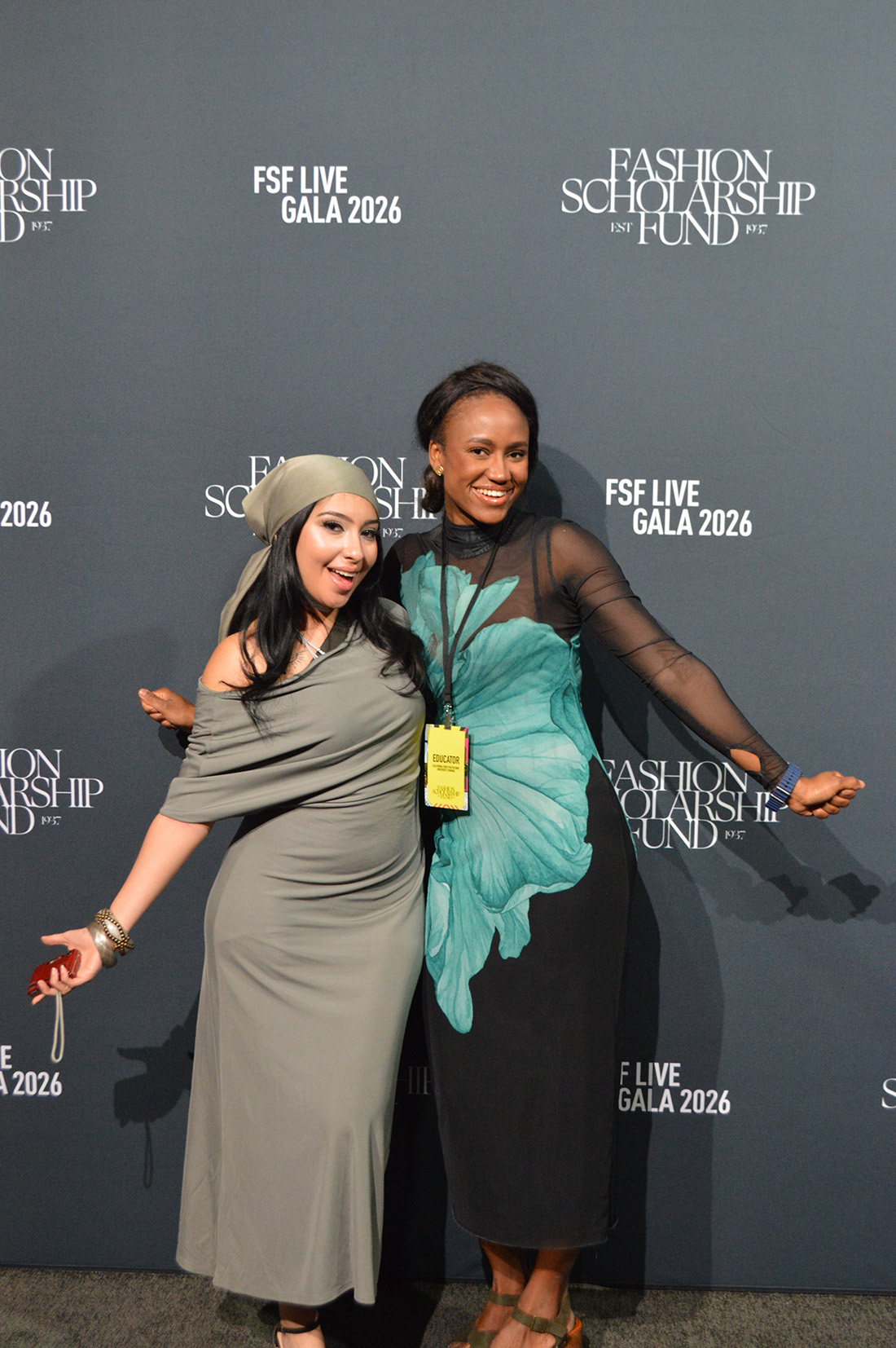 The idea grew out of Cordoba’s experiences with students and their success beyond the classroom. One of her students, Andrea Avalos, won a Fashion Scholarship Fund (FSF) national competition with a case study applying a sustainability lens to a streetwear-soccer collaboration concept, a distinctive approach that helped her stand out among competitors. Avalos traveled to New York to receive the award, where she was approached by multiple brands for job opportunities.
That experience reinforced for Cordoba the value of helping students take their work beyond the classroom.
“If we don’t apply for opportunities, we don’t get a chance to get one,” she said.
Through the LIFT funded project, students will learn how traditional fashion roles can be reimagined through a sustainability lens.
For Cordoba, the goal is to help students leverage their sustainability knowledge to define and differentiate themselves in the marketplace.
“It is a dream come true in a way that I can see my students rethinking how they will work in fashion through sustainability lenses,” she said.
She hopes students will leave the project with a stronger understanding of their abilities and the confidence to pursue their career goals in the industry.
The project also reflects the career-focused needs of many CSU students, Cordoba said, particularly first-generation students who, while deeply supported by their families, are often blazing a new trail as the first to apply to internships, scholarships and competitive opportunities. That is why, Cordoba said, creating those structured pathways within the university matters so much.
To expand access beyond students in the targeted courses, Cordoba will also offer career-readiness sessions and mentoring focused on résumés, portfolios, scholarships and internships. She is also a Career Champion at Cal Poly Pomona, part of the inaugural cohort of faculty and staff committed to intentionally embedding career readiness into their courses. Her LIFT project and her Career Champion role are now deeply connected, with both initiatives strengthening each other. Together with the Career Center, she will co-develop tools that will continue to support students long after the project ends – a convergence she describes as everything coming together at exactly the right time.
Cordoba said giving students opportunities to see concepts applied in real-world settings can help them connect classroom learning to potential careers.
For the faculty members, the LIFT awards provide resources to expand what students can do with what they learn.
For Cordoba, that means helping students recognize their own potential.
“Our students have everything it takes to compete at the highest level,” she said. “They have the skills, the creativity, and the drive. All they need is the intention and the dedication to put their work out there.”