CPP Underwater Robotics Team Earns Second Place at World Championship

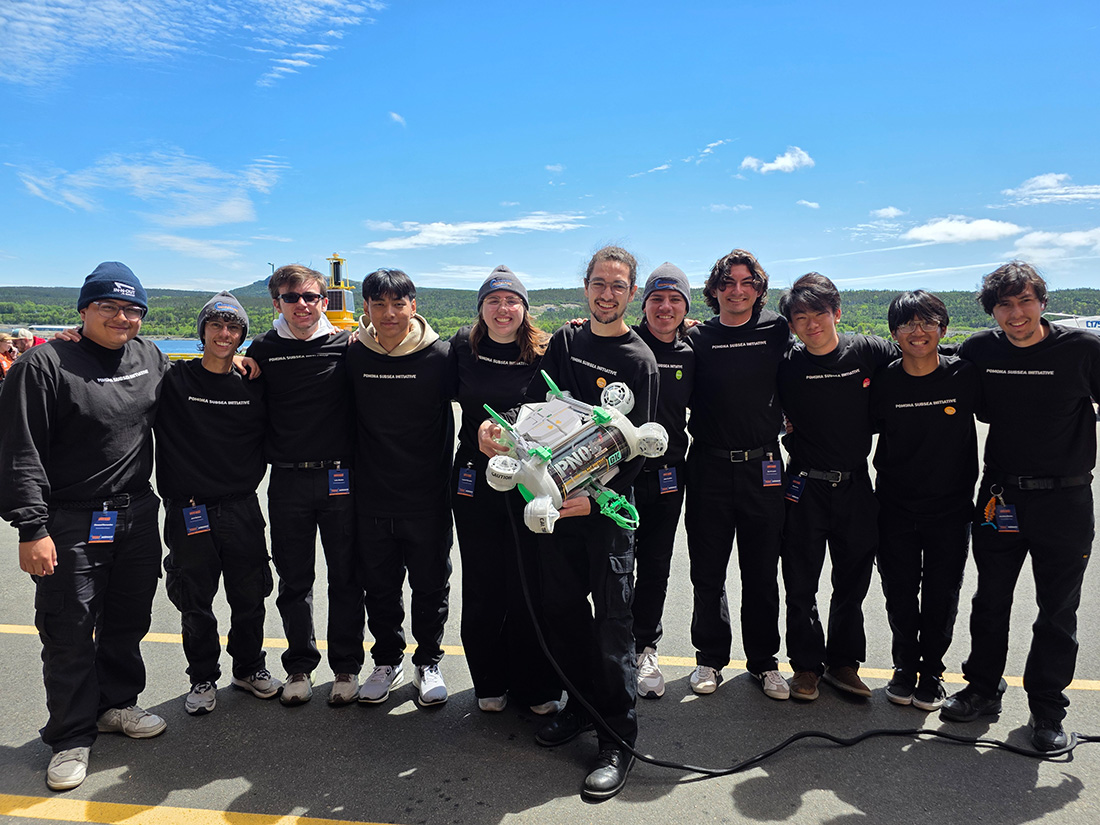
The Pomona Subsea Initiative, a student team from Cal Poly Pomona, earned second place in the Pioneer Class at the 2026 MATE ROV Competition World Championship place in St. John's, Newfoundland and Labrador, Canada.
Senior Lauren McLaury also earned the Engineering Presentation MVP title, which recognizes the student who leads the most impactful technical presentation, articulating the team’s design process, project execution and results.
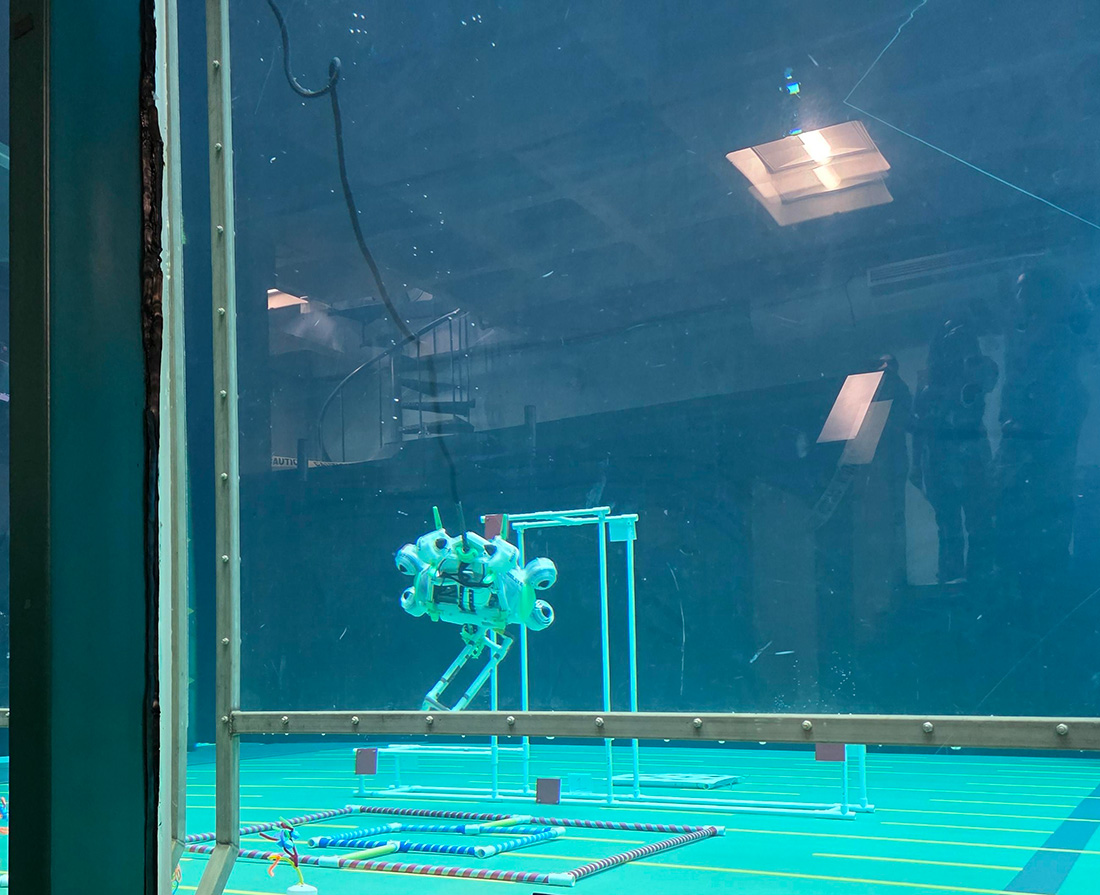 More than 80 teams from 10 countries competed in the international event which challenged student teams to design, build and pilot remotely operated underwater vehicles (ROVs) to complete missions modeled after real-world ocean engineering problems.
The 13-member team entered the Pioneer Class, a competition category for first-year university teams, technical schools and community colleges.
Mechanical engineering students McLaury and Daniel Silguero, who had experience developing underwater robotics systems, recruited the other team members and led the two-year effort.
During the early stages of the international competition, the team encountered multiple challenges, including critical system failures, requiring them to quickly adapt and rebuild nearly every component on site. This included meticulously waterproofing, sealing, rewiring and reinstalling each of their scratch-built thrusters with less than 12 hours until round one.
Minutes before their final round – which included precise tasks such as connecting underwater cables, turning valves, deploying and recovering sensor modules, and surfacing heavy objects with the team’s inflatable lift bag – the team was presented with yet another challenge. Their radio-based controller wouldn’t connect to their surface-side control system.
“We had to swap it out for a game controller,” said Silguero. “Making the swap was quick and easy but the code was written for a different layout. This meant we had to pilot the robot inverted, up was down and down was up. Despite this, we completed nearly every single task. We achieved the second highest points score in that mission with inverted controls.”
McLaury also lauded the team for rising above the challenges.
“The fact that we were able to place second overall, despite this, is incredible. We are so proud of the team,” she said.
At the competition’s conclusion, Jill Zande, executive director of MATE at the Marine Technology Society, noted that, “The level of innovation, professionalism, and perseverance displayed by these students continues to raise the bar each year. By solving authentic engineering challenges in world-class facilities, students are developing the technical and professional skills needed to become the next generation of engineers, technologists, and innovators.”
In addition to piloting their vehicles, students produced technical documentation, delivered engineering presentations, created marketing displays, managed project budgets and collaborated with industry professionals throughout the week.
The Bronco team plans to build on its debut performance by competing in the Explorer Class, the highest level of competition, in 2027.
“With the support of the school, and our momentum from this past summer’s win, our team, Pomona Subsea Initiative, plans to bring Cal Poly Pomona’s name to the global stage once again,” said McLaury.
Team members:
- Luke Blades
- Jimmy Huynh
- Justin Vuong
- Jake Casillas
- Giovanni Hernandez
- Jonathan Beaton
- Joel Nelson
- Gavin Lopez
- Eason Liu
- Matthew Gallardo
- Reese Sugita