

CPP Professor Improves Beef Authentication Methods
The global grass-fed beef market is $15.56 billion and expected to grow to $21.23 billion by 2035, according to Future Market Insights. While grass-fed beef commands premium prices compared to conventionally raised beef, there is no single standard or testing to verify that meat sold to consumers in the U.S. is actually grass-fed.
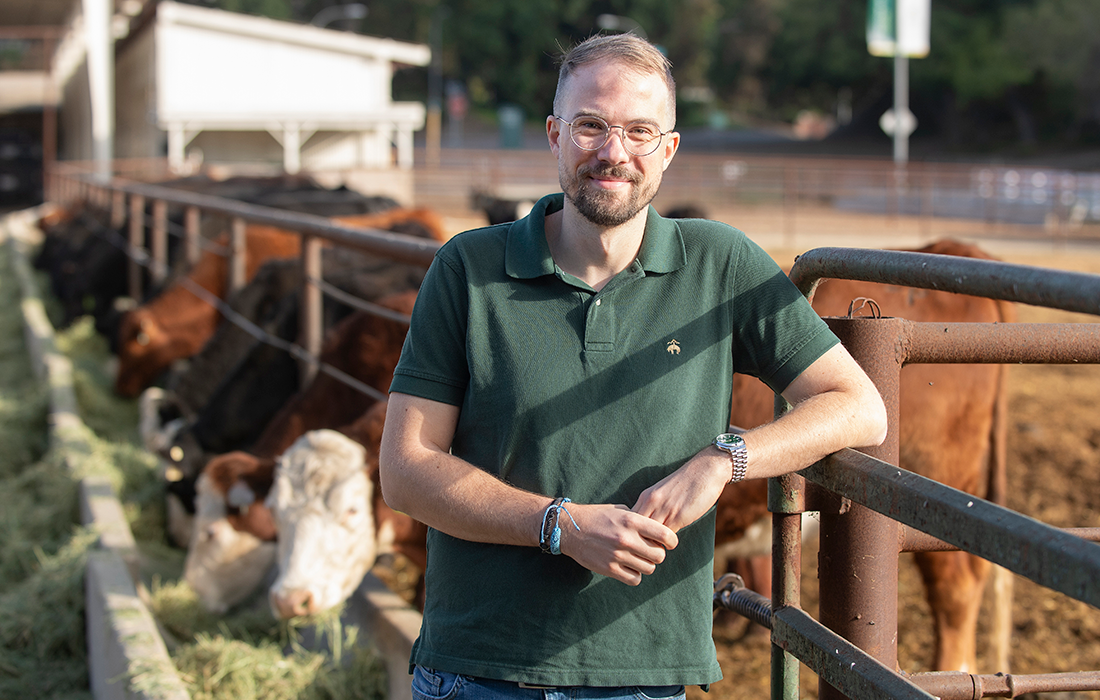
Lucas Krusinski, assistant professor in the Animal and Veterinary Science Department, is part of a team developing methods to authenticate grass-fed and grass-finished beef products to protect ranchers who invest the extra time and money and protect consumers from food labeling fraud.
“Labeling is tricky and just confusing consumers because most think grass-fed and grass-finished mean the same thing, but in reality, it doesn’t,” said Krusinski, “Technically all cattle are grass-fed because they spent the majority of their life on pasture eating fresh forages. But grass-finished means that they also spent the last two to three months of their life on pasture.”
Despite the differences between grass-finished and grass-fed, the USDA has allowed voluntary grass-fed labels with little regulation since 2016, which often leads to consumers believing that beef is grass-finished even in cases when it’s not.
Krusinski, alongside collaborators at Michigan State University, Chapman University and Utah State University, analyzed cattle from groups that had been fed either grape-supplemented feed, grain or were 100% grass-finished. Ribeye samples were collected and analyzed for metabolomics and fatty acids using mass spectrometry methods and gene expression analysis.
The team reported more than 200 compounds, finding consistent differences between grass-finished beef and the other groups, with more compounds, such as Vitamin E, organic acids and omega-3 fatty acids in high concentration accumulating beneficial nutrients for human health.
The team was able to accurately predict 100% of beef from grass-finished cattle, 94.4% of beef from grape-supplemented cattle and 76.5% grain-finished, achieving an overall 90.4% predictive accuracy rate. The high degree of confidence would allow for usage of these methods to be applied to stronger authentication standards.
Krusinski is the lead author on their paper, “Highly Targeted Metabolomics Coupled with Gene Expression Analysis by RT-qPCR Improves Beef Separation Based on Grass, Grain or Grape Supplemented Diet,” published in Food Frontiers.
The team is now testing distiller’s grains, different byproducts and diets to see if they make differences in finished beef products. Their ultimate goal is the development of faster, less expensive testing methods that can be widely adopted by the rapidly growing industry to protect ranchers and consumers from fraud.