
Academic Standing Statuses Renamed to Support Student Success
After several years of research and consultation, Cal Poly Pomona has renamed its academic standing statuses to better support students in academic difficulty.
Currently, for example, undergraduate students are on “Probation” when their cumulative or CPP GPA is below 2.0. In the renaming, which will go into effect on this semester, the “Probation” status will be changed to “Academic Notice.”
Other status changes include:
- “Probation with Contract” to “Academic Notice with Contract”
- “At Risk” to “Academic Warning”
Over the last decade, there has been a trend in higher education around renaming academic standing statuses. Studies and articles have found that the term “probation” can be stigmatizing and impact students’ mental health, sense of belonging, and self-efficacy – which affects their graduation rates. Across the CSU, more than 14 campuses have changed their terminology.
“This change speaks to the dedication of our community to ensure that we remain asset-based, student-centered, and culturally responsive in our language, actions and processes,” said Erin DeRosa, executive director of university advising. “Words matter.”
In 2023, CPP advisors, administrators and the Academic Senate began to review the university’s academic standing policy. The Retention & Graduation Specialists led the charge in exploring a renaming. The team of advisors, who support students in academic difficulty in each of the colleges, found that “probation” created psychological barriers for students. In a survey they ran about the renaming, students shared they felt anxious, shameful and sad about being in negative standing.
“As advisors, our role is to partner with students in their journey. We felt that the term ‘probation’ was too heavy and discouraging, and it didn’t reflect the supportive environment that we wanted to create,” said Berlinda Crawford, who advises students in the College of Education & Integrative Studies.
“When I talk with students facing academic difficulties to learn about their challenges, it’s very rarely about the academic rigor and more often about life struggles, such as finances and multiple outside responsibilities. By shifting to ‘academic notice,’ we’re able to move away from labeling students and emphasize that we’ve noticed they could use extra care and support.”
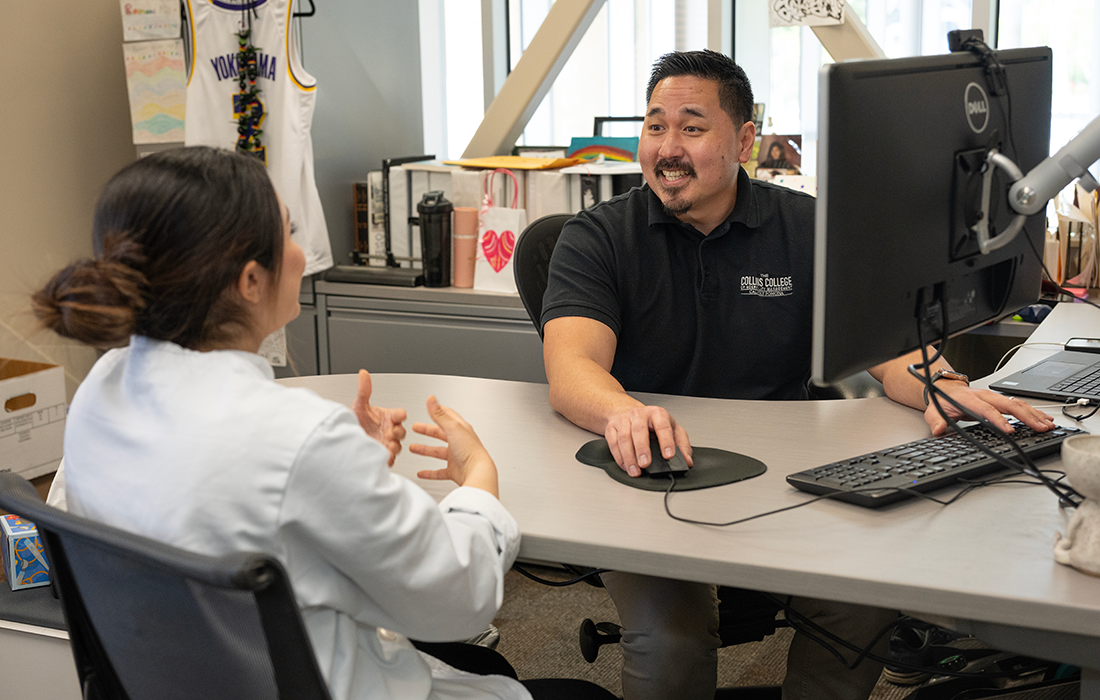
Henry Flores, a Retention & Graduation Specialist in the Huntley College of Agriculture agrees. “Many students put off meeting with us, and when I’ve asked them why, they mentioned that they feel like they’re getting in trouble,” he said. “By renaming our academic standing statuses, we hope to change students’ mindset to one that encourages them to reach out for assistance.”
When students are in academic difficulty, there are many resources available to help them turn things around. Students in Academic Warning, Academic Notice and Academic Notice with Contract must all complete a mandatory Canvas course that helps them reflect, reach out to needed campus resources and reset their goals. Students also regularly meet with their advisors, Retention & Graduation Specialists and support staff to make academic plans and stay on track. On average, students who attend advising appointments with a Retention & Graduation Specialist have higher reenrollment rates and higher average term GPAs than those who do not.
“Over the last several years, we’ve continued to grow and develop our advising team into a community of professionals who not only support students in meetings and workshops, but who advocate for them by identifying and dismantling barriers to their success,” DeRosa said. “I am proud of the work that our Retention & Graduation Specialist team did to make this goal a reality.”