

Office of Academic Innovation Summer Conference Focuses on AI in Higher Education
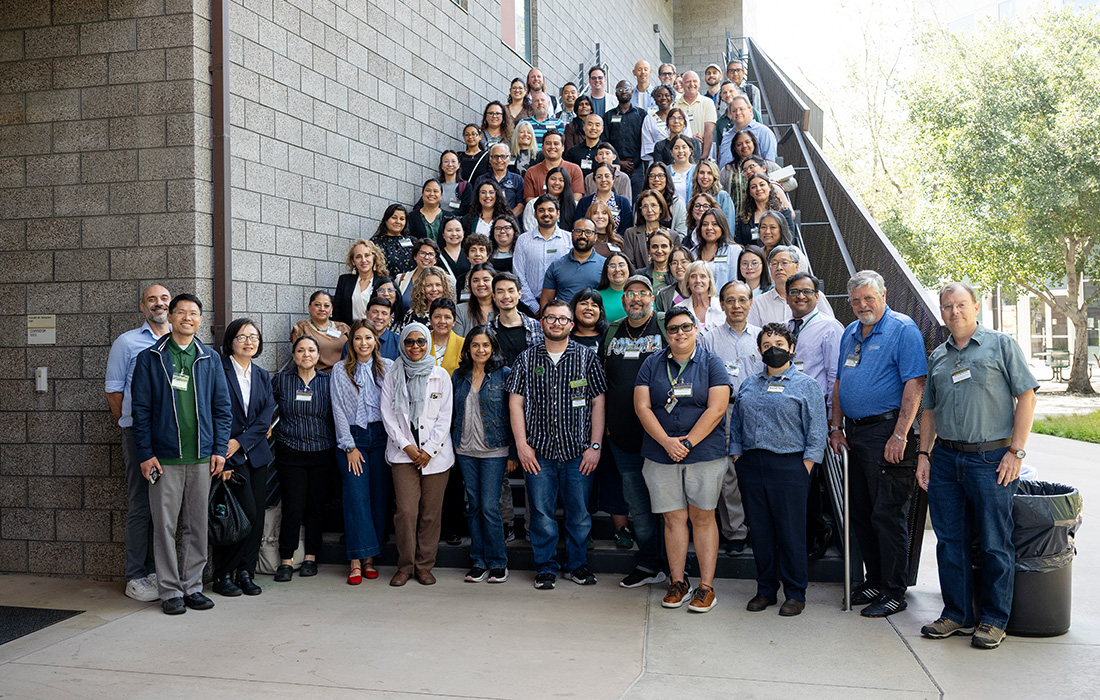
Faculty and staff from Cal Poly Pomona and outside universities gathered for the 2026 Office of Academic Innovation Summer Conference, themed “Human at the Core: Navigating AI in Higher Education.”
The two-day event, June 3-4, focused on exploring the opportunities, challenges and responsibilities associated with artificial intelligence in teaching, learning and university operations.
Hosted by the Office of Academic Innovation, the annual conference brough together educators, staff, and campus leaders to engage in conversations about how AI is reshaping higher education while emphasizing the importance of keeping human connection, creativity, and critical thinking at the center of innovation.
The conference featured sessions across two tracks: AI in the Classroom and AI Outside the Classroom. Attendees explored practical applications of AI, emerging technologies and strategies for integrating AI tools in ways that support student success, enhance productivity and strengthen learning outcomes.
The conference also featured keynote presentations from Frank Wuerthwein, director of the San Diego Supercomputer Center at the University of California, San Diego; Andrew Currah, education leadership executive at Apple Inc.; and Tiffany Zhu, assistant professor of global ethics and technology at Old Dominion University. Drawing from their expertise in research computing, educational innovation and technology ethics, the keynote speakers challenged attendees to consider both the transformative potential and the responsibilities that accompany the growing use of artificial intelligence in higher education.
Throughout the conference, presenters and keynote speakers shared insights on topics ranging from course design and assessment to student engagement, research, advising and administrative workflows. Through interactive sessions and discussions, attendees examined how AI can be leveraged responsibly while addressing concerns related to ethics, equity, sustainability, and academic integrity.
Among the attendees was Monica Palomo, a civil engineering faculty member, who reflected on the conference’s focus on intentional and responsible AI use.
“My biggest takeaway from ‘Human at the Core’ is that AI should be used intentionally—not to replace our creativity or judgement, but to amplify our ability to learn, design, and solve problems responsibly,” said Palomo. “At the conference, I used tools like ChatGPT and Codex to create a website. I also designed a flyer, extracted information from videos, and used tools that helped me organize ideas and data quickly, which reminded me that AI can free us from tedious work so we can focus on deeper analysis, innovation, and student learning. As educators, we have an opportunity to model throughout AI use—maximizing learning while minimizing unnecessary AI iterations water use and environmental impact—so that technology serves both people and the planet.”
Palomo’s experience reflected a recurring theme throughout the conference, that AI is most impactful when used to augment human capabilities rather than replace them. Discussions emphasized the importance of approaching technology with intentionality and ensuring that innovation aligns with institutional values and student needs.
Belal Hasan, a nutrition and food science faculty, also reflected on how AI can enhance teaching and learning while preserving the importance of human expertise and critical thinking.
“The biggest takeaway was that AI should be positioned as a partner than a replacement for expertise,” said Hasan. “For example, in food science, AI can accelerate data analysis, flavor compound modeling and process optimization, but the true value still lies in human judgement—interpreting results within cultural contexts and translating finding into commercial food products. Integrating AI into my teaching and research is an opportunity to strengthen the critical thinking skills of my students and give them more complex challenges. It is a great way to train professional complexity managers.”
For David Peña, lead career coach in the College of Environmental Design, the conference highlighted AI’s potential to expand educational opportunities and prepare students for the future workforce.
“The OAI Summer Conference reinforced that AI transforms how we learn and work,” said Peña. “These technologies give us unprecedented opportunities to expand access, personalize learning and empower students to move beyond consuming knowledge to creating solutions, discoveries and ideas that may shape the future. At Cal Poly Pomona and across the CSU ecosystem, we have an opportunity to meet this moment with optimism and purpose, preparing students not just to navigate change, but to lead it.”
Peña’s perspective underscored the conference’s broader focus on preparing students for a rapidly evolving world. Throughout the event, presenters and panelists encouraged attendees to view AI not simply as a technological tool, but as a catalyst for reimagining learning, creativity, and innovation across disciplines.
These conversations align with Cal Poly Pomona’s growing commitment to innovation and emerging technologies. The university is advancing innovation through artificial intelligence, cybersecurity and geographic information systems initiatives that empower students, faculty and industry partners to collaborate, conduct research and develop solutions that address tomorrow’s challenges.
As artificial intelligence continues to transform higher education, Cal Poly Pomona remains committed to supporting faculty and staff through professional development opportunities that encourage experimentation, collaboration and responsible innovation.
The 2026 Office of Academic Innovation Summer Conference served as a reminder that while technology continues to evolve, the human element remains essential. By keeping people at the center of innovation, educators can harness the power of AI to create more engaging, inclusive and impactful learning experiences for students while preparing them to lead in an increasingly AI-enabled world.
To learn more about the Office of Academic Innovation Summer Conference and upcoming professional development opportunities, visit the website or contact them directly at ai@cpp.edu.