Hand-Crafting Music: A Love Letter to Family and Creativity

Students walking into the music department on a Friday afternoon may be greeted by decidedly unusual sounds.
Instead of the familiar scales on a piano or orchestral tuning, they might catch the eerie cry of a touchless digital theremin, hear the chiming of a new creation made of upcycled materials or feel the guttural hum of a wooden daxophone – unconventional instruments that turn everyday materials, technology and even light into music
These unique sounds would be coming from MU 4171W: Theory, History, and Design of Musical Instruments, led by Ethnomusicology Professor Jessie Vallejo. Unlike traditional upper-division, lecture-heavy courses, Vallejo designed her class with one thing in mind: “Learn By Doing.”
The class is meant to be an open door to students of all majors and musical proficiency levels. Due to the hands-on nature of the class, Vallejo leans into the technology-focused culture of the Cal Poly Pomona student body.
"It [isn’t] a typical Ethnomusicology 1 course … I was really inspired by the polytechnic approach at Cal Poly Pomona," Vallejo said. "The fact that there are so many musicians on campus who aren't studying music, and/or they're looking for ways to include music, even if it's not their major … I wanted to find a way to get students more involved with the hands-on aspect of their instruments."
A Daughter’s Tribute
When Vallejo was hired over a decade ago, she was tasked with designing a new upper-division ethnomusicology course in a matter of weeks. In addition to the CPP motto, Vallejo took inspiration for the class from her family.
 "On a more subconscious level, I think the class has been like a love letter to my family members, especially my father who was really good with his hands," Vallejo said. "My father was a mechanic, and I really wish I had learned more from him.”
Though she is no stranger to assembling IKEA furniture, patching walls, or restoring windows with her husband, she continues to seek a more structured reason to perfect the skills her father began teaching her before he died in 2025. The course remains a tribute to his passion for being creative.
“It’s a love letter to working with our hands and creating beautiful things and how that connects us with people near and far,” Vallejo said.
Making the Music
Students in MU 4171W tackle a series of unconventional design challenges throughout the semester. A few of the standout projects they complete throughout the course include:
Recycled Instrument Challenge
This project challenges students to make a functional instrument from materials that would otherwise be thrown away, blending creativity, engineering, and sustainability into a single project.
“One student took a bunch of metal tubes from a junkyard that were for basketball hoops … he wanted to blend sports with instruments, so he put together chimes,” Vallejo said. “In a sustainable way [he used] metal that was seen as garbage, but then he repurposed it.”
AI “Frankenstein” Instrument
Inspired by her experience following an AI crochet pattern that went awry during the pandemic, Vallejo asks students to follow instructions completely generated by AI as an example of AI’s artistic and technical shortcomings.
“AI does creative stuff like this really badly,” Vallejo said. “Students have three chances to refine the prompt and ask it to make an instrument and then come in, and they have to follow the directions to a T … it's kind of a funny way to be like, ‘okay, and let's learn from it.’”
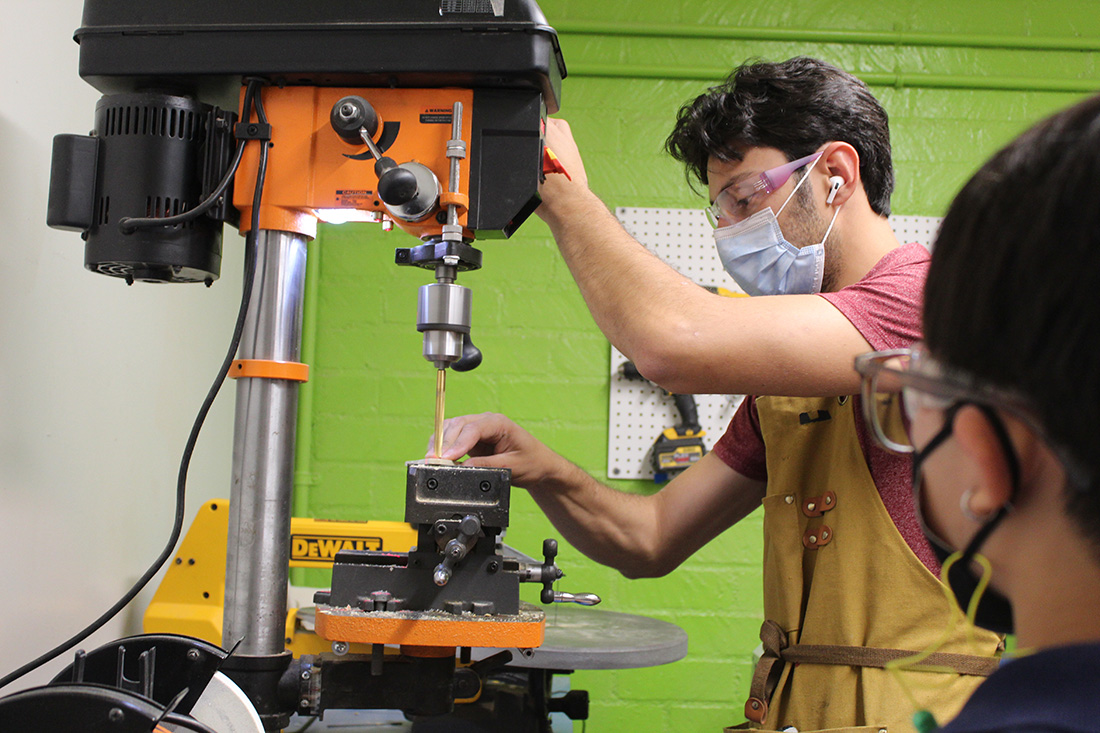
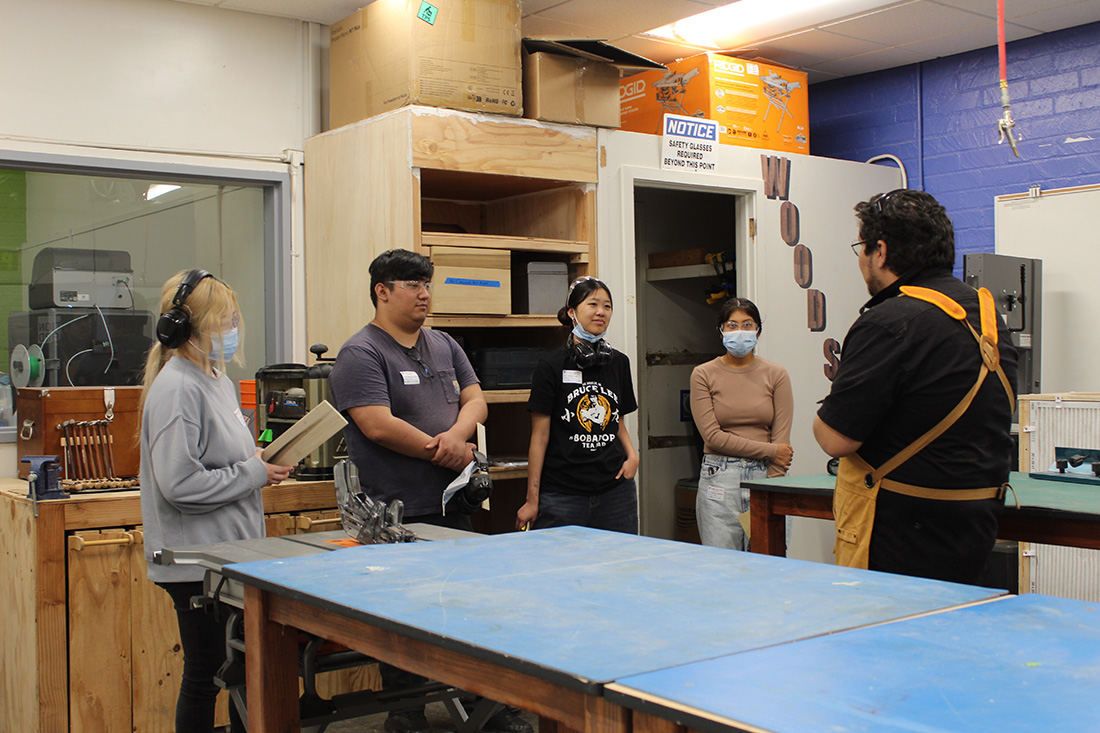
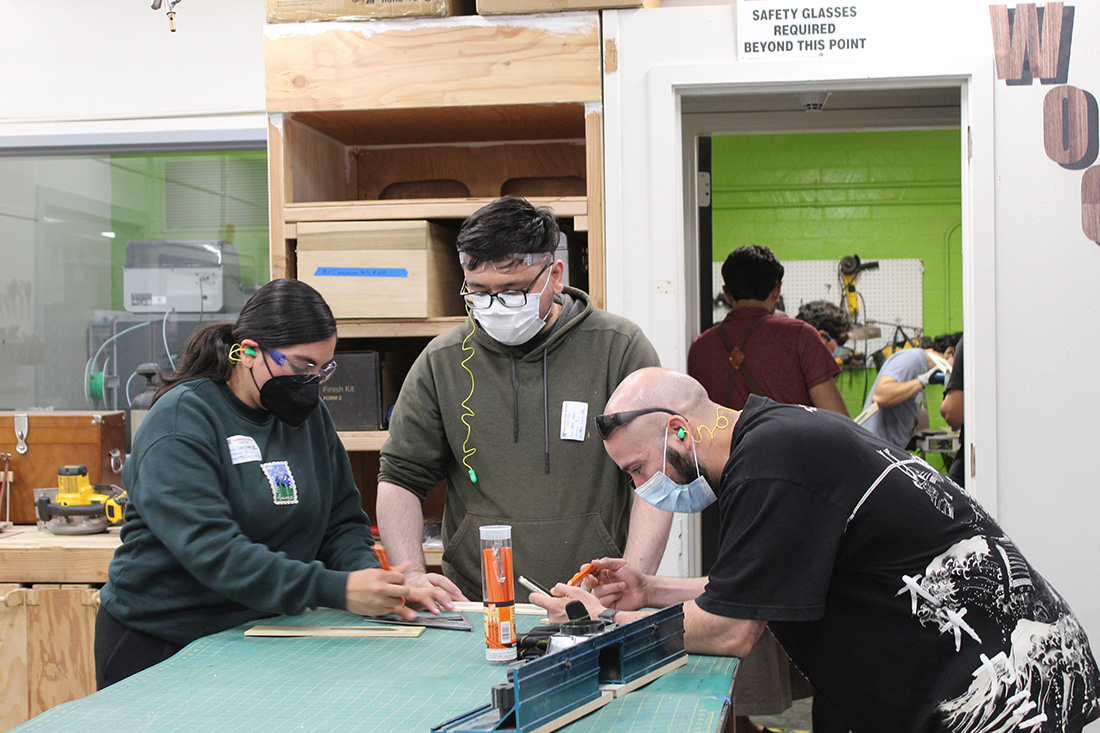
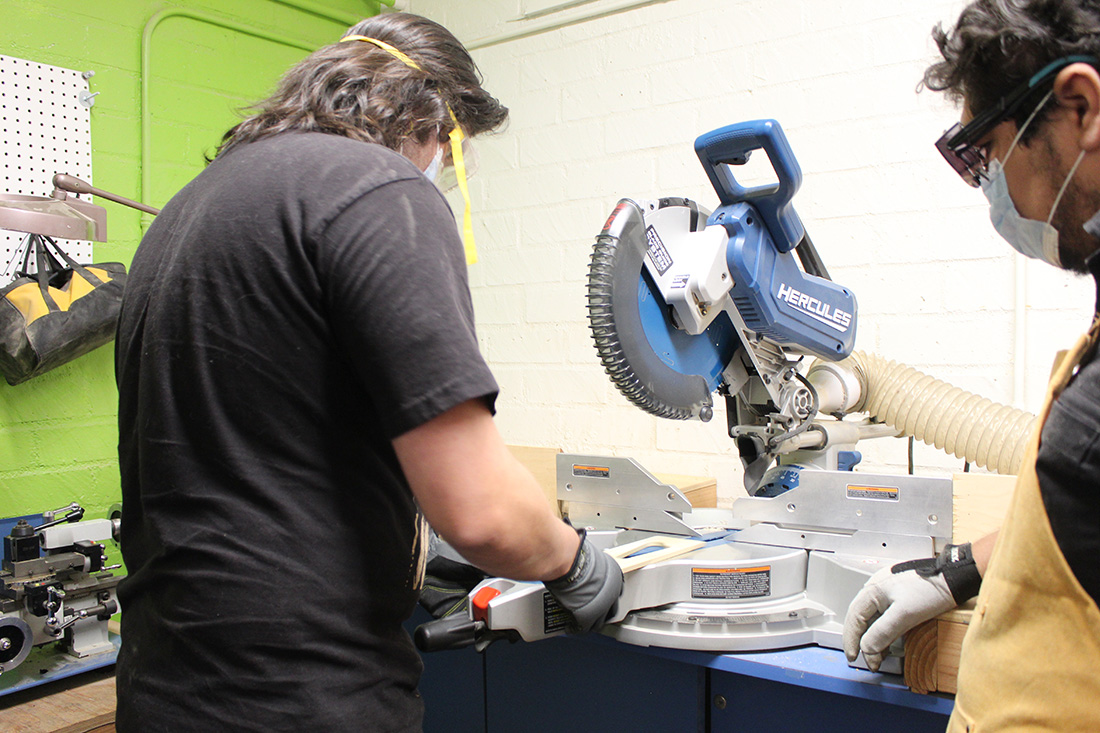
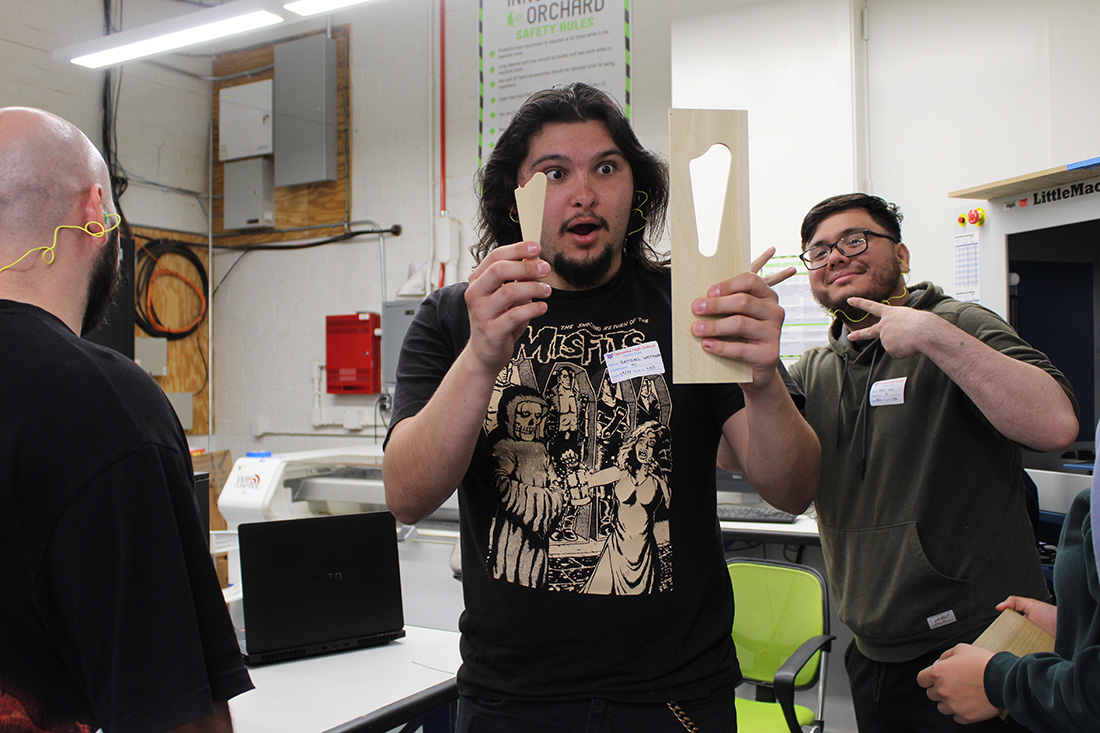
 Building Daxophones in collaboration with Innovation Orchard
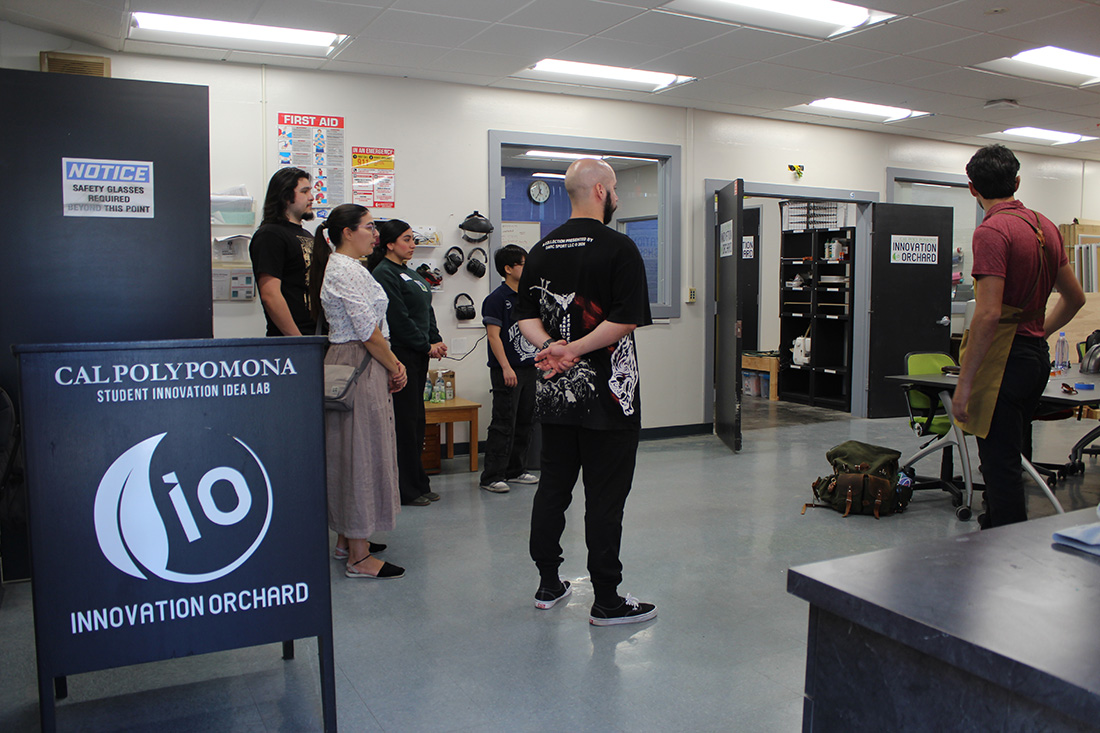
Vallejo took hands-on to the next level when brainstorming the daxophone project. By partnering with Innovation Orchard, students have access to woodworking tools and mentors to make the experimental idiophone, or vibrating instrument.
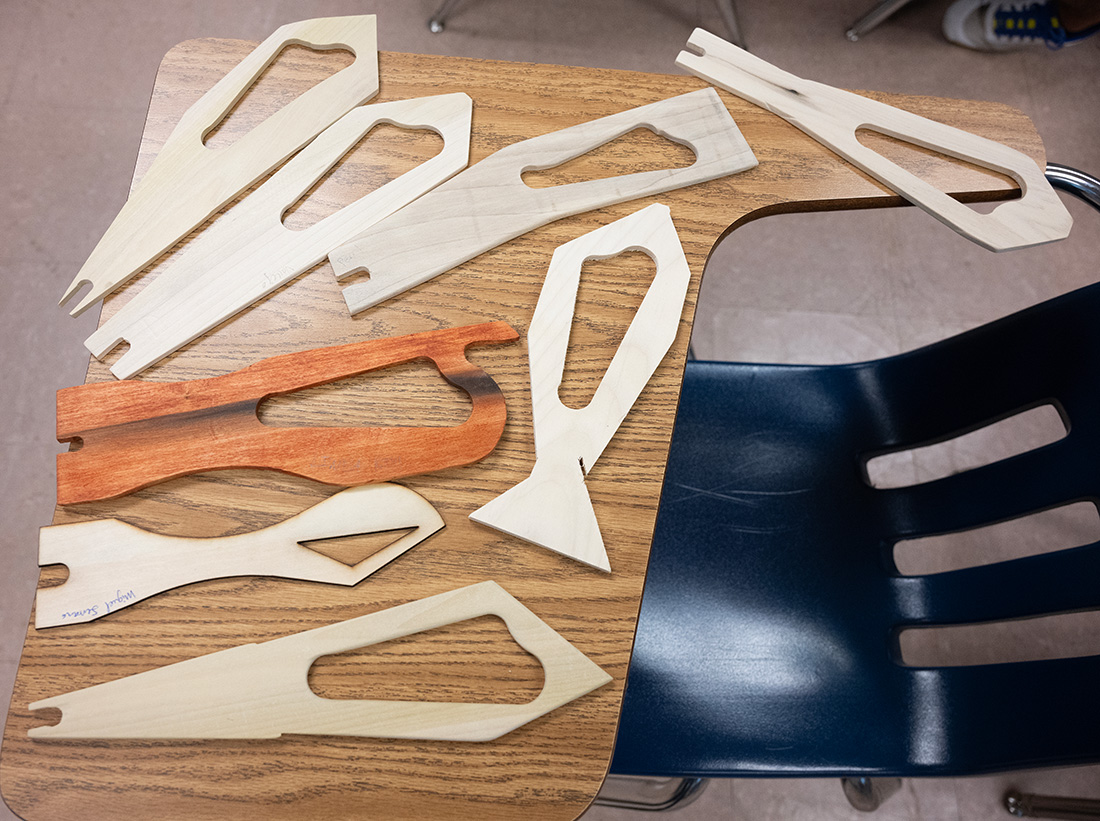
“All the students [last] semester for my class either used the laser printer in the maker space studio or we brought their planks of wood to the Innovation Orchard and got to carve out our own daxophone tongues,” Vallejo said. “The tongues are carved planks of wood that are bowed to make sound.”
The class has successfully carved about 12 custom daxophone tongues, and this coming semester, Vallejo plans to construct the sound boxes herself, with the long-term vision of assembling a permanent departmental instrument that can be recorded or played by CPP’s New Music and Electronic Music ensembles.
“I'm hoping that we will make many pieces that can be part of the department,” Vallejo said. “I think in the future, it would be fun to collaborate with some of the professors … it would be really great to see some crossover.”
An Open Door for Every Major
Vallejo said she would like to see another crossover — students from other majors taking her class.
Non-music majors should not let the music theory or the writing-intensive designation intimidate them. According to Vallejo, the upper division course, which will be offered again to juniors and seniors in Fall 2027, is intentionally designed to be a multidisciplinary space where students of all backgrounds can learn together.
“When you get to design a class and teach a class that you feel like is your brainchild, you try to make it so that you can have just as much fun with the students and learn from the students,” Vallejo said. "I hope that students will enjoy finding their voices and feeling empowered through writing and playing musical instruments."