From Cal Poly Pomona to Italy: Scholarship Opens Door to Archaeological Research

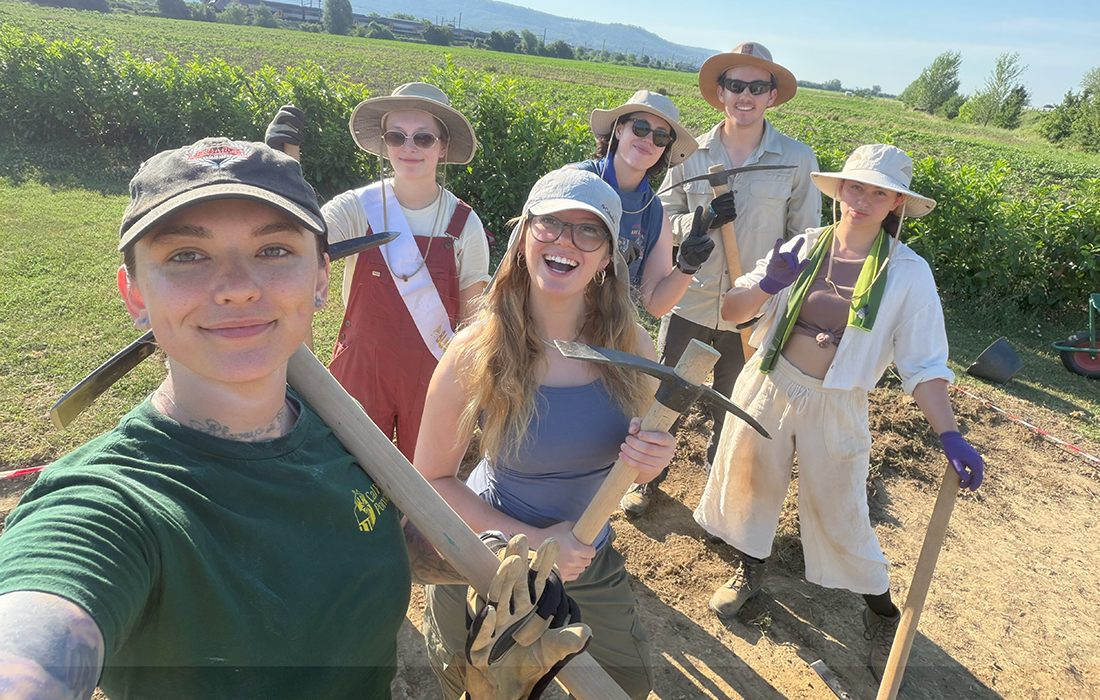
An ancient Etruscan site in Cortona, Italy might seem a world away from Cal Poly Pomona. But for anthropology student Alexis Yrigoyen, five weeks of archaeological fieldwork there brought classroom learning to life.
The first-generation college senior and McNair Scholar participated in the Cortona Survey & Excavation Field School project with support from the Vera R. Campbell Promise Scholarship, which awarded her $5,760 to cover the cost of the program.
The scholarship, awarded through the Institute for Field Research (IFR), helped make an international field school experience financially accessible while allowing Yrigoyen to develop skills directly related to her academic interests in archaeology, geophysics and cultural heritage.
“As a student, I don’t take opportunities like this for granted,” Yrigoyen said. “Financial support for me was the difference between seeing an amazing opportunity and actually being able to say yes to it.”
Digging Deep into Fieldwork
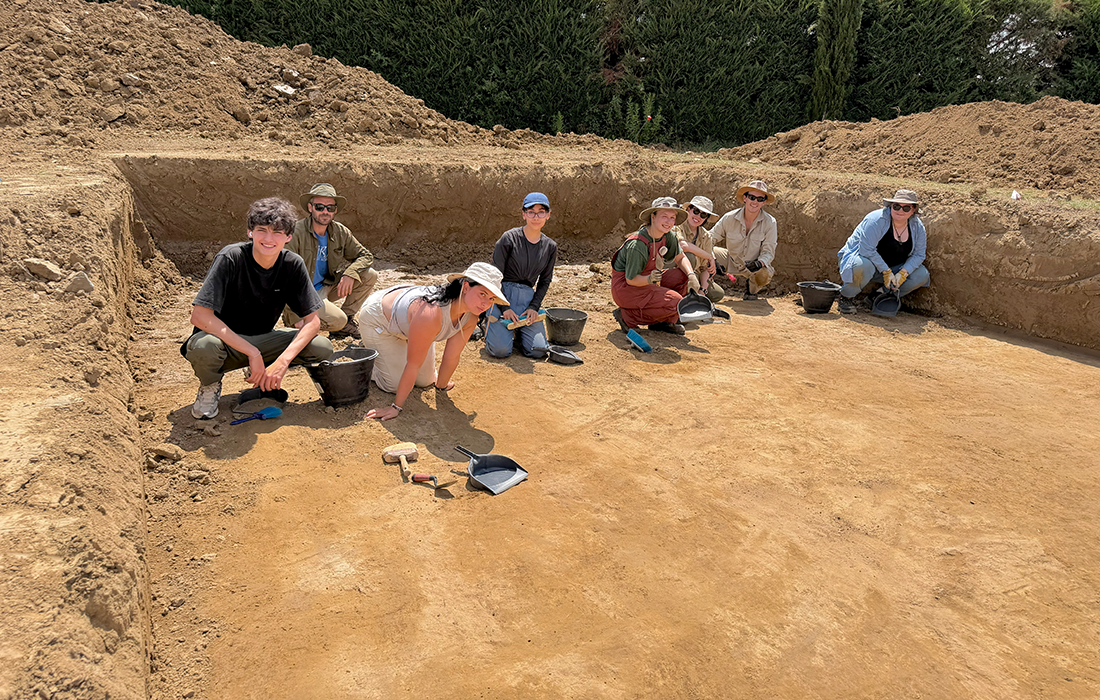
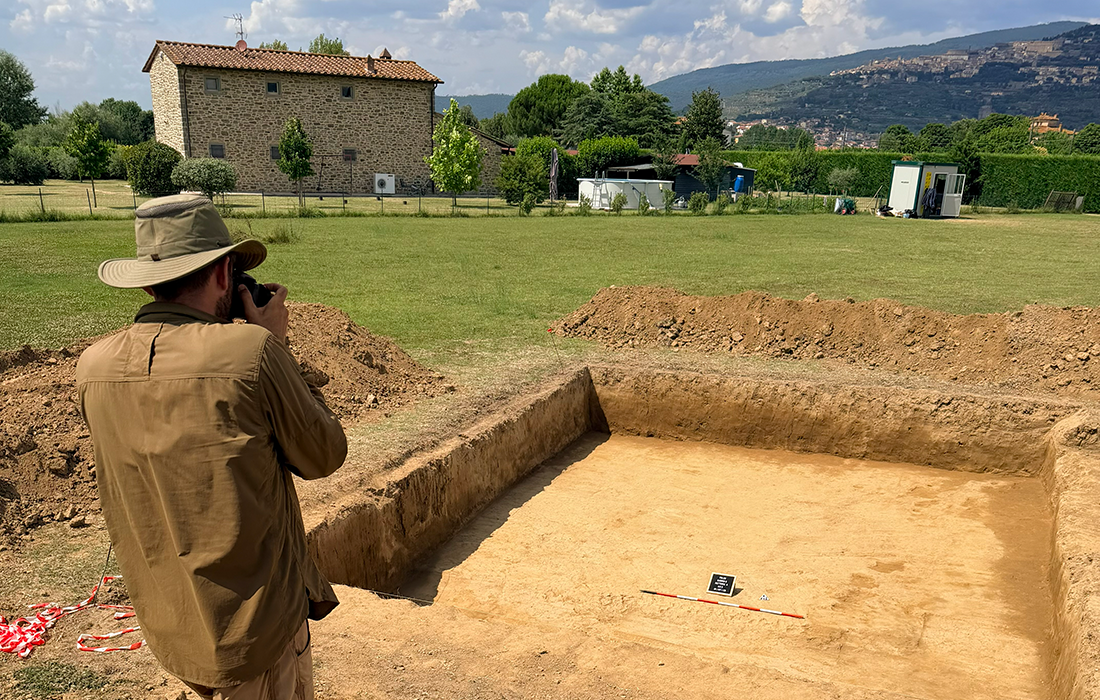
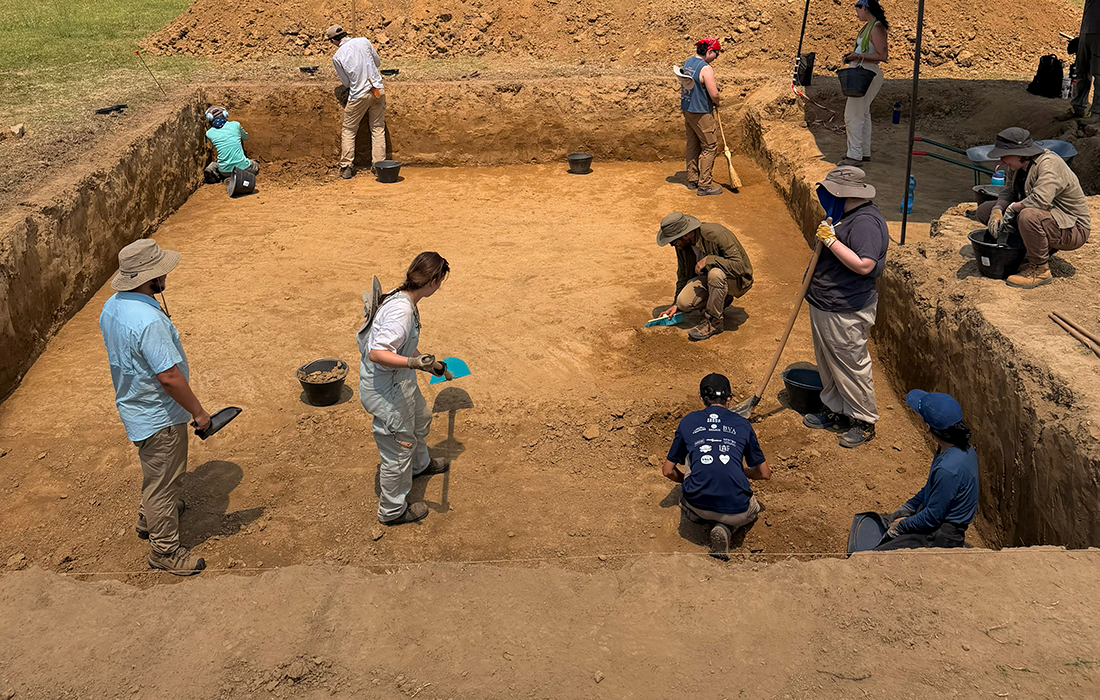
Yrigoyen worked alongside an international research team investigating an ancient Etruscan structure identified through geophysical surveys during the previous field season. The team opened two excavation trenches to investigate features of the structure detected beneath the ground and better understand the structure’s layout and possible purpose.
 The field school combined traditional excavation with digital tools that allowed students to document archaeological features and analyze the site from multiple perspectives. Students excavated the site layer by layer, recording their findings. They also used photogrammetry and laser scanning to create measurable three-dimensional models of digital records of layers and features as they were uncovered.
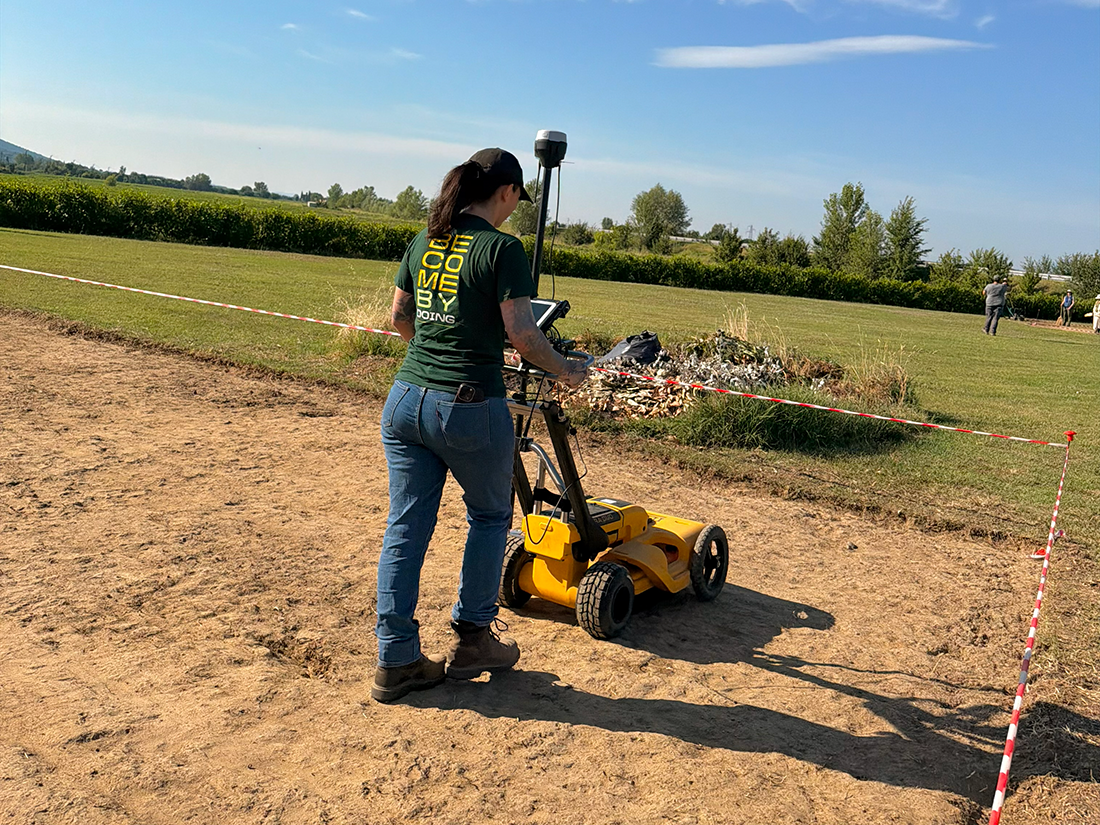
Students also worked at nearby archaeological sites, including Sodo and Ossaia, where they conducted geophysical surveys and explored digital documentation methods. They assisted researchers by processing data collected and comparing what the technology revealed with what researchers found through excavation.
For Maurizio Forte, the field school’s director and a professor at Duke University, Yrigoyen’s interest in photography and digital technologies made her a particularly engaged participant.
“Alexis is a very visual person, and that was clear from her first days in Cortona,” Forte said. “She brought a real passion for photography and digital technologies, and she put it to work for the project.”
Forte said Yrigoyen paid close attention to how researchers photographed excavation trenches and transformed images into three-dimensional models and data for analysis. Her curiosity also extended to stratigraphy, artifacts and the scientific methods behind the research.
“In archaeology, seeing well is a skill, and Alexis has it,” Forte said.
Beyond the Classroom
For Yrigoyen, the experience built on research she had begun at Cal Poly Pomona through the Engaging and Graduating Hispanic Students Through Undergraduate Research Program (ENGAGE), where she was part of the program’s final 2025–26 cohort. Through ENGAGE, she worked with faculty mentor Geological Sciences Assistant Professor Md. Iftekhar Alam on a project investigating ground-penetrating radar (GPR) signals associated with marked and unmarked graves at Agua Mansa Pioneer Cemetery in Colton, California. The experience introduced her to archaeological geophysics, which she later applied and expanded upon during the Cortona field school.
Although ENGAGE has since concluded, Yrigoyen continues to with Alam on archaeological geophysical fieldwork at cemeteries as part of her senior thesis, which she plans to complete by May 2027.
Another important lesson reinforced for Yrigoyen during her time in Italy is that archaeological research rarely follows a perfectly predictable path. Although previous geophysical surveys helped researchers identify potential archaeological features, the team had to excavate deeper than expected after encountering approximately a meter of modern fill associated with more recent construction and landscape changes.
At Fossa del Lupo, students investigated an area containing architectural remains associated with an Etruscan building. They found roof tiles, unfired mud bricks and wall fragments, as well as a pit containing more than 1,000 roof tile fragments, ceramics and possible animal bones. Students documented where the materials were found and used three-dimensional models to better understand how the building was constructed.
For Forte, the work illustrated how traditional excavation and digital documentation complement each other.
“Technology does not replace excavation,” Forte said. “It makes it more precise and more transparent, and partly reversible, because we can return to the site virtually at any time.”
A Valuable Lesson
Beyond excavation, Yrigoyen helped bag and label artifacts at the Cortona site before cleaning and sorting them at Ossaia. There, students also used 3D scanners and photogrammetry for the first time
 These experiences broadened Yrigoyen’s understanding of archaeology as a field that brings together scientific methods, technological innovation, historical interpretation and collaboration among specialists.
“I learned that archaeology doesn’t exist separately from the place that you’re working,” Yrigoyen said. “And I think that was the biggest thing that I loved about working with an international team.”
The experience also enabled Yrigoyen to work with students from other American universities, Italian researchers and institutional partners, including Sapienza University of Rome and Boston College. Students from different academic backgrounds contributed their own perspectives, helping the team approach archaeological questions from multiple angles.
For Forte, that diversity was central to the research experience. A history major, anthropologist, engineer and art historian might notice different details in the same excavation, he said, and the strongest interpretations often emerge through those conversations.
The collaborative environment extended beyond the excavation site. The project involved partnerships with the Museum of the Etruscan Academy and the City of Cortona (MAEC), local landowners, and researchers and institutions in Italy and the United States.
Archeology in a Living Community
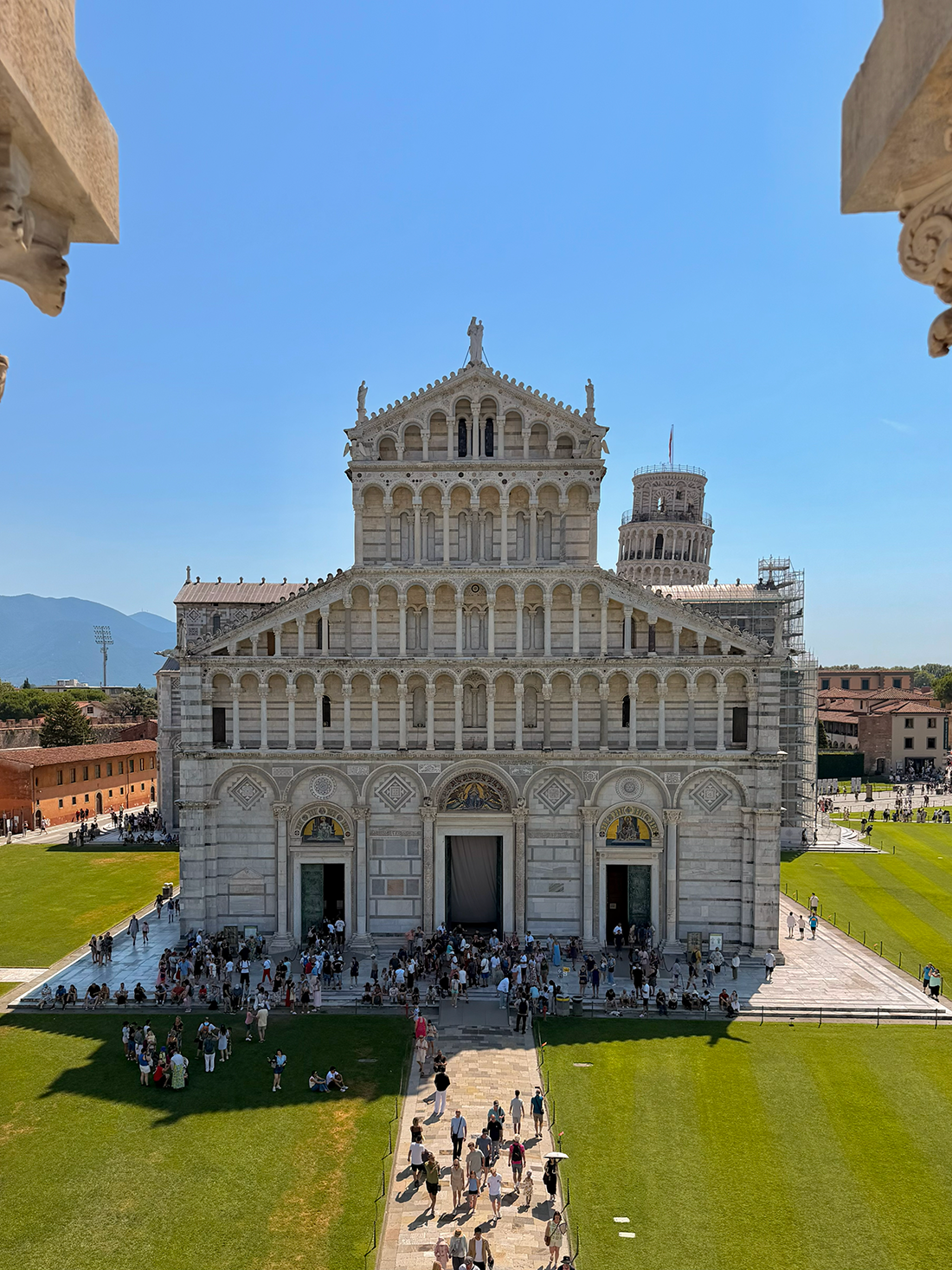
Living and working in Cortona, a historic city with Etruscan origins and medieval and Renaissance architecture, also gave students an opportunity to experience archaeology as part of a living community. The city’s language, food, landscape and cultural traditions became part of the broader learning experience.
Yrigoyen said seeing those relationships firsthand helped her appreciate how much archaeological research depends on the people and organizations connected to a site. Local partnerships influenced where the team could conduct research, what it could investigate and how its findings could be shared.
The experience also strengthened her interest in pursuing graduate study and a career in anthropology, research and teaching. By combining hands-on fieldwork with digital documentation and community-engaged research, the program gave her experience she can continue building on at Cal Poly Pomona and beyond.
Through the Cortona field school, she returned with expanded technical skills, a deeper understanding of archaeological research and a renewed appreciation for the connections between the past and the communities that continue to shape its interpretation.
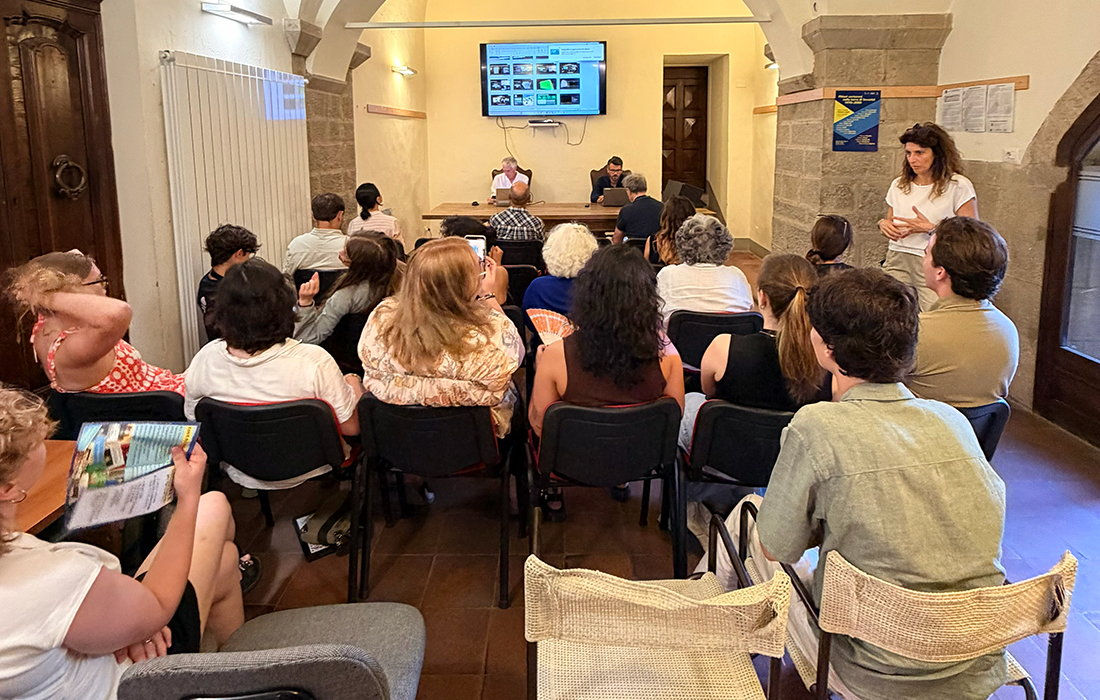
At the end of the field season, researchers presented their work at MAEC, giving community members an opportunity to learn about the project and ask questions. For Yrigoyen, sharing the results with the people who had supported the research reinforced the importance of connecting archaeological discoveries with the communities whose histories and landscapes they help illuminate.
“I didn’t expect this level of collaboration,” Yrigoyen said. “I came home with much stronger field skills, but the bigger lesson that I learned, what I was enlightened by, was understanding archaeology as a creative and collaborative process.”