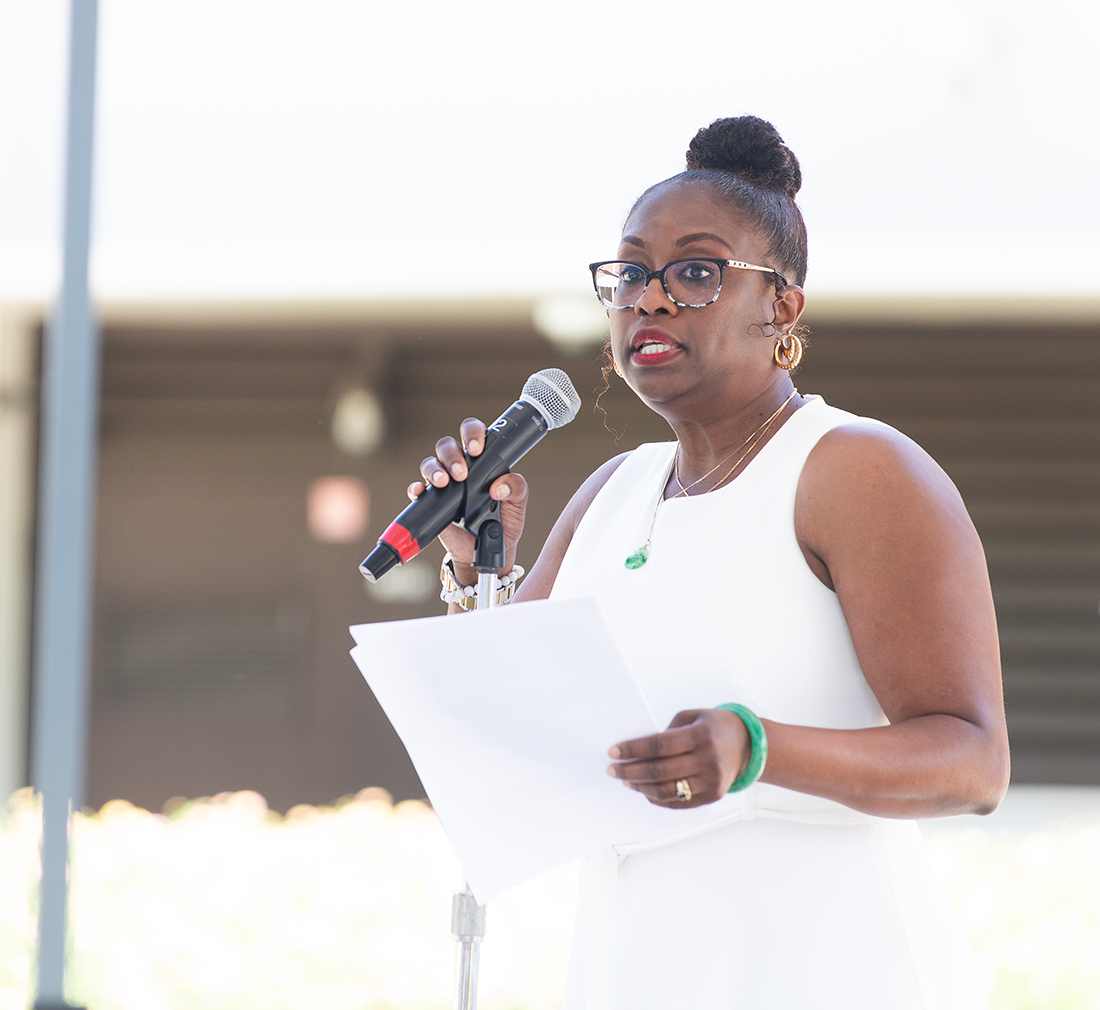
CPP MLK Plaque Rededication Event Includes Call to Action

What began as a happenstance discovery of a forgotten plaque honoring the Rev. Martin Luther King Jr. turned into an opportunity for the campus to celebrate the slain civil rights leader’s contribution to bending the moral arc of the universe a little more toward justice.
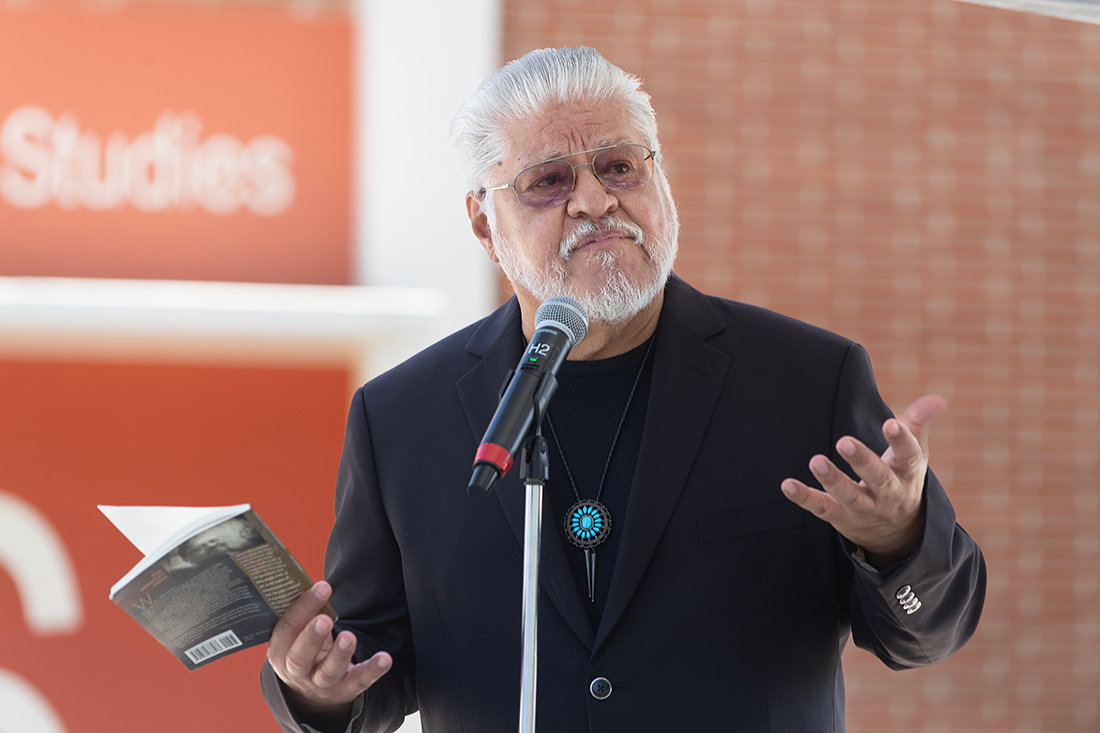
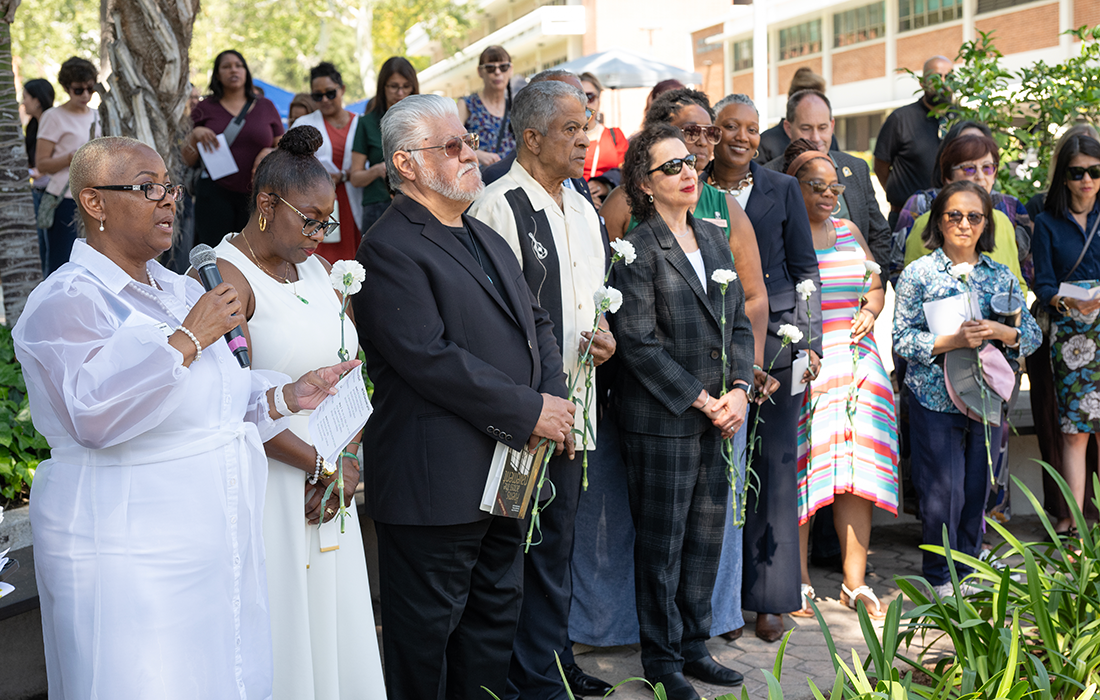 Faculty, staff, students, alumni and friends of Cal Poly Pomona gathered March 25 for the campus event, “From Monument to Movement: Advancing MLK’s Legacy Through Community and Collective Action,” to not only remember King, but also to call for the continued push for justice, equity and progress. The event included speeches, poetry readings, including one by noted author, poet and activist Luis J. Rodriquez, and a performance of “We Shall Overcome” in the University Quad, just a few steps away from the now relocated and refurbished plaque.
The plaque, previously outside of Building 6, was rediscovered in 2024, refurbished and moved.
The College of Education and Integrative Studies’ (CEIS) Afrofuturism Initiative, led by CEIS Dean Jenelle Pitt-Parker, hosted the event.
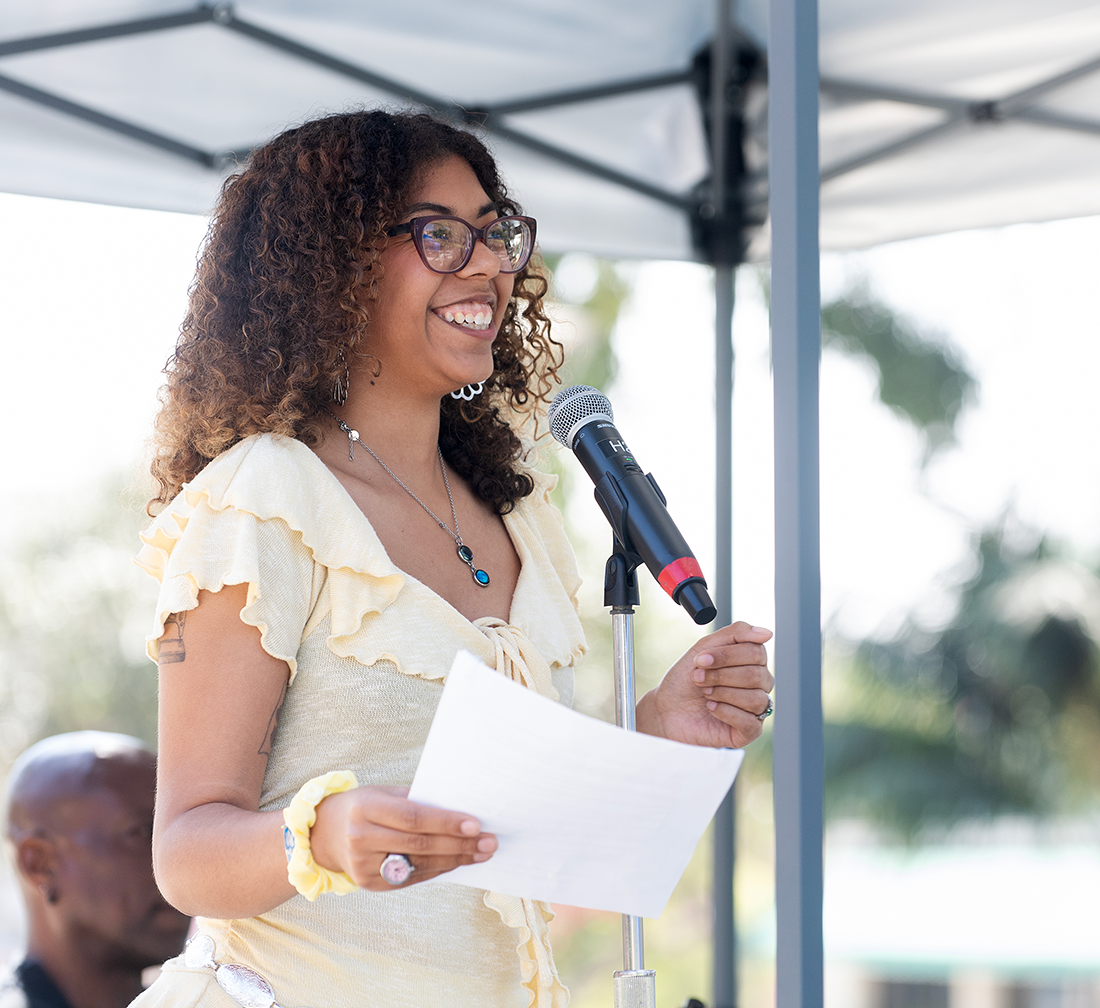
ASI Vice President Bia Machain spoke of King’s vigilant fight for freedom, justice and equality and how it is important to see it as a call to action in an ongoing battle to create a more equitable society.
“As a Black woman navigating spaces that were not built with me in mind, I feel the weight and privilege of what Dr. King fought for every day. The opportunities I have, the ability to lead, to advocate, to be heard are all direct results of the sacrifices of those made before me,” Machain said. “Dr. King’s legacy has taught me that leadership is not about a position. It is about purpose, and that purpose must always be rooted in justice service and community. Honoring his legacy means more than admiration. It means engagement. It means protecting the vulnerable, advocating or equity, challenging injustice when we see it and refusing to accept inequality as inevitable.”
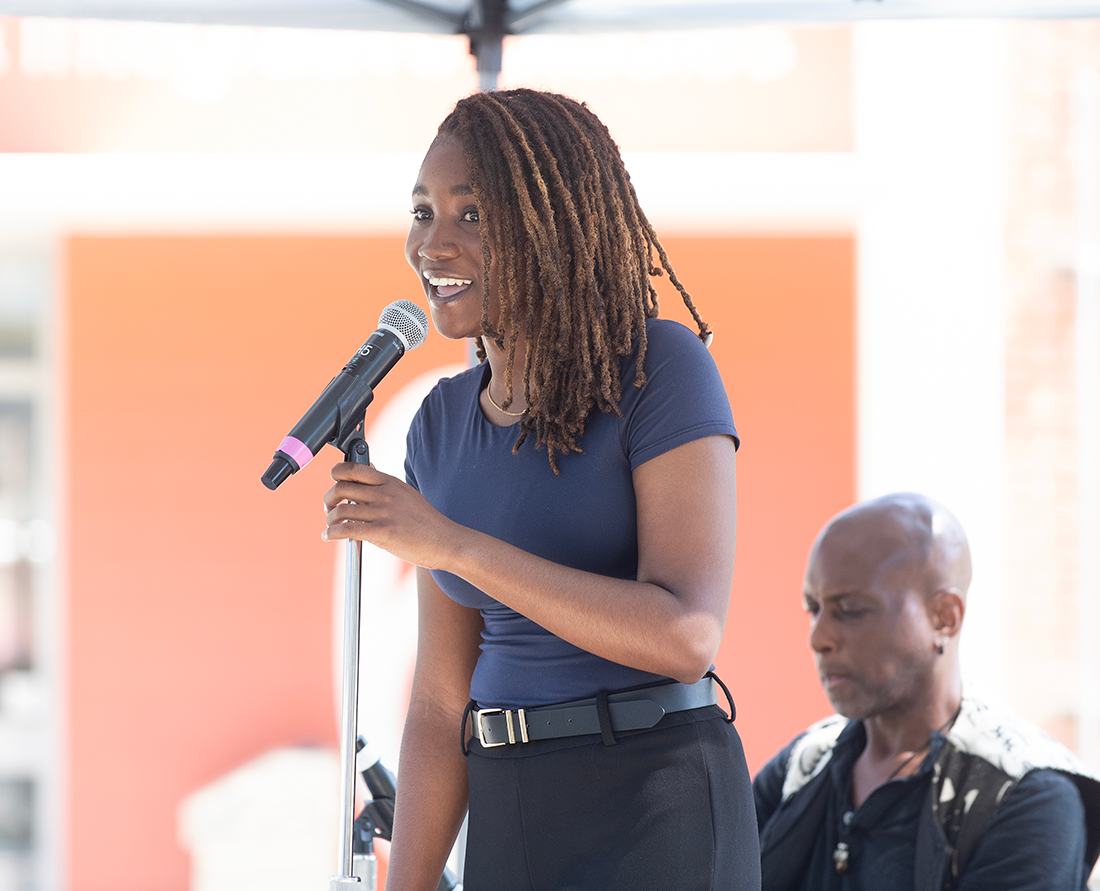
DeVoneia Jordan (’25, doctorate in educational leadership), who serves as a lead career coach liaison for the College of Science, also wrote a poem for the occasion and delivered some words about the plaque rededication and the importance of continuing the work King started.
“We are here to engage through reflection through poetry through music and through collective action because change has never come from silence,” she said. “It has always come from voices willing to rise. We are here to build community, to create a space where students, faculty, staff and community partners see themselves not as separate parts, but as a collective force committed to belonging and shared stewardship. And we are here to be inspired, not just by the dream Dr. King spoke of, but by the work that still remains because if we are honest, the work is not yet finished.”
Jordan was a part of the Afrofuturism program as doctoral student and heard about the plaque, which was previously located outside of Building 6. Through conversations with the campus community in 2024, she learned about the plaque’s origins — how it was placed at the base of a eucalyptus tree by Black students more than 30 years ago. Since then, the space was overgrown by vines, so Jordan made the restoration of the plaque the focus of her required project for the scholarship program.
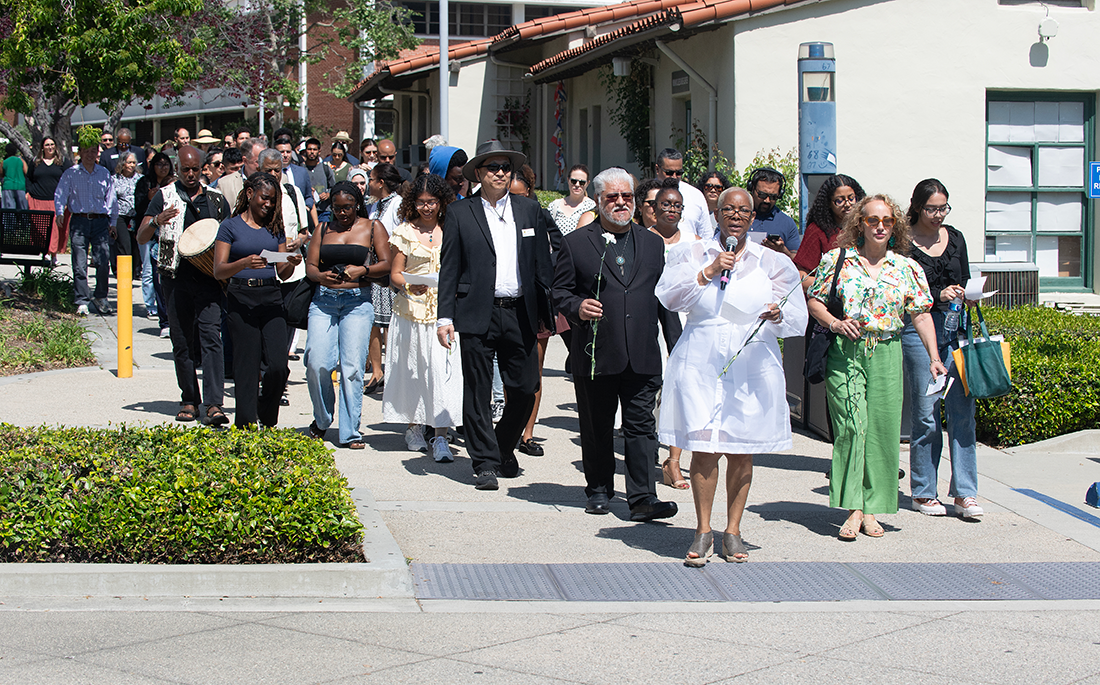
During the event, participants filled out commitment cards outlining what they hoped to see for civil rights in the future and the role they will play in advancing it. The event also included a march from the University Quad to the Bronco Student Center, with participants chanting, “Where does peace start? Peace starts with us,” followed by a luncheon with speeches by student leaders, representatives from the Black Faculty Staff Association, the CSU and the Pasadena chapter of the NAACP.
Erianah Benjamin, the ASI senator for the College of Letters, Arts, and Social Sciences, shared her thoughts about the impact of King’s legacy and the importance of holding on to hope and courage.
 “We are living in a time that can feel heavy, a time where progress does not always feel guaranteed and where speaking about equity can still be met with resistance,” Benjamin said. “But even in that, I find hope and community. I find hope in students who continue to organize, advocate and refuse to be silent, and I find hope in knowing that change has never come from a place of comfort. It always comes from courage.”
Alumnus Clark Rucker (’83, engineering technology) recalled discussions about memorializing King with a plaque on campus while he was a student. He spoke of James Bell, the first Black dean of the School of Arts (the predecessor of the College of Letters, Arts, and Social Sciences) and a one-time acting university president, as one of the key figures at CPP in support of the Black student-led efforts to get the plaque installed.
“Black students on campus wanted to acknowledge Dr. King’s legacy, the things that he embodied and what has been memorialized about him in every speech that we have heard and writing we have seen,” Rucker said. “The students wanted to get that acknowledged by the school as being important and I’m here to tell you it is important. Dr. Bell heard and he acted, recommending the funding and alignment with the Black Student Union on the mission. This memorial plaque isn’t just an acknowledgment of Dr. King’s impact on our country, but humankind’s history.”
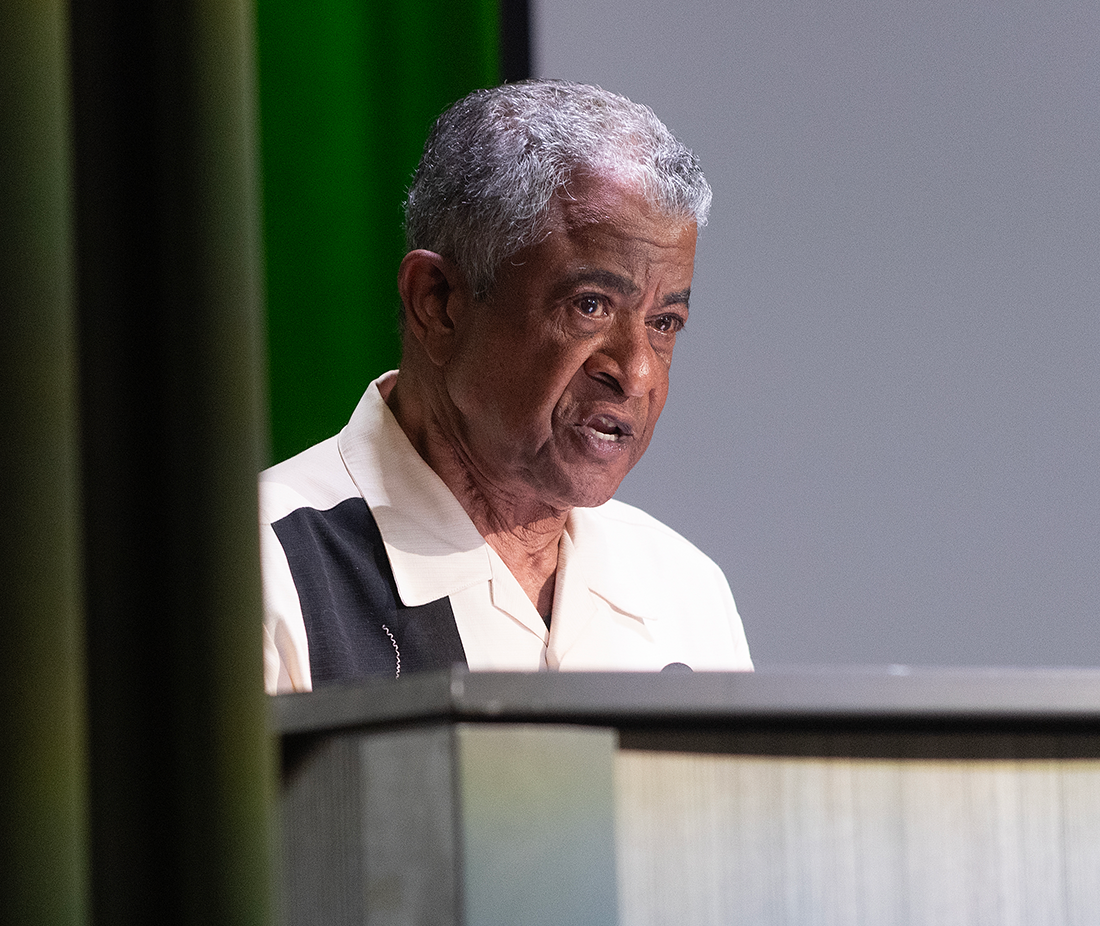
Actor and author Tucker Smallwood gave a keynote address, recounting his life abroad in Greece as a youth, his time in the military and the push for civil rights led by King and other activists. He recalled his college days at Antioch College in Yellow Springs, Ohio, on a campus with very few Black students and no barbers in town willing to cut his hair. He and other students took part in a sit-in protest that included some not affected by the refusal to be served.
“This is important. A. Only a handful of students were adversely affected by this discrimination. B. All of the other students (not affected) were willing to stand up, protest and demonstrate on behalf of only a few facing discrimination,” Smallwood said. “Think about that because that is what it takes to counter racism and discrimination.”