Books
Living Our Religions
 The population of the South Asian Diaspora in the US is over 2.5 million people. Yet in a post 9/11 climate of opinion, little is known about this group beyond images of Muslim and Hindu fundamentalists and terrorists. This is particularly true of women where simplistic assumptions about veils and subordination obscure the voices of the women themselves. Rarely are Hindu and Muslim American women—many of whom are social workers, physicians, lawyers, academics, students, homemakers—asked about their everyday lives and religious beliefs. Living our Religions brings out these hidden stories from South Asian American women of Bangladeshi, Pakistani, Indian and Nepali origin. Their accounts show how diverse and culturally dynamic religious practices emerge within the intersection of histories and politics of specific locales. The authors describe the race, gender, and ethnic boundaries they encounter; they also document how they resist and challenge these boundaries. Living our Religions cuts through the myths and ethnocentrism of popular portrayals to reveal the vibrancy, courage and agency of an “invisible” minority.
Muslims In Motion
 In Muslims in Motion, Nazli Kibria provides a comparative look at Bangladeshi Muslims in different global contexts--including Britain, the U.S., the Middle East, and Malaysia. Kibria examines international migrant flows from Bangladesh, and considers how such migrations continue to shape Islamization in these areas. Having conducted more than 200 in-depth interviews, she explores how, in societies as different as these, migrant Muslims, in their everyday lives, strive to achieve economic gains, sustain community and family life, and realize a sense of dignity and honor. Muslims in Motion offers fresh insights into the prominence of Islam in these communities, especially an Islam defined by fundamentalist movements and ideologies. Kibria also focuses on the complex significance of nationality--with rich analyses of the diaspora, the role of gender and class, and the multiple identities of the migrants, she shows how nationality can be both a critical source of support and also of difficulty for many in their efforts to attain lives of dignity. By bringing to life a vast range of experiences, this book challenges prevailing stereotypes of Muslims.
Gendering the Spirit
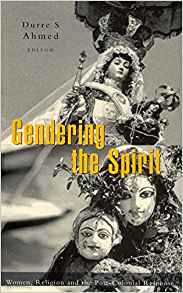 This book is about the devotional subcultures which women have always created. Its authors draw their evidence and inspiration from the Hindu, Buddhist, Islamic and Christian traditions of Asia, in particular. Here we find women as healers, goddesses, saints, gurus, nuns and heretics. One thing these remarkable women all share is their defiance of orthodoxy and fundamentalist interpretations oppressive of women. Instead they have created religious alternatives which appeal profoundly to huge numbers of women. Not that these alternatives, as the authors who have written this book show, are accepted by the mainly male religious establishment. Indeed women's rejection of patriarchal interpretations of religion and their creative revisioning of religion in their daily spiritual practice can be a very dangerous activity. In addition to fascinating glimpses of little known aspects of the feminine within the great religions, this book is also a reflection of the newly emerging spirituality of women in Asia as they experience and respond to the political and social injustices they confront.
In the Beginning is Desire
 By a Bengali woman and scholar, study of texts and the role of Kali within Indian culture. excellent pre-reviews. Astrong feminist statement,careful scholarship. Discussion of Rig Veda, Tagore's Chandalika, Karnad's Hayavandana, Chugtai's Crooked lIne, Devi, It Does Not Die, Eliade, Bengal Nights, Tagore, Gora,Roy, Good of Small Things.
Absent Mother God of the West
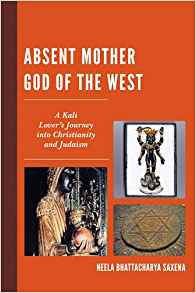 This book about the missing Divine Feminine in Christianity and Judaism chronicles a personal as well as an academic quest of an Indian woman who grew up with Kali and myriad other goddesses. It is born out of a women's studies course created and taught by the author called The Goddess in World Religions. The book examines how the Divine Feminine was erased from the western consciousness and how it led to an exclusive spiritually patriarchal monotheism with serious consequences for both women’s and men’s psychological and spiritual identity. While colonial, proselytizing and patriarchal ways have denied the divinity inherent in the female of the species, a recent upsurge of body-centric practices like Yoga and innumerable books about old and new goddesses reveal a deep seated mother hunger in the western consciousness. Written from a practicing Hindu/Buddhist perspective, this book looks at the curious phenomenon called the Black Madonna that appears in Europe and also examines mystical figures like Shekhinah in Jewish mysticism. People interested in symbols of the goddess, feminist theologians, and scholars interested in the absence of goddesses in monotheisms may find this book’s perspective and insights provocative.
Conditioning and Empowerment of Women
 Preface List of Contributors Introduction Women's Capabilities and Social justice Ecosociology of man-Woman Relation : Towards Risking A Comprehensive Paradigm Women's Question: The Three Distinct Viewpoints Rabindranath and Gender Politics Revolutions: Parampara: Women Society, Women in Bengal and Brahmo Samaj:Historicity and Present Relevance Looking Beyond the Individual: Interaction of Structural Factors and Agency in the Empowrment of Women A Micro- Study of Women and Agency in (Chhattisgrah) Region in madhya Pradesh Women in Environmental Management Women in Environmental Managment and Status in Joint Forest Managment Empowerment of Women Through Panchyati Raj Institution I Find My Voice- A Personal Narrative Index
Negotiating Ethnicity
 In the continuing debates on the topic of racial and ethnic identity in the United States, there are some that argue that ethnicity is an ascribed reality. To the contrary, others claim that individuals are becoming increasingly active in choosing and constructing their ethnic identities.Focusing on second-generation South Asian Americans, Bandana Purkayastha offers fresh insights into the subjective experience of race, ethnicity, and social class in an increasingly diverse America. The young people of Indian, Pakistani, Bangladeshi, and Nepalese origin that are the subjects of the study grew up in mostly white middle class suburbs, and their linguistic skills, education, and occupation profiles are indistinguishable from their white peers. By many standards, their lifestyles mark them as members of mainstream American culture. But, as Purkayastha shows, their ethnic experiences are shaped by their racial status as neither “white” nor “wholly Asian,” their continuing ties with family members across the world, and a global consumer industry, which targets them as ethnic consumers.” Drawing on information gathered from forty-eight in-depth interviews and years of research, this book illustrates how ethnic identity is negotiated by this group through choice—the adoption of ethnic labels, the invention of “traditions,” the consumption of ethnic products, and participation in voluntary societies. The pan-ethnic identities that result demonstrate both a resilient attachment to heritage and a celebration of reinvention. Lucidly written and enriched with vivid personal accounts, Negotiating Ethnicity is an important contribution to the literature on ethnicity and racialization in contemporary American culture.
New Roots
 In this compelling look at second-generation Indian Americans, Khyati Y. Joshi draws on case studies and interviews with forty-one second-generation Indian Americans, analyzing their experiences involving religion, race, and ethnicity from elementary school to adulthood. As she maps the crossroads they encounter as they navigate between their homes and the wider American milieu, Joshi shows how their identities have developed differently from their parents’ and their non-Indian peers’ and how religion often exerted a dramatic effect. The experiences of Joshi’s research participants reveal how race and religion interact, intersect, and affect each other in a society where Christianity and whiteness are the norm. Joshi shows how religion is racialized for Indian Americans and offers important insights in the wake of 9/11 and the backlash against Americans who look Middle Eastern and South Asian. Through her candid insights into the internal conflicts contemporary Indian Americans face and the religious and racial discrimination they encounter, Joshi provides a timely window into the ways that race, religion, and ethnicity interact in day-to-day life.
A Place at the Multicultural Table
 Multiculturalism in the United States is commonly lauded as a positive social ideal celebrating the diversity of our nation. But, in reality, immigrants often feel pressured to create a singular formulation of their identity that does not reflect the diversity of cultures that exist in their homeland. Hindu Americans have faced this challenge over the last fifteen years, as the number of Indians that have immigrated to this country has more than doubled. In A Place at the Multicultural Table, Prema A. Kurien shows how various Hindu American organizations--religious, cultural, and political--are attempting to answer the puzzling questions of identity outside their homeland. Drawing on the experiences of both immigrant and American-born Hindu Americans, Kurien demonstrates how religious ideas and practices are being imported, exported, and reshaped in the process. The result of this transnational movement is an American Hinduism--an organized, politicized, and standardized version of that which is found in India. This first in-depth look at Hinduism in the United States and the Hindu Indian American community helps readers to understand the private devotions, practices, and beliefs of Hindu Indian Americans as well as their political mobilization and activism. It explains the differences between immigrant and American-born Hindu Americans, how both understand their religion and their identity, and it emphasizes the importance of the social and cultural context of the United States in influencing the development of an American Hinduism.