A Student’s Startup Journey From Dorm Room to San Francisco
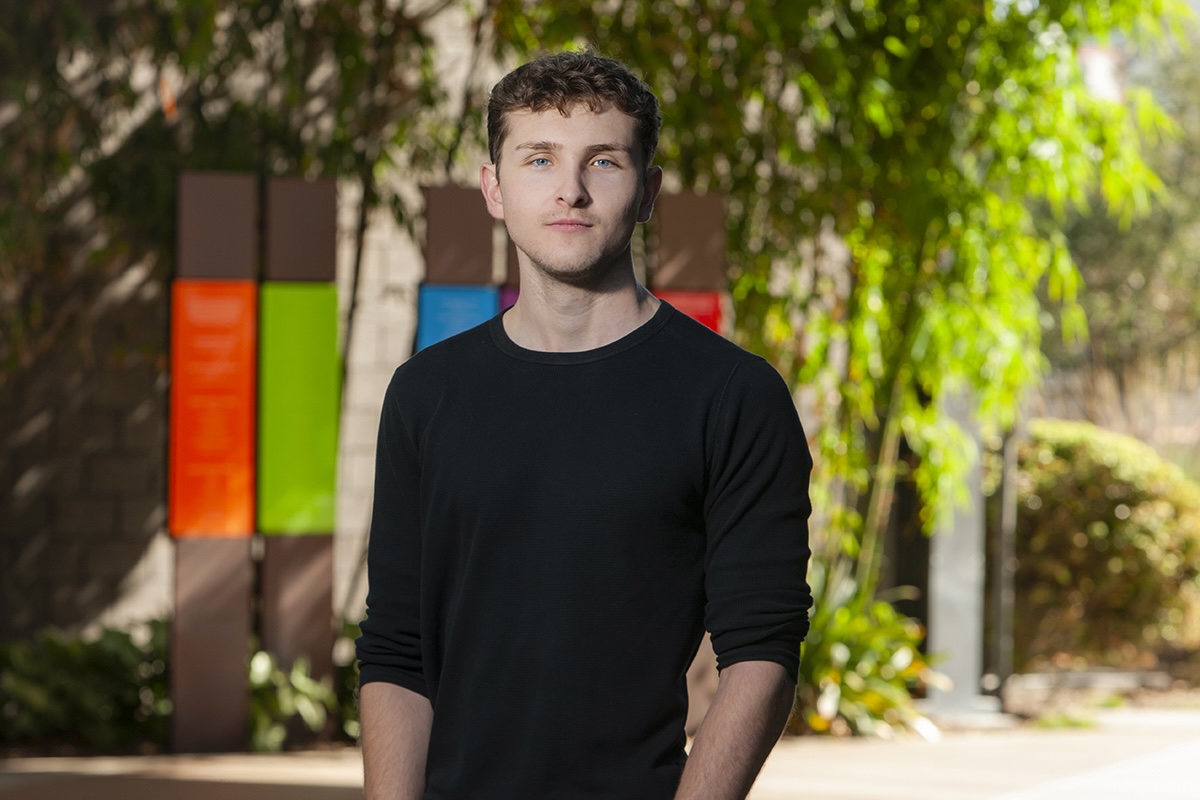
A Y Combinator hackathon win, a $200,000 check, and a string of hard pivots taught Logan Moray (’26, marketing management) that you only fail when you give up.
By Mike Landers
Logan Moray had 10 minutes.
Two angel investors had just offered him and his co-founder $200,000 for a piece of TrendSweep, the social media trend tool he dreamed up in his first-year dorm room at California State Polytechnic University, Pomona (CPP). Days earlier, they had been one of about 200 teams at a Y Combinator hackathon in San Francisco. As an American technology startup accelerator and venture capital firm, Y Combinator has invested in more than 5,000 companies since its founding in 2005.
“My co-founder and I talked it over, and we were like, ‘You know what? We might not get this opportunity again,’” Moray says.
They said yes. That same day, Moray packed his things, snapped one last photo, and drove from Pomona to San Francisco.
What followed was the kind of education no syllabus could script: months spent chasing a bigger idea, three days on a tuna boat off the coast of Mexico, and a solo rebuild that finally put TrendSweep in the hands of real users.
Looking for a Community, Building a Product
It all began in the Sequoia dorm tower on campus in Pomona. CPP’s focus on marketing and entrepreneurship options within the College of Business Administration (CBA) motivated Moray to enroll, and the school’s polytechnic promise of “Become by Doing” sealed it. Being an hour from the beach and a half hour from downtown LA didn’t hurt, either.
“The fact it was a polytechnic school and the fact that it had promised to teach us by actually doing the things that we wanted to do was a big reason why I chose this university,” he says. “I personally believe in learning by experience. I think it’s probably the most valuable thing that any university can offer to its students.”
What Moray struggled to find was a community of fellow entrepreneurs. From his dorm room, he posted motivational content online, hoping to find other people who wanted to build. At the same time, he was running Expon, an AI automation and consulting business he had started in high school. Moray cold-called local businesses, and once
they were on board, he went inside their operations, found the inefficiencies, then built and implemented AI solutions to fix them.
Between the cold calls and client work, he spotted a gap. Small businesses and aspiring creators wanted to post on social media but didn’t know what to post, and nobody can stay online 24/7 to catch every trend.
“So, I thought, you know what? I want to build something that can find those trends on social media so that businesses and content creators can stay up to date with what is happening in their niche,” he says.
Moray wanted to move fast, and he hadn’t yet built the AI software to identify trends automatically. So, to test the product and start collecting feedback, he went the manual route first. He papered campus with flyers reading “I will pay you to doomscroll” and hired a few students to send him what they found.
The AI version would have to wait for San Francisco.
The Hackathon That Changed Everything

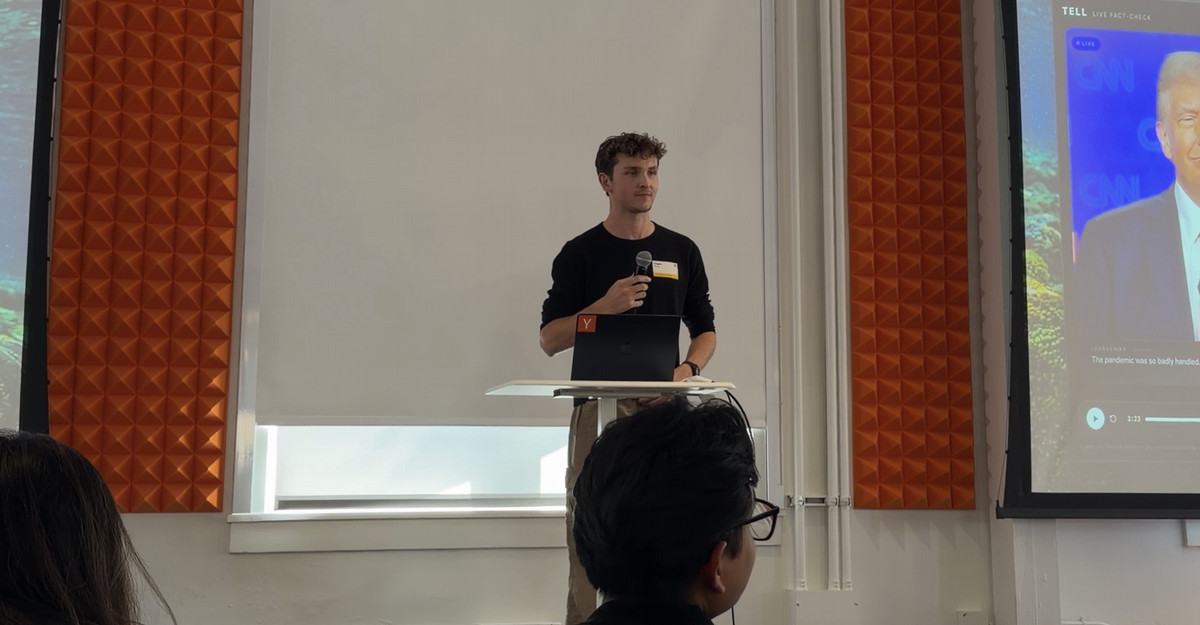
Moray and his co-founder were accepted and invited to participate in the January 2026 Y Combinator hackathon in San Francisco, and they knew the competition would be tough and featured teams from across the globe, including Europe, Asia and the Middle East. At first, they didn’t know what to build. Then they settled on the piece TrendSweep was still missing. Over the 24-hour event, they built an MVP of the AI trend identification system that Moray’s paid doom scrollers had been standing in for, then watched as team after team was knocked out.
“And then, shockingly, we ended up as first place,” Moray says. “I don’t even know how to explain it. It was unreal.” The prize was a guaranteed Y Combinator interview. At the after parties, one introduction led to three more, then three more, until the offer landed: $200,000, and 10 minutes to decide.
Chasing a Bigger Vision
With funding in hand, the team set out to make TrendSweep bigger. Over the next few months, the trend tool grew into an ambitious consumer intelligence platform for brands. The team cycled through one small pivot after another, and each one made the product more complicated, including a push to tap social media data that the platforms keep locked away.
For a while, it felt like progress. Then the warning signs piled up. Brands weren’t asking for what the team was building, and the cost of building it kept climbing. Coming to terms with what that meant took time.
“The mistake was, after we raised, we decided to chase a bigger vision that no one really asked for, just because we wanted to feel more venture-backable, feel like a bigger idea,” he says.
Once the team accepted that the platform wasn’t working, they stepped back and took a hard look at a completely different problem: maritime drones for commercial fishing, an idea from a prospective partner whose family fished for a living.
Out at Sea
Moray’s job was to validate it. He hit the San Francisco docks at 4 a.m., and within days he talked his way onto a commercial tuna boat, spending 72 hours off the coast of Mexico in international waters testing the drone and learning how fishermen do business. “It wasn’t very fun, but it was very useful,” he says. “And it was very valuable.”
What he learned at sea settled the question. The industry was fragmented, seasonal and heavily regulated. The team shelved the idea, the prospective partner moved on and so did his co-founder. For the first time since the hackathon, Moray was on his own.
“But I did not want to give up,” Moray says. “My motto is, ‘You only fail when you give up.’”
Back to the Beginning
With no co-founder and no clear direction, Moray went looking for answers and took a class on product-market fit that reframed everything. “One thing that I learned was that we never finished our initial product,” he says. “The second that we got an angel investment, we decided to change the product into something that we hadn’t validated.”
That realization pointed him back to the original idea, which still had real demand. Using the AI and coding skills he had taught himself, Moray rebuilt TrendSweep solo over the summer, had it in the App Store in about two and a half weeks and reached roughly 1,000 users. Then he called and emailed as many of them as he could for feedback.
The feedback pointed somewhere new. Most of his users turned out to be solo founders and small businesses using social media in place of paid ads, and that insight is now driving TrendSweep’s next chapter. “It’s taking that opportunity and understanding the fact that there are going to be a lot more small to medium-sized businesses and giving them the opportunity to compete with the giants,” he says.
Finishing What He Started
Today, Moray runs TrendSweep while finishing his degree at Cal Poly Pomona. He will graduate in May in marketing management, finally taking the upper-division marketing courses he had waited for, including classes that push students to use AI. “I value the idea of finishing what you started,” he says. “You change the direction; you never change the goal.”
At a Glance: The TrendSweep Timeline
· First year at CPP: The TrendSweep idea is born in a Sequoia dorm room.
· January 2026: First place among about 200 teams at a Y Combinator hackathon.
· Days later: A $200,000 angel investment and a move to San Francisco.
· Spring 2026: Months of building consumer intelligence for brands, then a maritime drone test at sea.
· Summer 2026: A solo rebuild and roughly 1,000 users.
· Fall 2026: Building TrendSweep for solo founders and small businesses while finishing at CPP.
Moray’s Advice for Student Builders
· Learn AI now: “Just learn as much about how AI can integrate into the direction you want to go. Because sadly, AI is here to stay, and if you don’t understand it, you’re going to be falling behind.”
· Reframe failure: “Whether I fail or whether I succeed, I’m winning either way because the lessons learned are investments in myself.”
· Listen to your users: “Ship the MVP. Get customers, get feedback from those customers, iterate. And repeat.”
Moray sees the current landscape as one of opportunity for students. “Now is probably the best time in the history of the world to be graduating from a university,” Moray says. “For those who want to go on and build companies, this is the best opportunity anyone has ever had, coupled with the age of AI and with the frontier models giving everyone the ability to build whatever they want with almost zero experience,” he says. “Most coders don’t write a single line of code anymore. It’s all AI. So, with that new ability, it has lowered the bar to create a company and chase your dreams.”
When we asked to share his story, Moray saw it as a way to give back to the community he went looking for as a first-year student.
“If anything, I hope this story helps inspire students at Cal Poly Pomona to come out and build what they want to build, to chase their dreams in entrepreneurship, and grow that startup community here on campus, so that the future students who want to build stuff don’t feel alone in their ambitious startup dreams,” he says.
Pivot by pivot, that’s what it means to Become by Doing. Connect with Logan Moray on LinkedIn: https://www.linkedin.com/in/loganmoray/
Check out his latest endeavor here.