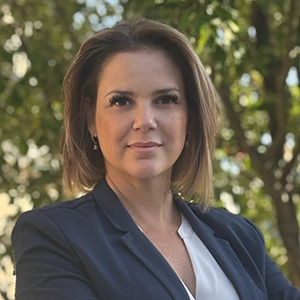
Désirée Gellatly
Assistant Professor
Department of Animal & Veterinary Sciences, Huntley College of Agriculture
Phone number
(909) 869-2793
Office location
Office hours
T TH | 9 AM - 11:30 AM
About me
Biography
Education
Postdoctoral Fellow, Agriculture and Agri-Food Canada, Lethbridge, Alberta, Canada (2019)Research
Overview
Publications
-
Jawad H, Gellatly D, Lei Y, Thompson S, Borzouei S, Osonowo O, Gilleard J S, Miar Y, Goldansaz S A, Manafiazar G. Candidate serum metabolite biomarkers of sub-clinical Haemonchus contortus infection in sheep. Sci Rep. 2025 October; 15, 34203. https://doi.org/10.1038/s41598-025-15690-6
-
Gellatly D, Lei Y, Neale A, Smith L, Edgar E, Bloomfield B, Elliot B, Wenger I, Thompson S. Impacts of maternal bovine appeasing substance administered at weaning on behavioral and physiological adaptation of beef heifers to the feedlot. Animals. 2025 September; 15, 2788. https://doi.org/10.3390/ani15192788
-
Osonowo O, Lei O, Markus S, Miar Y, Thompson S, Thompson A, Paganoni B, Rose G, Jawad H, Gellatly D, Manafiazar G. Optimization of the feed intake test period in sheep production. Canadian Journal of Animal Science. Just-IN https://doi.org/10.1139/cjas-2025-0025
-
Gellatly D, Schwartzkopf-Genswein KS, Nordi WM, Silver T, Jelinski M. Clinical progression of a case of toe-tip necrosis syndrome in a feedlot steer. Can Vet J. 2025 May;66(5):514-522. https://pubmed.ncbi.nlm.nih.gov/40322658/
-
Meléndez DM, Marti S, Gellatly D, Schwartzkopf-Genswein KS. Can we mitigate pain associated with castration in beef cattle at early ages? -What it means for animal welfare, productivity and consumer perception: a review. Can J Anim Sci. 2025 July; 105:1-31 https://doi.org/10.1139/cjas-2024-0033
-
Wong NST, Malmuthge N, Gellatly D, Nordi WM, Alexander T, Polo RO, et al. Characterization of the hoof bacterial communities in feedlot cattle affected with digital dermatitis, foot rot or both using a surface swab technique. Anim Microbiome, 6, 2, 2024. https://doi.org/10.1186/s42523-023-00277-1
-
Gellatly D, Marti S, Pajor EA, Meléndez DM, Moya D, Janzen ED, et al. Effect of a single subcutaneous injection of meloxicam on chronic indicators of pain and inflammatory responses in 2-month-old knife and band-castrated beef calves housed on pasture. Livestock Science, 244, 2021. https://doi.org/10.1016/j.livsci.2020.104305
-
Gellatly D, Cyrillo JN S G, Sant'Anna AC, Valente TS, Schwartzkopf-Genswein KS, Paranhos da Costa MJR. Flight speed as an indicator of Zebu cattle growth performance and suitability to the feedlot environment. Animal Production Science, 60, 560-566, 2020. https://doi.org/10.1071/AN18785
-
Macitelli F, Braga JS, Gellatly D, Paranhos da Costa MJR. Reduced space in outdoor feedlot impacts beef cattle welfare. Animal, 14, 12, 2588-2597, 2020. https://doi.org/10.1017/S1751731120001652
-
Nordi WM, Marti S, Gellatly D, Meléndez DM, González LA, McAllister, et al. Effect of preemptive flunixin meglumine and lidocaine on behavioral and physiological indicators of pain post-band and knife castration in 6-month-old beef calves. Livestock Science, 230, 103838, 2019. https://doi.org/10.1016/j.livsci.2019.103838
-
Meléndez DM, Marti S, Pajor EA, Sidhu PK, Gellatly D, Moya D, et al. Pharmacokinetics of oral and subcutaneous meloxicam: effect on indicators of pain and inflammation after knife castration in weaned beef calves. PLoS ONE, 14, 5, e0217518, 2019. https://doi.org/10.1371/journal.pone.0217518
-
Marti S, Meléndez DM, Pajor EA, Moya D, Gellatly D, Janzen ED, Schwartzkopf-Genswein KS. Effect of a single dose of subcutaneous meloxicam before knife castration alone or combined with hot-iron branding on scrotal healing, inflammatory response, and behaviour in 2-month-old beef calves. Canadian Journal of Animal Science, 2018. https://doi.org/10.1139/cjas-2018-0016
-
Marti S, Meléndez DM, Pajor EA, Moya D, Gellatly D, Janzen ED, Schwartzkopf-Genswein KS. Effects of a single dose of subcutaneous meloxicam prior to band or knife castration in 1-wk-old beef calves: II. Inflammatory response and healing. J Anim Sci, 96, 4136-4148, 2018. https://pmc.ncbi.nlm.nih.gov/articles/PMC6162621/
-
Meléndez DM, Marti S, Pajor EA, Sidhu PK, Gellatly D, Moya D, et al. Effect of meloxicam and lidocaine administered alone or in combination on indicators of pain and distress during and after knife castration in weaned beef calves. PLoS ONE, 13, 11, e0207289, 2018. https://doi.org/10.1371/journal.pone.0207289
-
Meléndez DM, Marti S, Pajor EA, Moya D, Heuston CE M, Gellatly D, et al. Effect of subcutaneous Meloxicam on indicators of acute pain and distress after castration and branding in 2-mo-old beef calves., J Anim Sci, 96, 3608-3621, 2018. https://doi.org/10.1093/jas/sky245
-
Meléndez DM, Marti S, Pajor EA, Moya D, Gellatly D, Janzen ED, Schwartzkopf-Genswein KS. Effect of a single dose of meloxicam prior to band or knife castration in 1-wk-old beef calves: I. Acute Pain. J Anim Sci, 96, 1268-1280, 2018. https://pubmed.ncbi.nlm.nih.gov/29506258/
-
Marti S, Meléndez DM, Pajor EA, Moya D, Heuston CE M, Gellatly D, et al. Effect of band and knife castration of beef calves on welfare indicators of pain at three relevant industry ages: II. Chronic pain. J Anim Sci, 95, 4367-4380, 2017. https://doi.org/10.2527/jas2017.1763
-
Marti S, Schwartzkopf-Genswein KS, Janzen ED, Meléndez DM, Gellatly D, Pajor EA. Use of topical healing agents in scrotal wounds after surgical castration in weaned calves. J Can Vet, 58, 1081-1085, 2017. https://pmc.ncbi.nlm.nih.gov/articles/PMC5603928/
-
Meléndez DM, Marti S, Pajor EA, Moya D, Gellatly D, Janzen ED, Schwartzkopf-Genswein KS. Effect of timing of subcutaneous meloxicam administration on indicators of pain after knife castration of weaned calves. J Anim Sci, 95, 5218-5229, 2017. https://doi.org/10.2527/jas2017.1978
-
Meléndez DM, Marti S, Pajor EA, Moya D, Heuston CE M, Gellatly D, et al. Effect of band and knife castration of beef calves on welfare indicators of pain at three relevant industry ages: I. Acute pain. J Anim Sci, 95, 4352-4366, 2017. https://doi.org/10.2527/jas2017.1762
Book Chapters
-
Gellatly, D. 2024. Steaks and Stakes: Enhancing Beef Cattle Welfare and Productivity through Extension in Western Canada. In: International Symposium on Animal Welfare as Added Value in Livestock Production Chains (Paranhos da Costa MJR., Sant'Anna AC., eds.) [Published in Portuguese]. Funep.
-
Schwartzkopf-Genswein KS, Gellatly D, Meléndez DM, Marti S. 2018. Welfare issues in feedlot cattle. In: The Welfare of Cattle (Engle T., Klingborg D., and Rollin B., eds.). CRC Press, Taylor & Francis Group.
The Gellatly Lab - Applied Ethology Research Group
The Gellatly Lab – Applied Ethology Research Group focuses on understanding and improving the behavior, welfare, and human–animal interactions of farm and companion animals. Our research integrates applied ethology, animal welfare science, and practical management to generate evidence-based solutions that enhance animal well-being, productivity, and sustainability. Through student-centered research, interdisciplinary collaboration, and industry engagement, the lab translates behavioral science into real-world impact across livestock and companion animal systems.
Meet our Student Members!
1- Cynthia Hernandez - MSc. candidate
![]() |
Cynthia was born in Oceanside, California, and began her academic journey at Northwest Vista College in San Antonio, Texas, where she pursued higher education as a first-generation college student. She earned her bachelor’s degree in Biology from California State Polytechnic University, Pomona in 2024.
Cynthia’s research interests focus on cattle reproduction, and she plans to pursue a Master’s degree with an emphasis on reproductive physiology, herd fertility management, and applied research in production systems. Her long-term goal is to work in the farm animal industry, contributing science-based solutions that improve reproductive efficiency and animal welfare.
Fun fact: Cynthia has been grooming dogs for over six years and is also a certified Zumba instructor who has taught classes at Cal Poly Pomona.
|
2- Ivette E. Aceves - MSc. candidate
TBA
3 - Stanley E. Nwada - MSc. candidate
TBA
