
STARS Profiles
The Faculty Mentor Research Stars (STARS) recognizes faculty members who have engaged students seeking a Learning-by-Doing experience at Cal Poly Pomona. These faculty members have helped mentor their students to conduct, present, and publish research; all the requirements for the Student Research Distinction.
Click on each Star Profile to Read More!
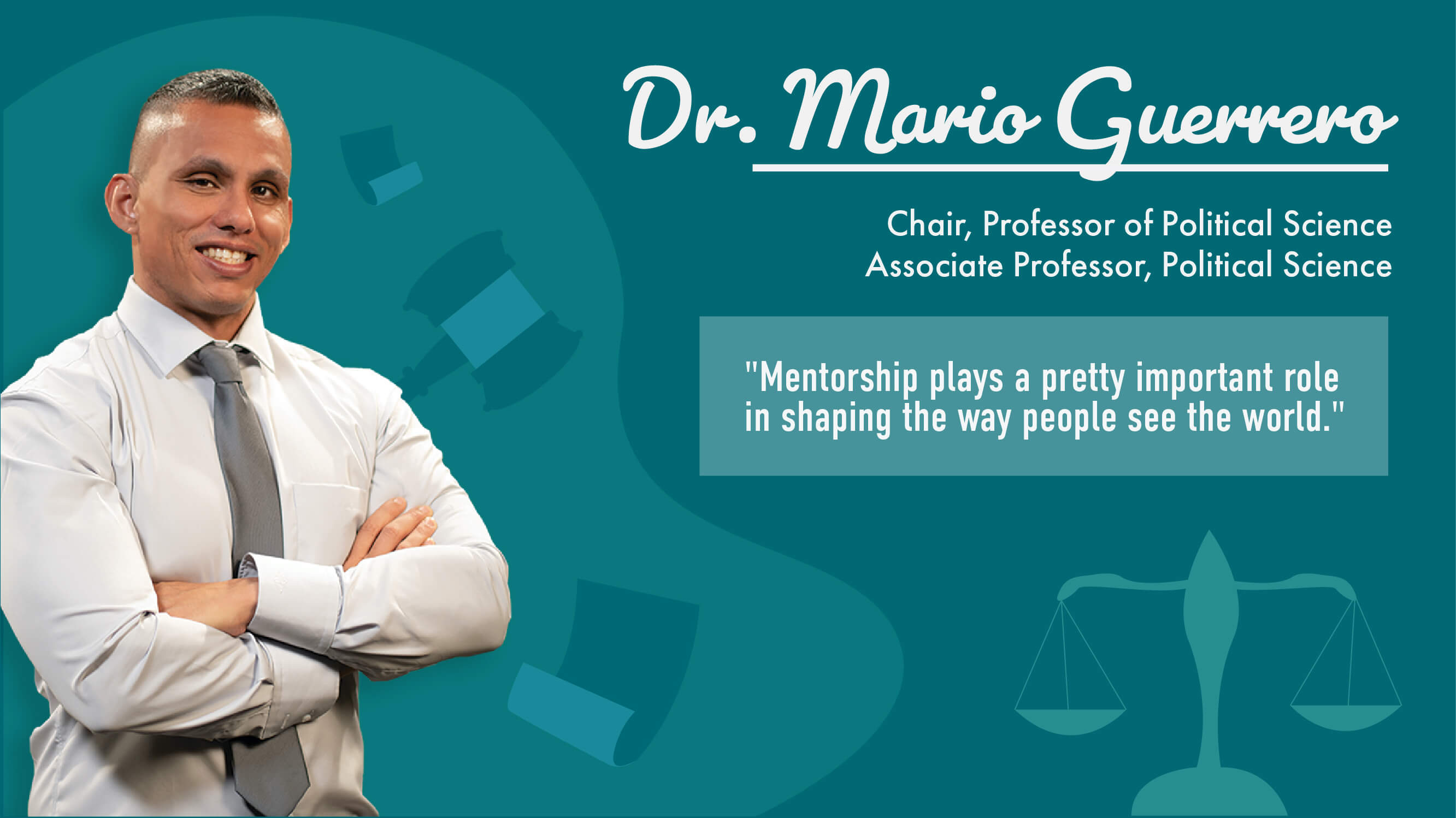
Dr. Mario Guerrero did not have the opportunities for research as an undergrad like they do at Cal Poly Pomona; he did not get involved in research himself until grad school.
He noted, “As an undergrad I thought college was just taking classes and getting grades, so being able to do research at Cal Poly Pomona as an undergrad and answer questions that you yourself can answer is just really powerful for the students.”
Guerrero came to Cal Poly Pomona fresh out of grad school after receiving his PhD and joined the Political Science Department as an Associate Professor. He began to teach courses on American politics including the presidency, Congress, and elections. His personal research includes work on campaign finance, emerging communication technologies, and political behavior.
While at Cal Poly Pomona, he noticed the difference from other colleges right away when it came to student research.
"Everywhere you go in academia people really are working on their projects alone, but when I came to Cal Poly Pomona there is definitely a culture of including undergraduates in that research," he said.
Guerrero soon became his department’s sole Thesis Advisor for the senior capstone class. The students finishing up their degrees would choose either a thesis or research internship in one of seven subfields in Political Science. Guerrero noted that the capstone served as a constant reminder to faculty that students needed to receive research experience early in their major. For this reason, the students would be better prepared for their senior year and post Cal Poly Pomona life.
Guerrero explained that his style of mentorship was all about the one-on-one relationship, and he tried to cultivate this from the start with each of his students. He found that each student benefited a lot from faculty mentorship, as well as the process working on an independent research project. Some of the benefits included increased introspection about their field of study, better academic stamina, and a growing curiosity about the world around them that could spark future research.
Over time, Guerrero’s relationship with his mentees shifted to more oversight, letting the students “fly” on their own. Some of the students he mentored are currently on the path to become professors themselves, joining PhD programs and positioning themselves as future mentors. Guerrero recalls the encouraging feeling this brings when the mentorship cycle comes full circle, comparing it to watching your kids grow up.
“You see them when they were like infants and struggling with basic concepts. Then, they email you and laugh about how easy it was when they started and how complicated it is now,” he said.
Guerrero has been deeply involved in his department for over eight years. He has watched the department and programs grow, going from five to 12 full time faculty with a total of five Thesis Advisors, instead of only himself. In 2019, Guerrero was appointed to the position of Department Chair for Political Science. This new role allows him to oversee the trajectory of the department and allow mentorship opportunities to continue to grow.
Moreover, Guerrero currently serves as a Faculty Fellow for the Office of the Undergraduate Research and is a member of the Western Political Science Association (WPSA) Executive Council. He is also the former president of the American Political Science Association Latino Caucus, a Ford Foundation Fellow, and RAND Faculty Leader.
These experiences and roles have helped Guerrero become the mentor and teacher-scholar he is today. In 2019, Guerrero was recognized as a STAR Mentor through the Faculty Mentor Research Stars (STARS) program for his mentorship of over 200 undergraduate students in the Political Science department.
Guerrero is grateful for this distinction and hopes that this accolade helps students know who to talk to at Cal Poly Pomona if they want to get involved in research. As a STAR Mentor, Guerrero has a deep understanding about how to conduct and disseminate research at Cal Poly Pomona. He wants more students to take advantage of the research experiences available to them on campus.
“It’s amazing what you can get at Cal Poly Pomona, and it's not specific to just the Political Science Department,” said Guerrero. “It’s happening in departments everywhere on campus when it comes to research, and that’s something unique to Cal Poly Pomona because we just value undergraduate research so much.”
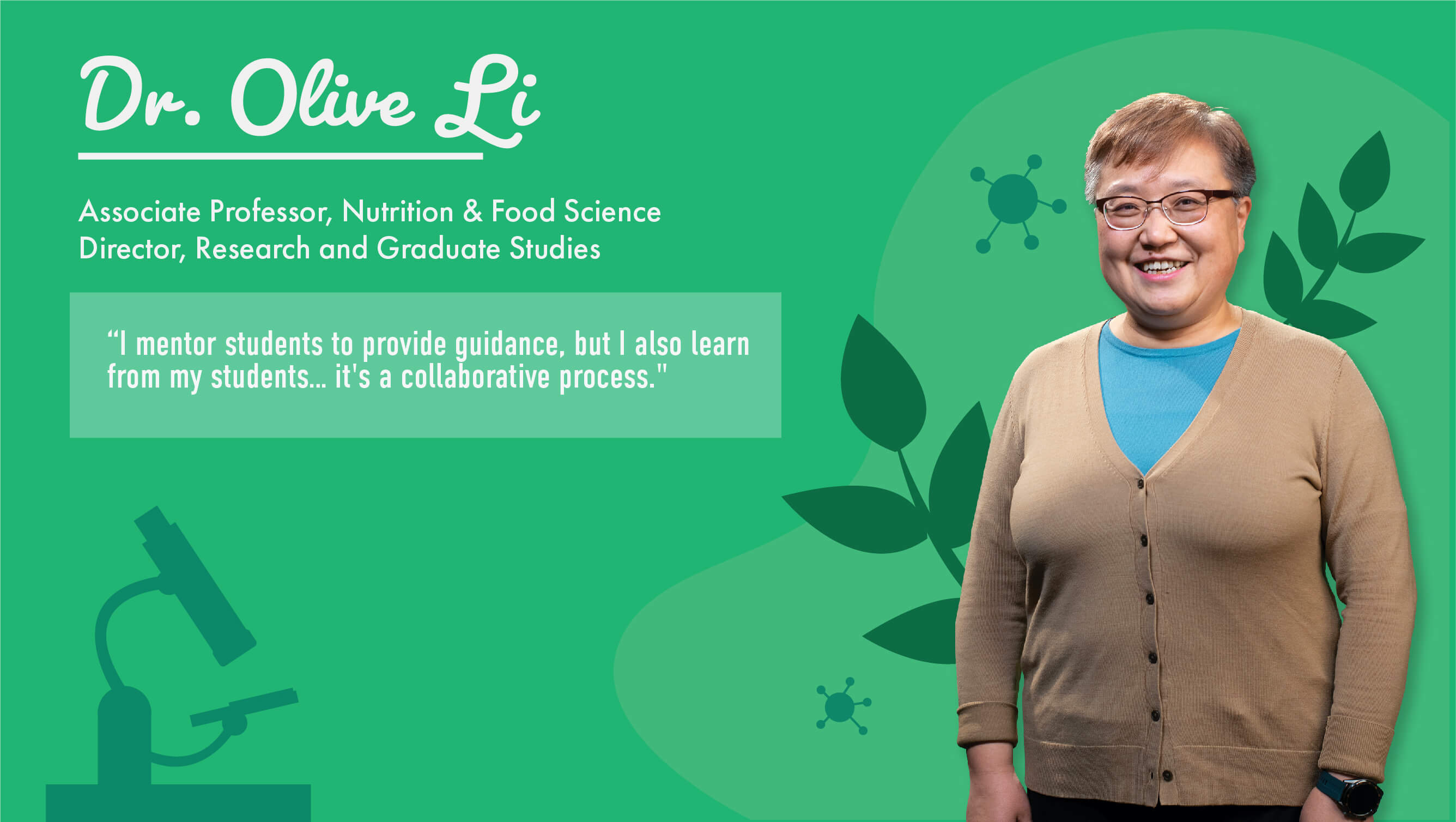
When Dr. Olive Li joined Cal Poly Pomona as a faculty member in 2011, she dived right into mentoring students in research. From the get-go, she realized that the process was collaborative. There was so much her students could learn from her, and even more she could learn from them
"I learned a lot from the students I mentored, including new discoveries, new findings, and so many new ways to do research!” Li said.
Li is currently an Associate Professor of Food Engineering in the Food and Nutrition Department at Cal Poly Pomona, teaching classes on food engineering, food packaging, and union operation for food processing. Her research focuses on post-harvest food processing technologies for sustainable agri-food production, including wastewater treatment and recycle and revalorization of agri-food processing byproducts for value-added food and feed application.
“I enjoy working side by side with students in our labs.” Li added. “When I am working with students that way, I can better see my impact and their progress,”
Li mentioned her own research experiences in college were more of a “self-exploratory journey” that left her struggling at times. However, she says that allowed her to gain confidence and independence once she accomplished her research goals. She appreciates Cal Poly Pomona’s commitment to guiding students with research opportunities while they are still undergraduates
Thus, Li tries to instill the same skills of confidence and independence that she gained as a student into those she mentors. These skills include time-management, communication, and problem solving. She wants the students she mentors to really tackle their research with a learning-by-doing mindset and have them grow as researchers.
Li stated, “Research really allows you to mature, allows you to grow your mindset, allows you to struggle, but then allows you to lead yourself to research results that you can claim and own.
Li also understands the sacrifice that research takes. She recalls her undergraduate students having to balance their research with classes and full-time jobs, even though the research itself can be like a full-time job itself! But she knows its worth it for her students to get into research as undergraduates, because it can help them get into great PhD programs, increase their job marketability, and helps their overall academic and life skills.
Li has enjoyed teaching and mentoring students at Cal Poly Pomona over the years. Her other roles include serving as the Director of Research and Graduate Studies for the Don B. Huntley College of Agriculture. In this role, she is the point of contact to coordinate faculty research and to help guide graduate programs. She is also the President of the Chinese American Food Society (CAFS), the Chair of the Southern California IFT Section (SCIFTS), and has received several awards for her research. Li has over 25 years of experience in teaching, research, and industrial services across the USA, Canada, India, and China.
These experiences and roles have helped Li become the mentor and teacher-scholar she is today. In 2019, Li was recognized as a STAR mentor through the Faculty Mentor Research Stars (STARS) program for her mentorship of nearly 50 undergraduate and graduate students at Cal Poly Pomona.
When asked about final advice to her students, Li stated she hopes that they realize that research is about the journey and all that you learn along the way. She is thankful her own research journey included mentoring so many passionate and curious students.
“I really encourage more undergraduate students on this campus to start conducting research!” Li exclaimed. “It's a great opportunity to work with a faculty advisor.
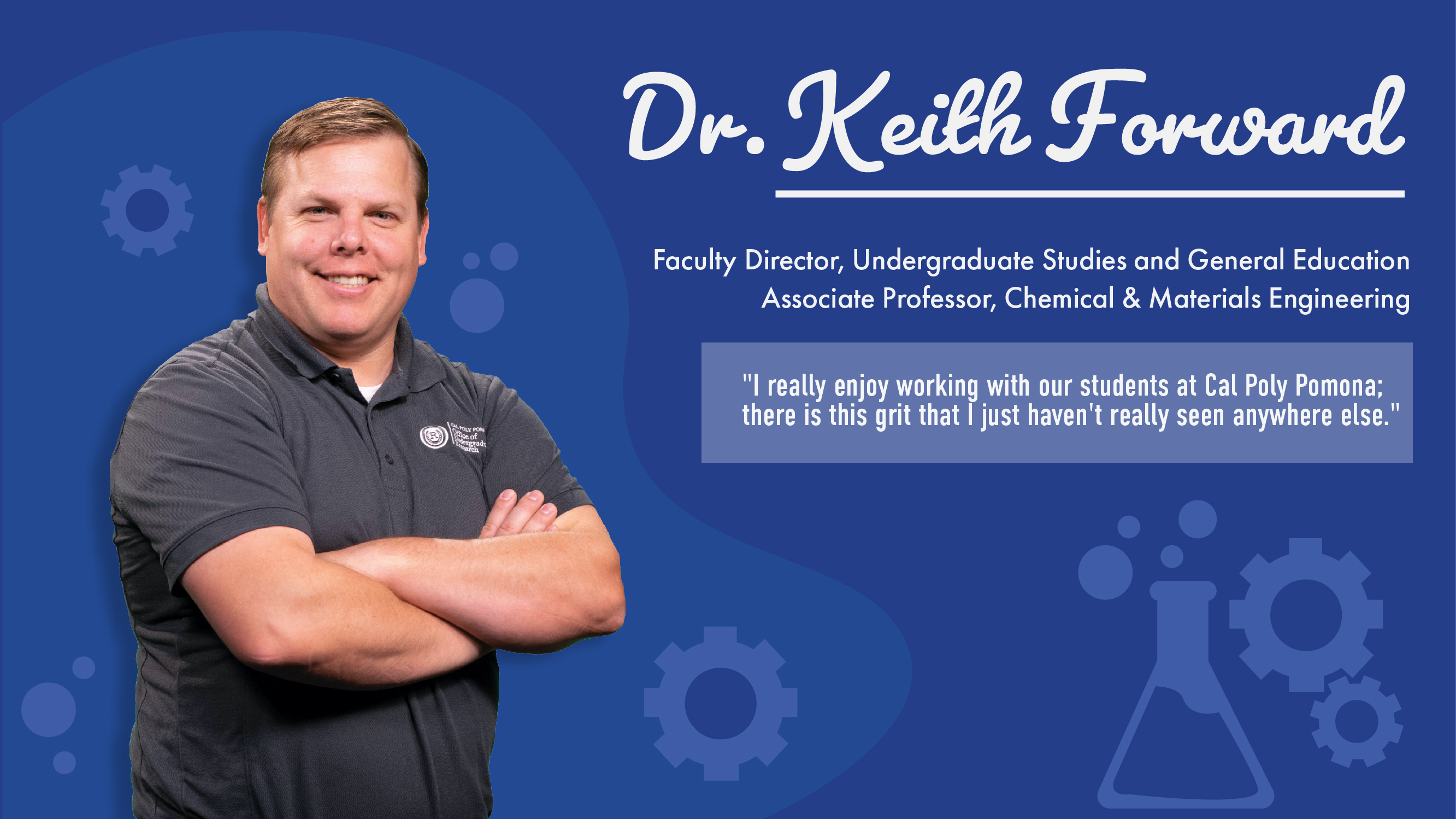
Since Dr. Keith Forward started at Cal Poly Pomona eight years ago, he has been eager to mentor students and bring them into the research world. Forward is currently an Associate Professor of Chemical Engineering, and while his research focus is on electrostatics, he understands that research is a skill that goes beyond any one field.
"Research is not just a skill set that's valuable to engineering, it's a valuable skill set to have in life.” Forward stated. “To essentially start from knowing nothing, and then to educate yourself to be in a place where you get to be knowledgeable about that area, that is what research is truly about.
Forward prefers to expose his students to research early on---as early as their sophomore year---and wants to help them compete the full research process as an undergraduate. In his mentorship program, he has clear steps for his students to get the most out of the experience. From literature reviews in the fall, lab work in the winter and spring, and presenting the research in the summer and beyond, students are exposed to the whole process. The students also build community and foster peer relationships through group activities he hosts. The more experienced students even guide newer students in the program, which Forward feels is an important part of the research experience.
“As researchers, we don't do research in a box,” he added. “We have to engage with our community and share our ideas, because if we don't do that, we don't learn from each other and are left stagnant.”
Forward has sent many of his research students to conferences across the country to present their work, including the annual meeting for the Electrostatics Society of America (ESA), the America Institute of Chemical Engineers (AIChE), and conferences at Cal Poly Pomona though the Office of Undergraduate Research. He also notes that while many of his students who complete research with him move onto PhD programs, some move into industry directly, using their research experience to stand out and get ahead in their field.
Either way, Forward notes research benefits his students immensely, no matter their career path, and hopes more students will get involved in their respective areas of interests on campus.
"My advice to the students is to go and talk to faculty about their research,” Forward emphasized. “Don't be intimidated by them; they're here at Cal Poly Pomona to serve students."
In 2019, Forward has also recently taken on the role of Faculty Director of Undergraduate Studies and General Education. Additionally, Forward has served as a Faculty Fellow for the Office of the Undergraduate Research since 2018. He enjoys his current roles, but understands that these responsibilities take time away from continuing on his research. Forward wants to dive deeper into his research again in the near future.
These experiences and roles have helped Forward become the mentor and teacher-scholar he is today. In 2019, Forward was recognized as a STAR mentor through the Faculty Mentor Research Stars (STARS) program for his mentorship of over 80 undergraduate students at Cal Poly Pomona.
Forward appreciates being recognized for his mentorship through the STARS program and hopes it inspires other faculty to become mentors. In addition, he hopes STARS can encourage more Cal Poly Pomona students to talk to their faculty about research
"From the student’s perspective, it can be intimidating to talk to faculty,” Forward admitted. “So for the students to see a sign outside my door that says: ‘I'm a STAR mentor, you're welcome to come talk to me about getting involved in undergraduate research’---I hope that kind of helps break down that barrier."