MINOR IN NONVIOLENCE STUDIES
The Force of Law
We stare today at an unprecedented intensification of political violence and technology-fueled unraveling of our common truths. The Minor in Nonviolence Studies provides students with the space and skills to engage, through a series of seminar-style courses, the radical tradition of political and democratic nonviolence that spans the globe, striving ceaselessly for an equal world. It encourages them to seek answers to complex questions about the past and future of our social and moral universe.
Law and Nonviolence: A Moral History serves as the gateway seminar to the Minor in Nonviolence Studies. Students must complete, along with it, the Capstone Seminar. Students examine, in these courses, the relationship of conceptual transformations to the century’s political thought and its violent philosophical, moral, and military crises. At its heart, the Minor in Nonviolence Studies tells the story of the moral force of civil disobedience and its place in shaping the arc of democratic citizenship in our time.
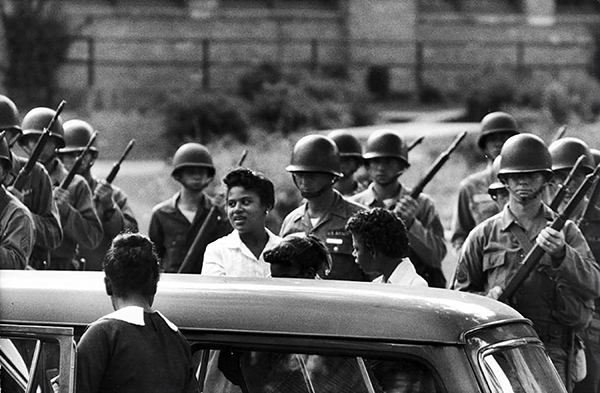
Crises of the Republic
A critical dimension of modern life is the moral and political permissibility—or the aura of unavoidability—granted to violence. Whether practiced by states or by autonomous and globally dispersed non-state actors, modern modes of violence take complex forms and are justified (or condemned) in complex legal and philosophical language. Some of these forms are spectacular, such as the violence witnessed in times of terrorist attacks, suicide bombings, and nighttime missile offensives launched by states and non-state actors. Other forms are underpinned by identifiable ideological impulses and claims to reason and higher purpose, like those that are conducted in the name of revolutionary justice, racial purification, class warfare, or humanitarian intervention. But perhaps most frequently, violence in modern life functions within the rhetoric and structure of political rationality, good governance, human rights, social security, and moral duty.
What separates modern practices of violence from premodern forms, thus, is not only their immense visibility aided by science, mass mobilization, and mass media. What separates them is also the conceptual rigor that sustains their rhetoric and practice. Moderns, in other words, think more rigorously about both the necessity and futility of violence.
What we call modern politics—secular and religious, democratic and authoritarian, imperial and anticolonial—has over the last four centuries generated more concepts, norms, laws, judgments, and understandings than any other period in recorded history of who we, as humans, are, and what we might, at the very limit of our humanity, become when violence (as choice or necessity) presents itself to us. Many of these concepts, such as that of “self” itself, have complex histories, which in turn share complex relationships with one another and across political traditions.
In this Pathway on Political Nonviolence, we are concerned with those particular concepts—will, freedom, justice, sovereignty, faith—that emerged within the context of nineteenth and twentieth century political culture and transformed our understanding of what it means to be free and to be human.
FOUNDATIONS
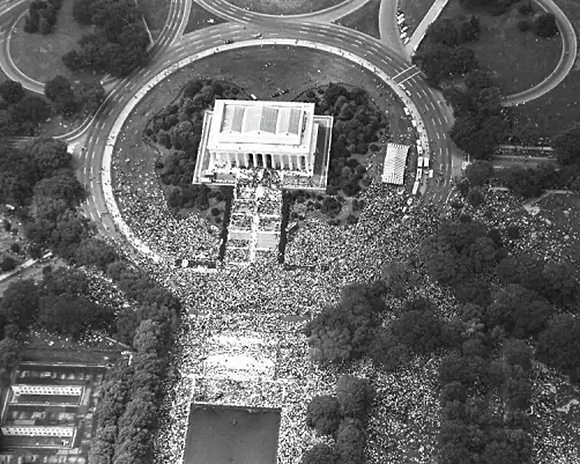
Law and Nonviolence: A Moral History
Among the most rational elements of modern life and personhood is the discourse of “law and order.” The "law-abiding citizen" is the ideal form of modern subjectivity. But the rhetoric of law and order has also meant the endemic presence of police power in civic life and the shadow of paramilitary forces in public spaces: these forces whose brutality, even and especially in liberal democracies, is always discriminatory and unequally felt, enforced by our racial and caste-ridden history. There is a history of violence underneath our democratic life, in other words. Just as we cannot understand the power of Gandhi without the brutal history of empire against which he struggled from the 1910s onward, we cannot grasp the hope of the Obama era without the courageous nonviolence of those whose commitment to civil rights in the 1960s required them to sacrifice themselves in face of the most brutal police assaults on their bodies. In this Gateway Seminar to the Minor in Nonviolence Studies, we delve into the deep history of civil disobedience. Which is to say, law's relationship to violence and nonviolence and, thus, to human freedom and citizenship as such.
Capstone Seminar on Political Nonviolence
Violence may repel us, but it also constitutes us, its temptation cutting to the soul of our very selfhood and identity. Here is the most paradoxical element of political violence: even as we theorize about it in classrooms and on campuses, it compels us to look away when we see it orchestrated against others in the world, thereby obscuring from our view the real structure and form of inequality that makes such violence possible in the first place. This denialism—or lie—is the moral scaffold of violence, and indeed of all our attraction for domination and sovereign power. Without a lie, perjury, or just insincerity of those who claim to be superior, as James Baldwin repeatedly tells us, there would be no violence. In this Capstone Seminar, students develop research questions that systematically investigate these linkages between perjury and violence, and thus the fundamental place of truth in a democracy without violence.
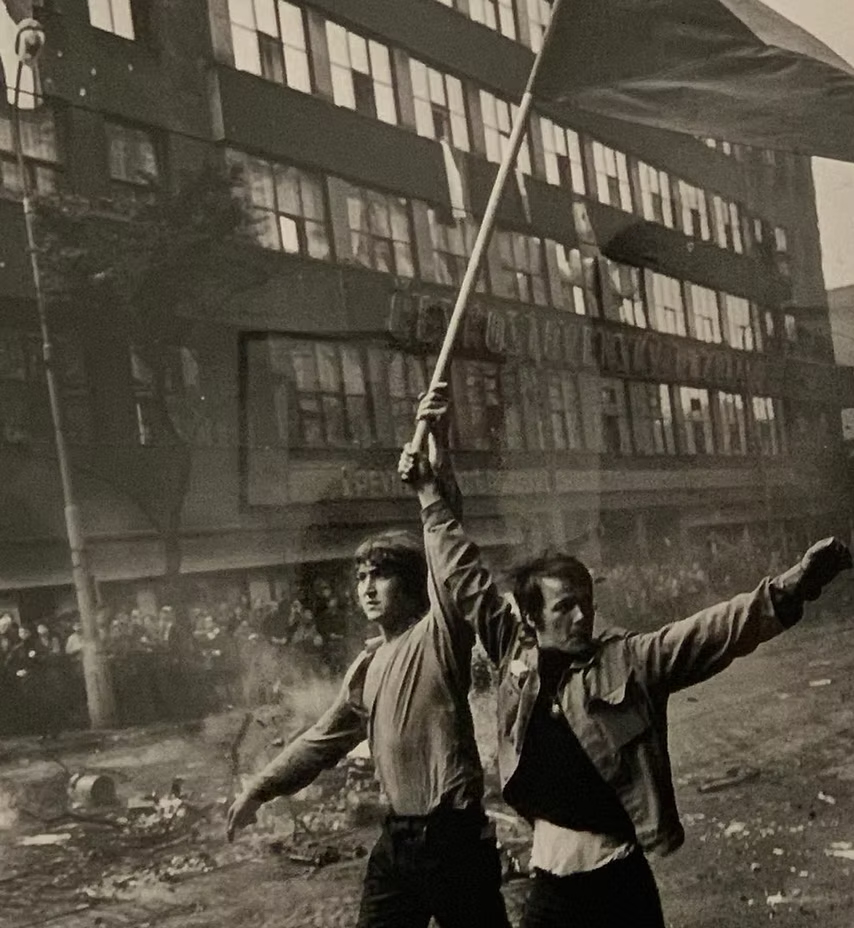
What is Freedom?
Freedom is unarguably the most fundamental idea in scientific and philosophical conceptions of human life. In truth, no investigation of our social and moral life can do without touching upon either the cognitive dimensions of freedom or the logic of force that physically constitutes it. What is it that makes the idea of freedom so vital to human existence and to the relationship between humanity and other life forms? Indeed, it is often claimed that freedom is our only truly universal moral imperative, expressed by every human collectivity and social formation as a normative claim that everyone ought to have such liberties to move and think. So much so that all historical and contemporary forms of fascisms have always begun their war cry against democracy—and globalisation itself—by using freedom as a rallying point. What are the consequences, then, of this universal and ambiguous humanism? Is freedom a global problem as opposed to being a universal solution to the complexities of democratic life? If so, how must our ideals and institutions respond to its coming deformities and promises?