About the Program
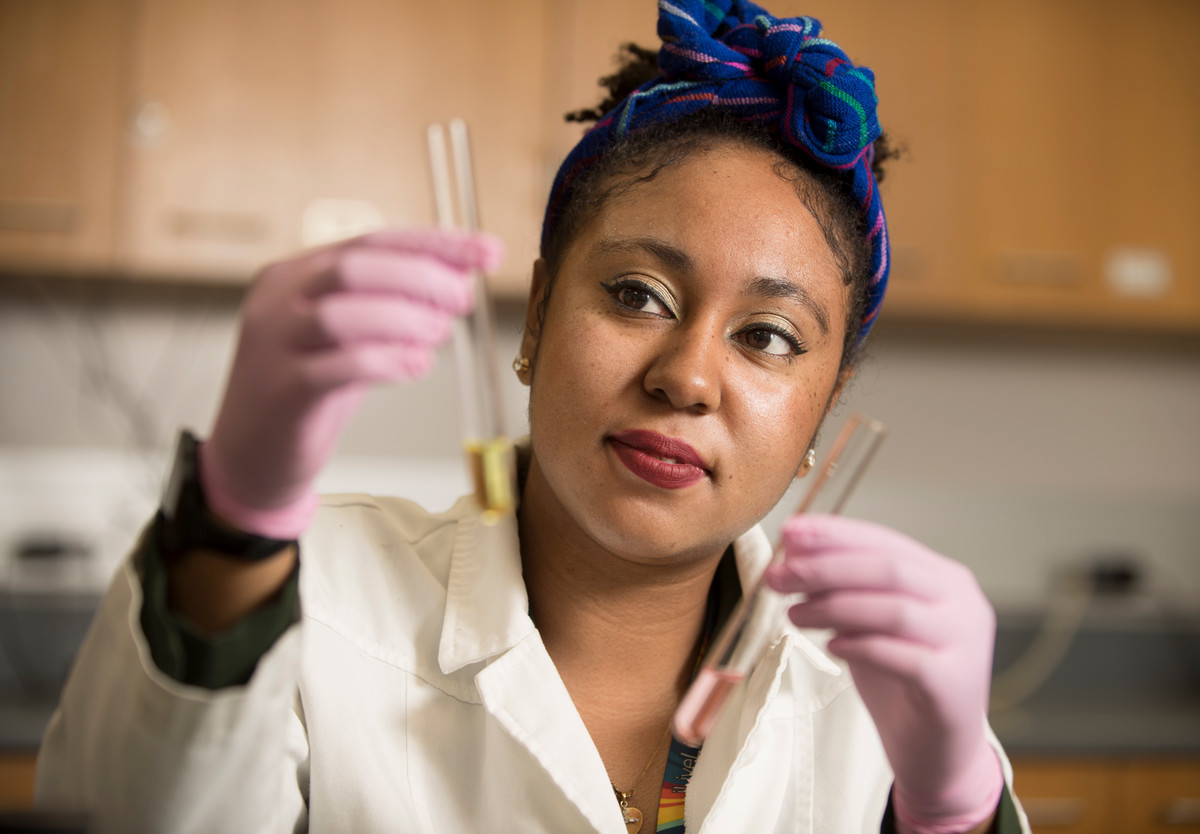
Understand the universe through the intersection of chemistry and physics. Study general, organic, physical, inorganic, and analytical chemistry. Work alongside expert faculty in advanced labs. With an American Chemical Society emphasis, you'll be ready for careers in research, industry, or graduate studies.

The Polytechnic Experience
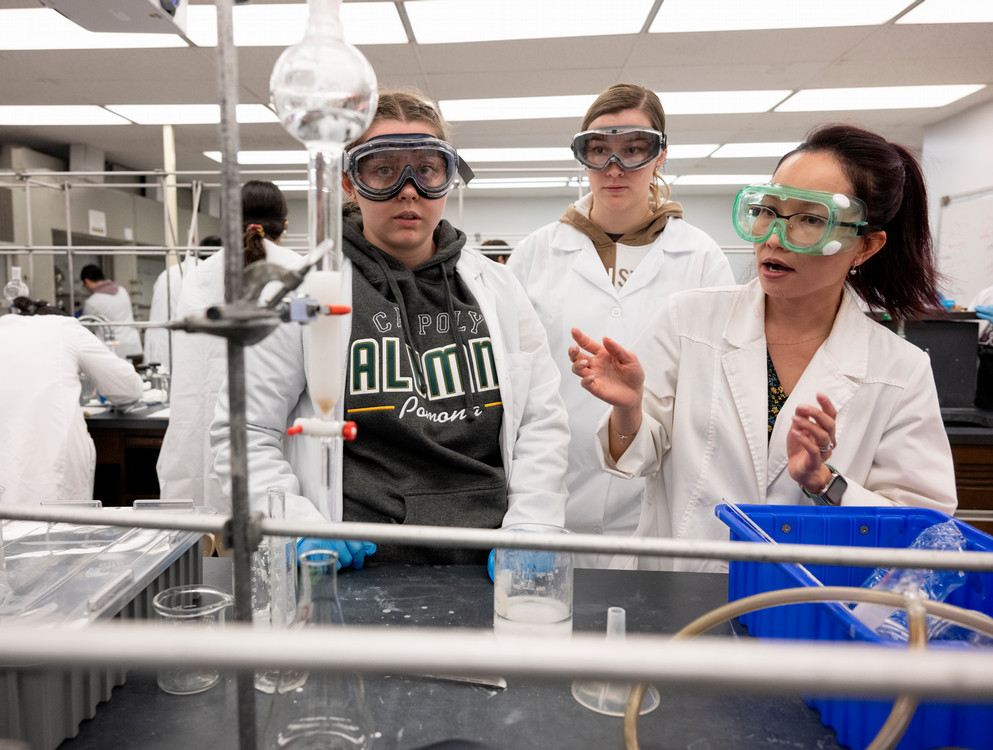
Join faculty-led research and publish your work alongside field experts. Get hands-on with spectrometers, chromatography tools, centrifuges, lasers, and more as you explore diverse chemistry applications. You won’t just study chemistry—you’ll become a chemist through labs and real-world experience.
Career Outcomes
Courses
Cal Poly Pomona's American Chemical Society option in the Bachelor of Science in Chemistry provides a comprehensive education that emphasizes the interface between chemistry and physics. This rigorous curriculum is designed for students aiming for traditional careers in chemistry or advanced graduate training. The ACS-certified degree ensures that students receive a robust foundation in core chemical principles, preparing them for roles in industry or academia. This option covers a broad range of topics, including analytical, organic, and physical chemistry, and integrates extensive laboratory work to reinforce theoretical knowledge. By aligning with ACS guidelines, the program upholds high standards of excellence in chemistry education. Graduates are well-prepared for various professional paths, including research, development, and quality control, or for pursuing advanced degrees in chemistry or related fields.


Financial Aid & Scholarships
Chemistry Golden (Au) 50th Anniversary Endowed Scholarship
The Chemistry Golden (Au) 50th Anniversary Endowed Scholarship awards $2,500 to undergraduate students in the College of Science. Preference goes to those involved in science-related clubs or activities, and those with internship or work experience applying knowledge of chemistry.
Featured Sub-Discipline: Physical Chemistry
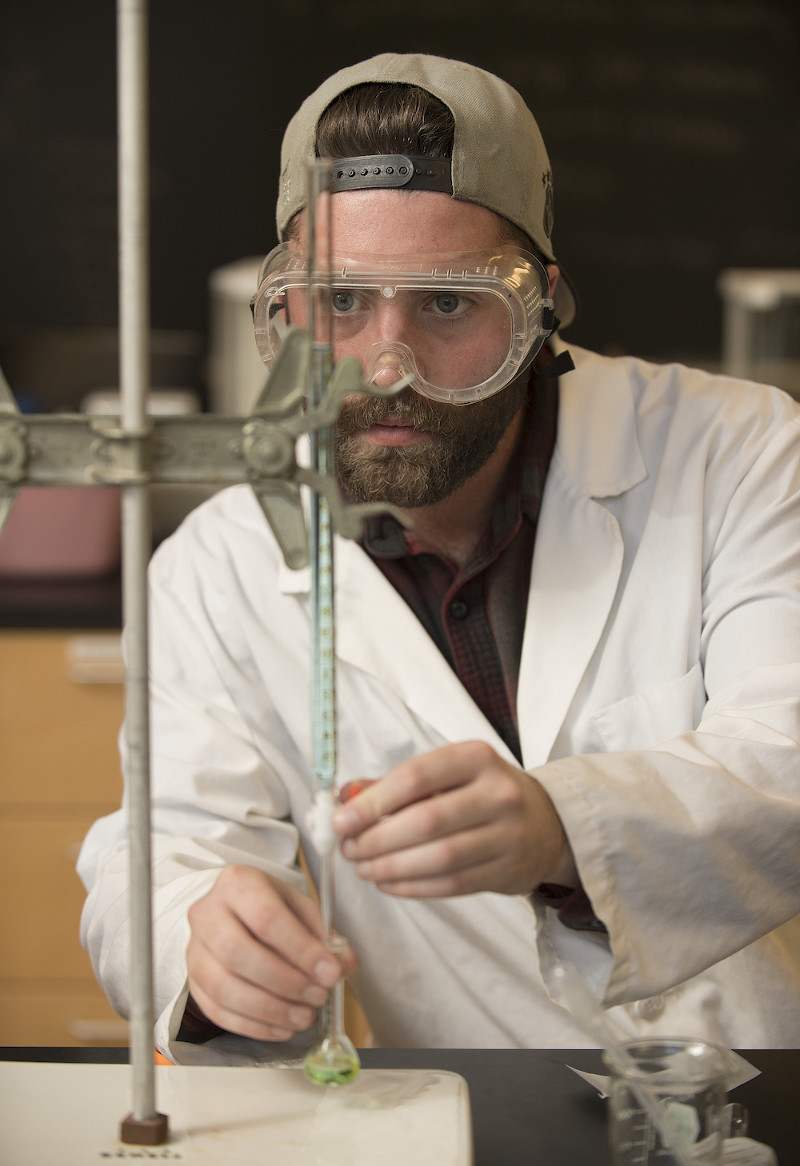
Physical chemistry gives an understanding of how chemical processes work at the macroscopic and microscopic levels. Thermodynamics and kinetics teach us how molecules interact with each other while quantum chemistry provides knowledge of how molecules behave at the atomic level. These insights give knowledge that allow us to create new ideas or innovate current ones.