Department History
Our Past
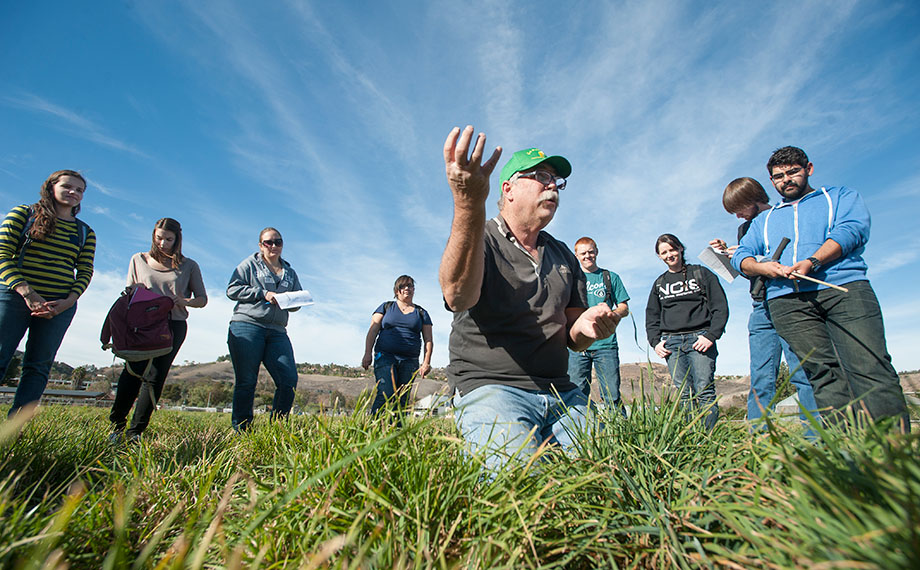
The Department of Plant Science is the founding department of the Huntley College of Agriculture and Cal Poly Pomona.
The university that would eventually become Cal Poly Pomona was established in 1938 at the former site of the Voorhis School for Boys in San Dimas. Initially, it was a satellite branch of the California Polytechnic School (now known as Cal Poly San Luis Obispo).
The first majors offered at the Voorhis campus were agricultural services and inspection, subtropical horticulture, and ornamental horticulture.
As the decades passed, the programs and the school grew substantially, with the campus shifting to the 800-acre Pomona ranch that formerly belonged to cereal magnate W.K. Kellogg and separating from the San Luis Obispo operation.
In 1968, three distinct departments were formed: the Department of Plant and Soil Science, which included agricultural biology (entomology); the Department of Ornamental Horticulture and the Department of Agricultural Engineering, later renamed Landscape Irrigation Science.
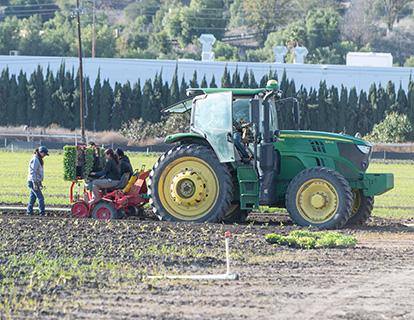
In 2008, during a time of severe university budget issues, all departments were consolidated into the current Department of Plant Science.
There is currently one major in plant science and six minors: agronomy, horticulture, pest management, soil science, urban and community agriculture, and water resources and irrigation management. Most students choose at least one minor course of study, allowing for specialization in their career choice.
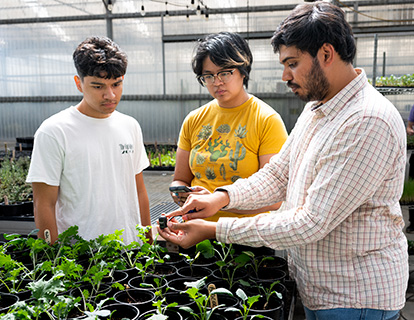
Urban and community agriculture is the most recent focus area to be added to the department. Two new faculty members were hired to start a program that took into consideration Cal Poly Pomona’s agricultural history and the corresponding interest in the urban agriculture movement. This has become a university-wide initiative with participation from many faculty members in all colleges on campus. All other traditional agricultural subjects continue to be taught.
More than 90 percent of our students find jobs upon graduation. They start careers in field and tree crop production, landscape management, horticulture, irrigation science, arboriculture, small and urban farming, and work with governmental regulatory and other agencies.
Many advance to graduate education across the nation. Thanks to our alumni’s success and generosity, the department awards a substantial number of scholarships each year.
