2026 Dale Prize: Rethinking Recovery: Planning for Resilient and Adaptive Climate Disaster Management
December 16, 2025
Press the tab key to view the content. Use the down arrow key to move to the next tab and up arrow key to move to the previous.
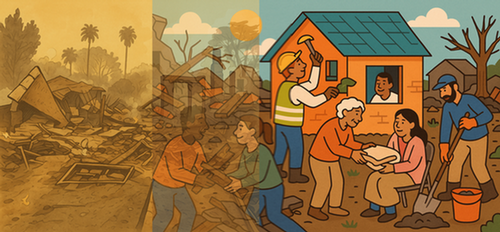
The Dale Prize recognizes planning excellence, creates dialogue between scholars and practitioners, and enriches the education of planning students. The Dale Prize is awarded in pairs: a $5,000 award to a scholar and a $5,000 award to a practitioner. Awardees spend two days meeting with students in classes and participate in a colloquium and other events.
The 2026 theme is Rethinking Recovery: Planning for Resilient and Adaptive Climate Disaster Management
The 2026 Dale Prize Colloquium is open to the public and will be offered by Zoom. We invite all to the Dale Prize Colloquium, 6:00 p.m.-7:30 p.m. (PST) on Tuesday, March 3rd. The Zoom Webinar login link will be announced in January 2026.
As natural disasters (and some not so natural)—wildfires, floods, droughts, hurricanes, and extreme heat—become more frequent, urban planners find themselves faced with immediate disaster management responsibilities and the need to create long-term recovery and resilience plans. Recovery and resiliency have evolved from separate concepts to being envisioned as a continuous, frequently recurring process with measurable impacts on the physical, economic, social, political, and environmental dimensions of our communities. Hence, as urban planners, we must focus on recovery efforts in our impacted communities that address housing, migration, displacement, the economy, and community vulnerability.
The 2026 Dale Prize invites planning and planning-related scholars and community-based practitioners to consider the changing role of planning in helping communities recover from disasters and build more resiliently. This includes scholars and practitioners who are working on risk management, rebuilding infrastructure, addressing disaster-induced displacement, and equity planning in impacted communities through stages of recovery across myriad sectors.
The focus on disaster management this year underscores the need to revisit the integration of disaster recovery into planning practices, institutional policy procedures, and collaborative governance strategies across public, private, and nonprofit sectors. Managing disasters, adapting to new climate realities, and developing resilient cities will require wide-ranging hazard mitigation solutions. Comprehensive policy approaches include promoting inclusive community participation processes, rehabilitating infrastructure, and building resilient communities.
We seek scholars and practitioners who have worked on planning process development and implementation for disaster recovery across different sectors. We are drawn to applicants who have previous experience working with local, state, and federal governmental agencies to coordinate disaster responses and improve proactive disaster management strategies. Moreover, we are interested in scholars and practitioners whose work examines the influence of infrastructure, land use and housing decisions, and political processes on the rate and nature of recovery, as well as on emerging technologies, data approaches, or strategic frameworks for improving adaptive management practice within post-disaster environments. Lastly, we encourage applicants whose disaster management research and practice has focused on addressing community vulnerability, resiliency, and rebuilding, especially for residents disproportionately impacted by disasters and other historical forms of planned and unplanned harm.
As the rate of disasters increases and recovery efforts continue to lag, urban planners must deal with complex interdependencies among built environments, environmental hazards, organizational processes, and community-based strategies to address climate vulnerabilities and environmental injustices. The 2026 Dale Prize challenges both scholars and practitioners to generate innovative thinking and applied solutions to envision disaster recovery as an opportunity to intentionally design equitable approaches. These approaches should address how we can adapt to long-term future conditions by building resilient communities that are safer and more just.
2026 Dale Prize: Rethinking Recovery: Planning for Resilient and Adaptive Climate Disaster Management
The Department of Urban and Regional Planning at Cal Poly Pomona seeks nominations for the 2026 William R. and June Dale Prize for Excellence in Urban and Regional Planning.
The Dale Prize seeks a scholar and a practitioner who have extended experience in disaster management research and practice, and have focused on addressing community vulnerability, resiliency, and rebuilding, especially for residents disproportionately impacted by disasters and other historical forms of planned and unplanned harm. Dale Prize events will be held March 3 - March 4, 2026.
Nominations are due on Friday, December 5, 2025.
Nominations Procedure
The prize winners will be selected based on:
- Evidence of substantial knowledge contribution to the field. This includes but is not limited to the quality and quantity of research, research/practice collaborations, impact on the field, and peer recognition.
- Applicability to the theme, Rethinking Recovery: Planning for Resilient and Adaptive Climate Disaster Management
- Potential for linking research results to planning theory (scholar).
- Engagement in disaster recovery, visioning, or other planning activities centered on community rebuilding and/or resilience. (practitioner).
The package may be submitted in digital format by email or through a file sharing service. Self-nomination is accepted.
The package should include the following:
Nomination of Scholars
- Nominating Cover Letter
- Name and current affiliation and description of nominee’s contribution to the field
- Narrative justifying the nomination (3 page maximum)
- Nominee’s Curriculum Vitae
- Contact information for the nominator
- Contact information for the nominee
- Approval by nominee of the nomination, including a commitment to be available in person for the full days of March 3 - March 4, 2026.
Nomination of Practitioners
- Nominating Cover Letter
- Name and current affiliation and description of nominee’s contribution to the field
- Narrative justifying the nomination (3 page maximum)
- Resume/Curriculum Vitae/Portfolio
- Contact information for the nominator
- Contact information for the nominee
- Approval by nominee of the nomination, including a commitment to be available in person for the full days of March 3-March 4, 2026.
Submittals should be electronically sent to: urpdept@cpp.edu. Please put 2026 Dale Prize Nomination in the subject line.
Contact
If you have additional questions, please contact:
Dr. Do Kim
dohyungkim@cpp.edu
(909) 869-4645
The Department of Urban and Regional Planning at Cal Poly Pomona is pleased to announce the winners of the 2026 William R. and June Dale Prize for Excellence in Urban and Regional Planning. Dr. Robert B. Olshansky, Professor Emeritus of Urban and Regional Planning at the University of Illinois at Urbana-Champaign, has won the Scholar Prize. Mr. Aaron Pfannenstiel, a Principal and CFO of Atlas Planning Solutions, has won the Practitioner Prize.
Practitioner Winner
Mr. Aaron Pfannenstiel, AICP, LEED AP
Principal and CFO of Atlas Planning Solutions
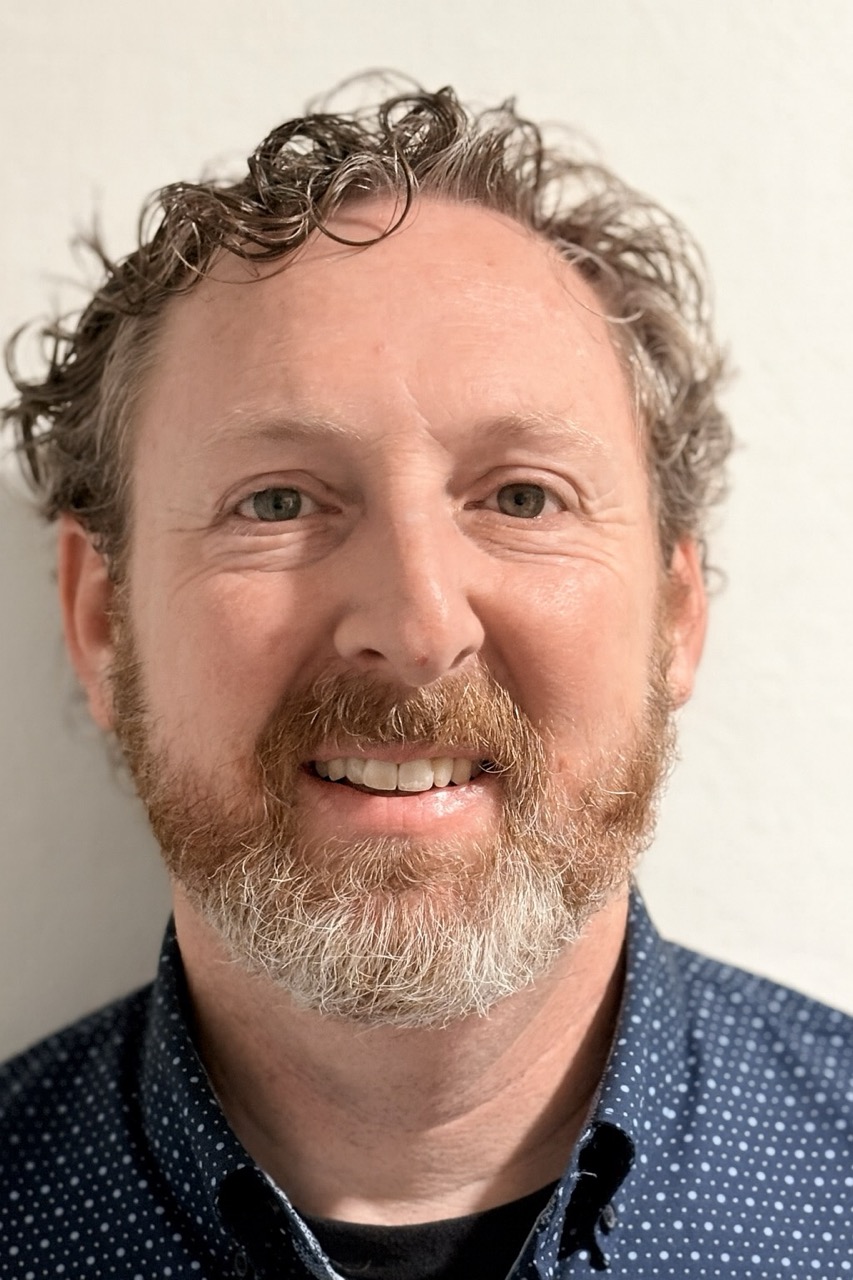 As a Principal and CFO of Atlas Planning Solutions, a firm he co-founded specifically to support public agencies in resilience, hazard mitigation, emergency management, and climate adaptation, Aaron has dedicated his career to helping communities prepare for, withstand, and recover from disasters. Under his leadership, Atlas has dramatically expanded its capacity to serve communities most vulnerable to wildfire, flooding, extreme heat, seismic hazards, and other compounding risks. His projects, including Local Hazard Mitigation Plans, Climate Change Vulnerability Assessments, Safety Elements, and Emergency Operations Plans, consistently center on equity, capacity building, and community voice. Award-winning efforts—such as the Santa Barbara County Climate Vulnerability Assessment, Resilient IE, and the Laguna Beach Climate Action and Adaptation Plan. All of his projects demonstrated uplifting disproportionately impacted residents, addressing structural vulnerability, and supporting long-term community rebuilding. His work has earned recognition from Cal OES, Cal FIRE, FEMA, and numerous professional organizations, reflecting strong recognition of both technical rigor and community-focused planning.
Scholar Prize Winner
Dr. Robert B. Olshansky, Ph.D., FAICP
Professor Emeritus of Urban and Regional Planning at the University of Illinois at Urbana-Champaign
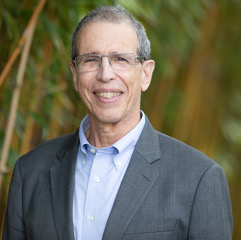 Dr. Olshansky is one of the world’s most distinguished scholars who has profoundly advanced the theory and practice of disaster recovery planning, planning for extreme events, and long-term community resilience. His pioneering research and field-embedded practice across the United States and internationally have shaped the global understanding of post-disaster governance, community rebuilding, and resilient land-use strategies. His landmark studies include New Orleans after Hurricane Katrina, the Puerto Rico hurricane recovery effort, climate adaptation, sea level rise, and expanded wildfire risk in California, and disaster recovery work in Japan, Taiwan, and Indonesia. He also led a planning assistance team on the Puerto Rico hurricane recovery effort. In addition to his academic achievements, Dr. Olshansky has an impressive record of outstanding service to the profession, including leadership roles with the American Planning Association (APA), the Association of Collegiate Schools of Planning (ACSP), the Earthquake Engineering Research Institute, and the California Geological Survey. He is Chair of APA California’s FAICP Committee and Co-Chair of the newly formed ACSP Disaster Recovery Working Group.
2026 Dale Prize Colloquium: Rethinking Recovery: Planning for Resilient and Adaptive Climate Disaster Management