About the Program
Improve the quality of life for countless individuals through developing infrastructure projects of all sizes. Build a strong foundation in structural analysis, materials science, fluid mechanics and more as you join one of the largest undergraduate civil engineering programs in the United States. We produce 15 percent of the young civil engineers in California. With options in environmental engineering, geospatial engineering and general civil engineering, you can choose the path that best prepares you for your dream career.

The Polytechnic Approach
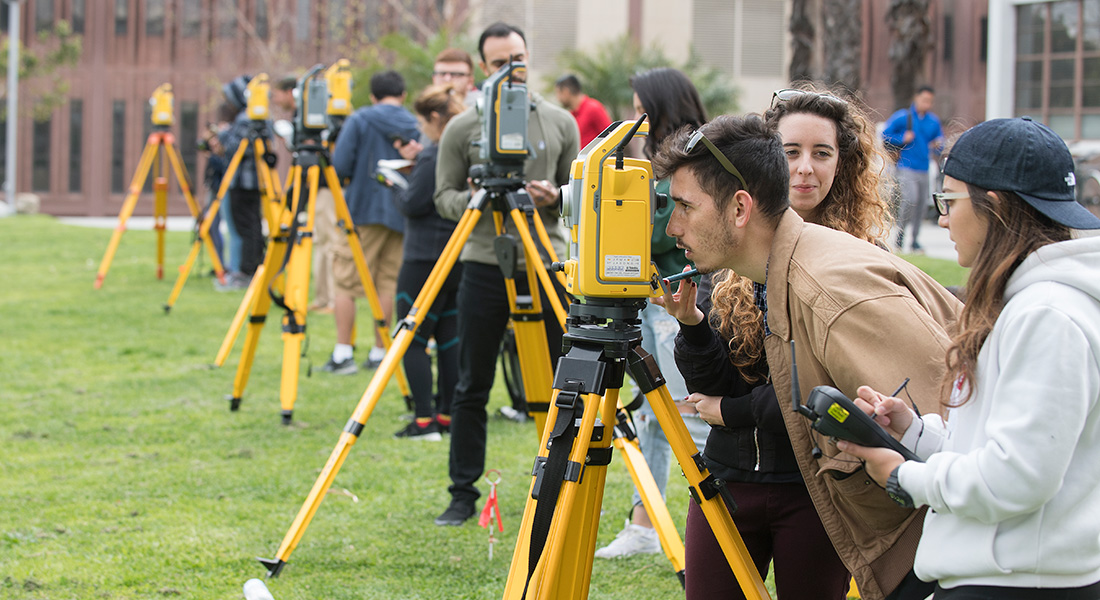
Take topographic surveys on campus, assess the strength and viability of engineering materials, study properties of rock and soil in the field and much more. Join clubs and activities like the steel bridge, concrete canoe, and seismic design competition teams to complement your education and meet other Broncos. Here, you become an engineer by practicing and applying your studies in the real world.
Career Outcomes
Program Emphasis
Courses
The Civil Engineering program prepares you to enter the profession in planning, design, construction, operations, or management capacities on such projects as freeways, major buildings, dams, bridges, aqueducts, airports, hydro-electric installations, water treatment plants, flood control works, urban development programs and more. The department offers three options: the general civil engineering option; the environmental engineering option; and the geospatial engineering option. B: Body text Required Yes The Civil Engineering program prepares you to enter the profession in planning, design, construction, operations, or management capacities on such projects as freeways, major buildings, dams, bridges, aqueducts, airports, hydro-electric installations, water treatment plants, flood control works, urban development programs and more. The department offers three options: the general civil engineering option; the environmental engineering option; and the geospatial engineering option. All options provide broad background in the various aspects of the civil engineering profession.
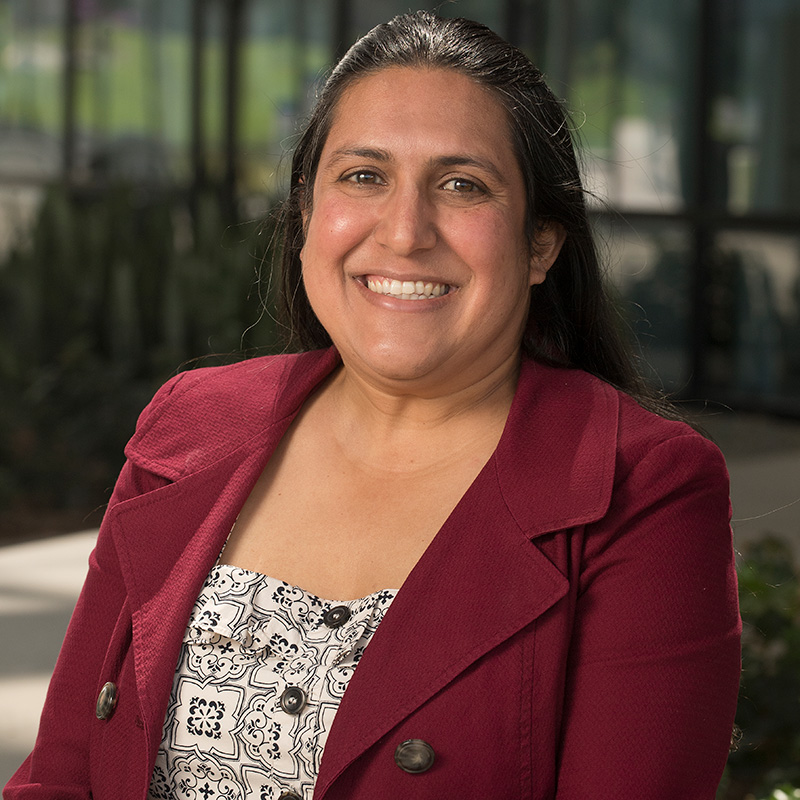
Professor, Civil Engineering, College of Engineering, Recipient of the Excellence in Service Award
Seema Shah-Fairbank
Seema Shah-Fairbank is an Associate Professor of Civil Engineering and a licensed civil engineer. She teaches courses in both the undergraduate and graduate programs in water resource engineering. She has served as the faculty advisor for the Cal Poly Pomona student section of the American Society of Civil Engineering, winning the national American Society of Civil Engineers Faculty Advisor...

Get Involved!
Civil Engineering Student Activities
An excellent college education includes much more than classes, and extracurricular activities can enhance your college experience. That’s why the Civil Engineering Department encourages participation in student clubs, competition teams, and organizations.
Licensure Disclosure and Accreditation
California State University programs for professions that require licensure or certification are intended to prepare the student for California licensure and certification requirements. Admission into programs for professions that require licensure and certification does not guarantee that students will obtain a license or certificate. Licensure and certification requirements are set by agencies that are not controlled by or affiliated with the California State University and licensure and certification requirements can change at any time.
The California State University has not determined whether its programs meet other states' educational or professional requirements for licensure and certification. Students planning to pursue licensure or certification in other states are responsible for determining whether, if they complete a California State University program, they will meet their state's requirements for licensure or certification. This disclosure is made pursuant to 34 CFR §668.43(a)(5)(v)(C). For more information, click here.
The civil engineering department offers a civil engineering program leading to a Bachelor of Science degree.
The civil engineering program has three options: general civil, environmental, and geospatial engineering.
The Civil Engineering program is accredited by the Engineering Accreditation Commission of ABET, https://www.abet.org, under the General Criteria, and the Program Criteria for Civil and Similarly Named Engineering Programs.
The Geospatial Engineering Option in the Civil Engineering program is accredited by the Engineering Accreditation Commission of ABET, https://www.abet.org, under the General Criteria, the Program Criteria for Civil and Similarly Named Engineering Programs, and the Program Criteria for Surveying and Similarly Named Engineering Programs.
For more information, please view our program educational objectives and outcomes.