Cal Poly Pomona MBA candidate Omar Gonzales (MBA ’27) was selected for two prestigious fellowships in 2026. The first, the Atlantik-Brücke New Bridge Program, is affiliated with one of Europe’s most established transatlantic organizations, whose members include leaders in politics, business, media, and academia. That fellowship ran from May 28 to June 7. He also attended the Aspen Ideas Festival, a prominent U.S. gathering of leaders and thinkers, held from June 25 to July 1. Gonzales reflected on both experiences, what it meant to be selected, and how his Bronco education prepared him for these opportunities.
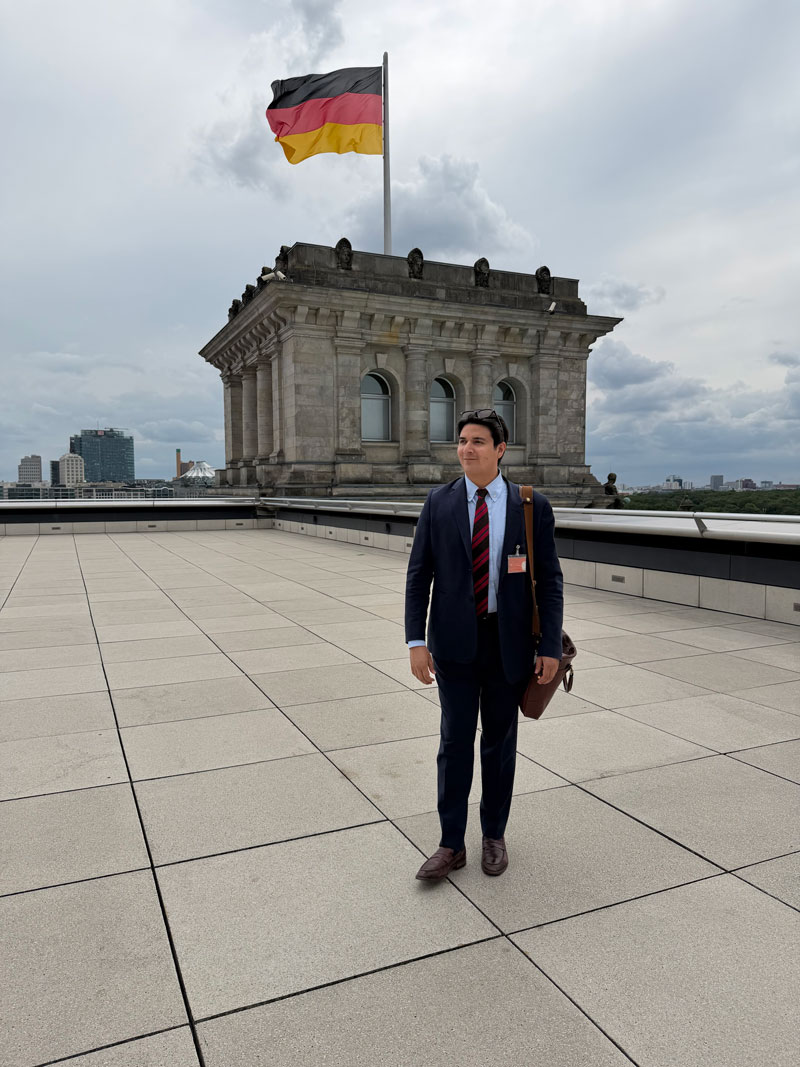
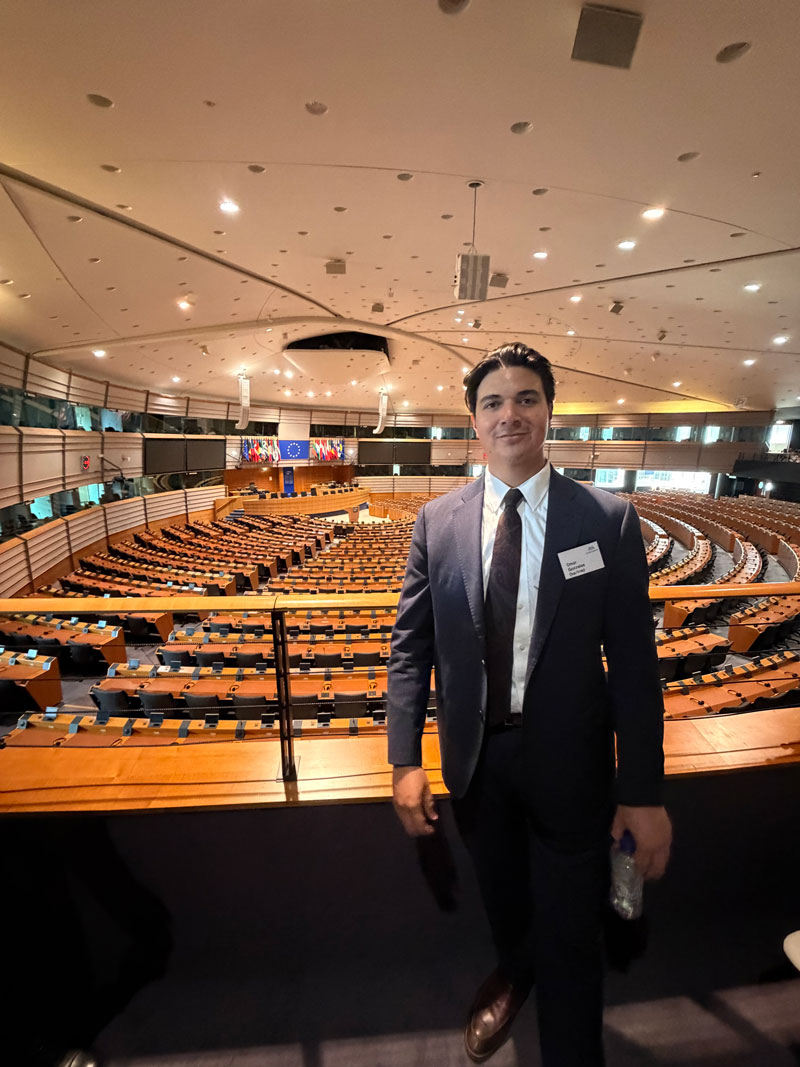
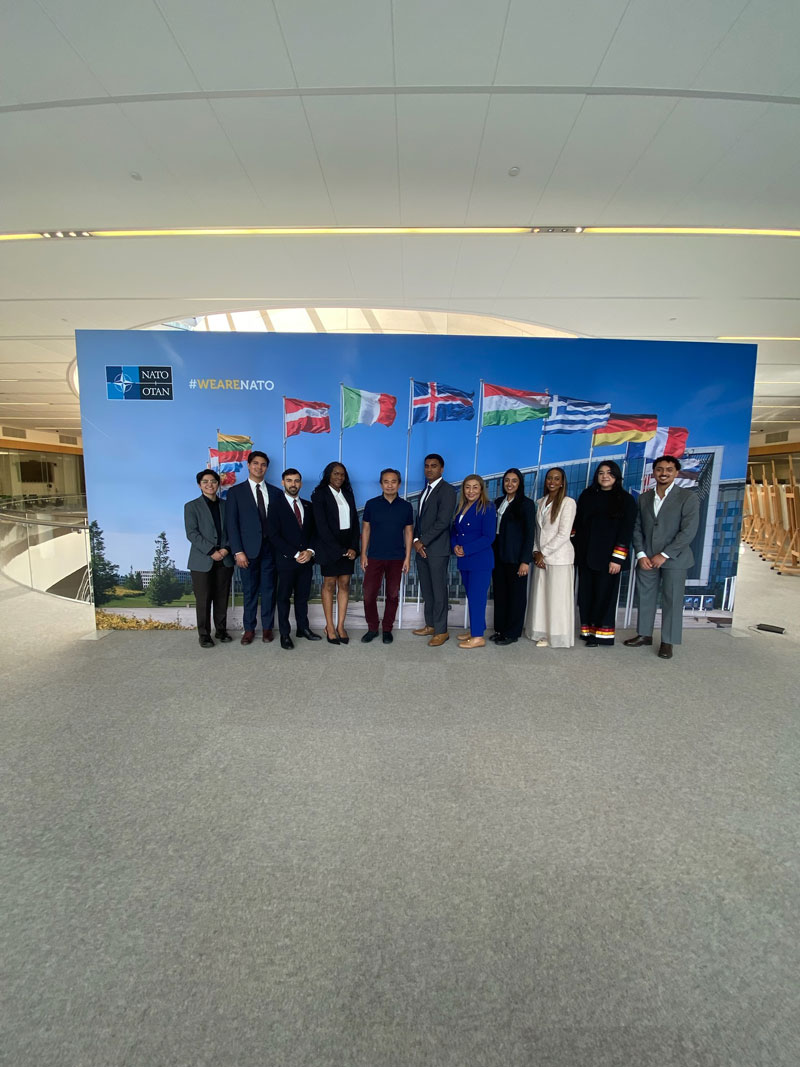
This summer, I traveled with the New Bridge Program of Atlantik-Brücke, the Berlin-based nonprofit that has worked to strengthen German American ties since 1952, meeting leaders at NATO and the European Commission across Washington, D.C., Brussels, and Germany. Weeks later, I attended the Aspen Ideas Festival, the Aspen Institute's annual gathering of leaders and big ideas, as one of its fellows, alongside CEOs, central bankers, and public intellectuals. I was proud to represent Cal Poly Pomona and the California State University system in both rooms. And in both, our perspective was not the default one. What surprised me most was how much of my MBA education I carried in with me.
Peter Drucker taught that management is the defining organ of every modern institution. The idea kept proving true. At NATO, a 32-member alliance worked through stakeholder alignment and scarce resources. Transatlantic relations, I came to believe, are, at the end of the day, a management challenge. The same disciplines that make a firm competitive make a democracy resilient.
The visit that stayed with me most was the Frankfurter Brauhaus in Frankfurt an der Oder. What impressed me there was not the production line. It was managing director Karsten Uhlmann, a business leader who understands that his company's future depends on everything around it: a city that has lost a third of its people since reunification, a workforce aging as the young move away, and neighbors who feel the economy moved on without them. His practice is to sit down with the people he disagrees with most, because people who feel unheard stop talking and start blocking. It was the dynamics of voice and psychological safety I had studied in Professor Chantal van Esch's Organizational Behavior course, playing out in a company and a region at once. Across eastern Germany, we heard versions of the same thing: residents hold a sliver of national leadership positions and don't feel seen. Our hosts warned us where that leads. Last week, it arrived: Saxony-Anhalt handed the far-right AfD its first state election victory, with nearly 44 percent of the vote. A leader's responsibility does not stop at the factory gate.
Germans call their founding economic idea the social market economy: room for business to grow, real participation for workers, prosperity that gets shared. Historians told us West German democracy took root partly because that economy delivered. At Aspen, in a session titled "How Can We Reinvigorate the American Dream?" David Leonhardt made the same case in American terms. Under the democratic capitalism of the postwar decades, a child born in 1940 had a nine-in-ten chance of outearning their parents. After 1980, the odds fell to a coin flip. Two countries, one lesson. As the first in my family to finish college, I know which side of that line my family lived on. The choice between kinds of capitalism is made in boardrooms as much as in Congress.
Preparing for these fellowships, I also went outside the College of Business to Cal Poly Pomona's Democracy Institute and Aishwary Kumar's podcast, "Mutant: Dialogues at the End of Democracy." His reframing of democracy's "end" as mutation rather than demise traveled with me from Berlin to Aspen. A political theorist prepared me for rooms full of executives. That's the point.
Managers optimize within a system. Leaders take responsibility for the system itself. Our new tagline, "Become by Doing," gets that exactly right. My cohort is full of first-generation graduates working full-time at a university ranked among the nation's best for economic mobility. We are not being trained to manage the economy we inherited. We are being prepared to build the one that is still possible.
Cal Poly Pomona is building those leaders. I saw the proof on two continents, and I'm becoming one of them.
Learn more about Singelyn Graduate School of Business’s MBA program.