WorkForward Conference Connects Students With Founders, Executives, and Alumni
October 26, 2026
| Mike Landers
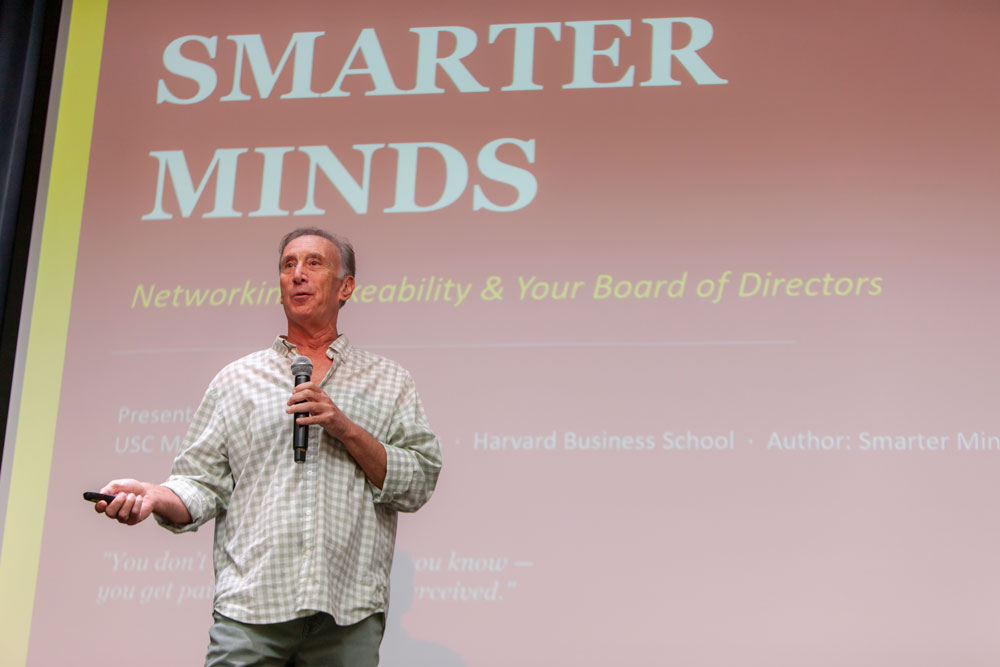
Entrepreneur and author Bill Barnett leads a session on networking and wealth creation.
Cal Poly Pomona's College of Business Administration (CBA) hosted its WorkForward Conference, a daylong event on campus that connected students with startup founders, executives, investors, and alumni who shared how they built their careers and what the future of work may hold. Organized by the CBA Career Hub (CBACH), the agenda included a startup showcase, leadership dialogues, talks on networking and wealth creation, and on-site conversations with recruiters from U.S. Bank.
The conference takes its name from hockey legend Wayne Gretzky's advice to skate to where the puck is going, not where it has been. "We want students to not just think of work as it is conceptualized today but work as it will evolve in the days to come," wrote Sandeep Krishnamurthy, Singelyn Family Dean of the College of Business Administration, in a message announcing the event.
Meet the Startups
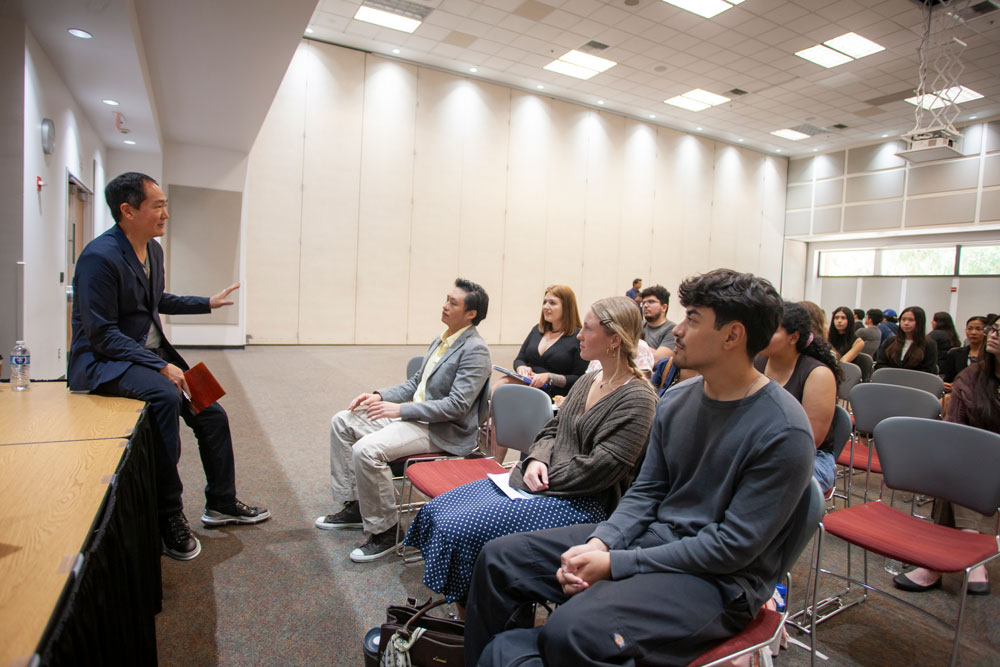
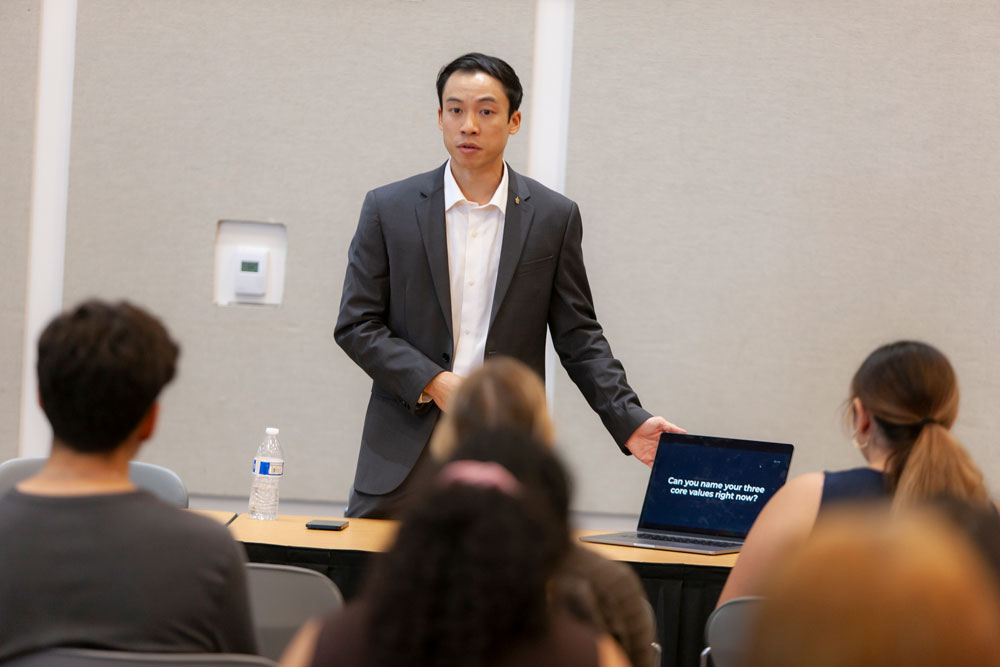
The day opened with a startup showcase, where founders of Novii, Emovid, and Neoflo.ai described their companies and the paths that led them to entrepreneurship.
Terry Hui (’20, marketing management), founder of Novii, a life-design platform that is free to CPP students, told the audience he transferred to Cal Poly Pomona from Mt. San Antonio College, missed internship deadlines, and commuted hours to an unpaid internship in Glendale before landing a job at Deloitte Consulting. "What I came to understand was that it didn't really matter where I started," Hui said. "It was just a matter of all the effort that I put in."
Founder and CEO of Emovid and former CEO of Evite, Victor Cho, demonstrated his company's verified video-messaging platform and outlined four skills he believes the next generation of workers will need: being a "cyborg" fluent in AI, a "conductor" who can direct AI resources, a "connector" with strong people skills, and a "crackerjack" with deep expertise in one area. "I don't care how many robots there are, I don't care how big AI gets, the key decisions are still going to be human," Cho said.
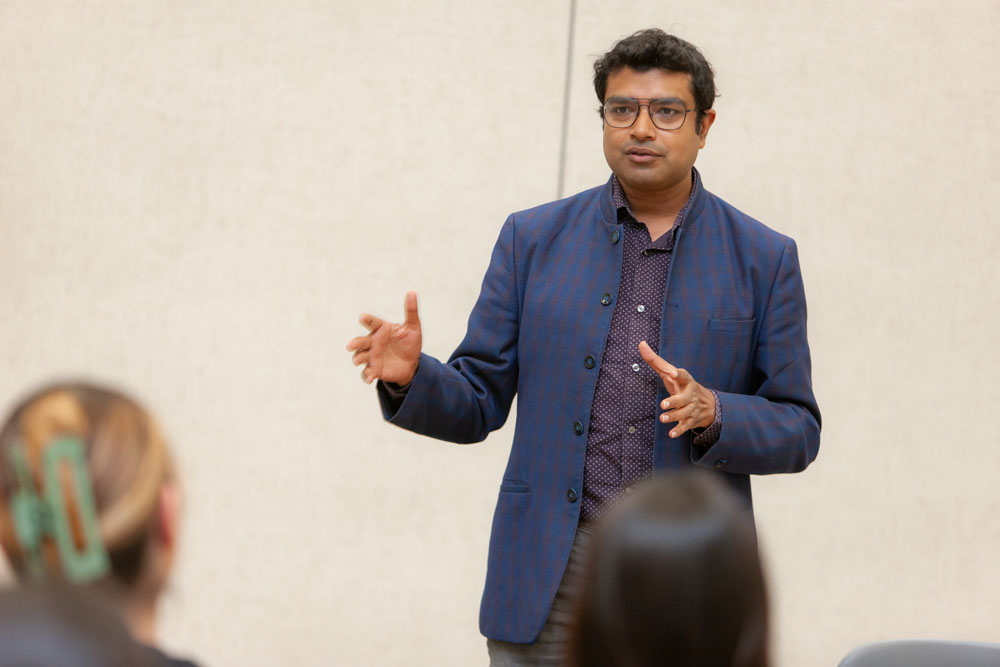
Nipun Mehra, founder and CEO of Neoflo.ai, presented his company's AI-first platform for running finance operations such as accounts payable, accounts receivable, and month-end closes. Mehra emphasizes that Neoflo.ai was created because boards and CEOs struggled to turn enterprise AI pilots into actual Profit and Loss (P&L) impact, aiming instead to deliver visible savings with strict Service Level Agreement (SLA) and compliance adherence.
Leadership Lessons
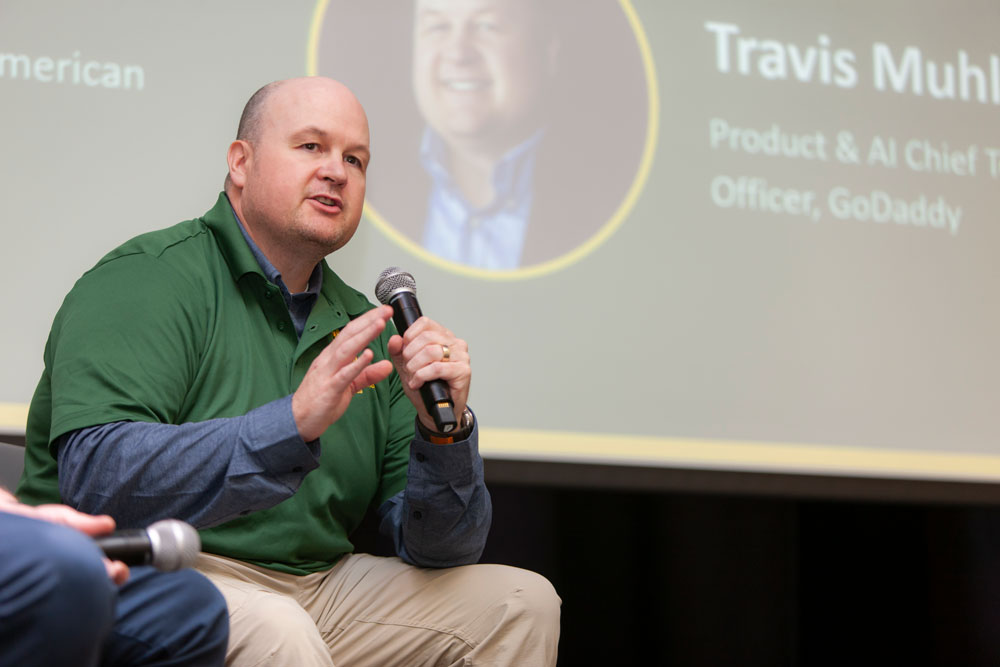
The afternoon sessions began with Anthony Orlando, associate professor of finance, real estate, and law, moderating a fireside chat with Singelyn Graduate School of Business namesake David Singelyn (’84, computer information systems; ’84, accounting), and Travis Muhlestein, chief technology officer of GoDaddy.
A proud alum, Singelyn built American Homes 4 Rent from three homes in 2011 into a company that owns more than 60,000 properties in 22 states. He told students that anxiety about AI is normal and that, like the Industrial Revolution and the dot-com era, this period of change will create opportunity for those who adapt. "One of the things that I told my team when AI was first coming out … is that in 10 years there will be two types of companies in the United States: those that embrace AI, and those that are no longer in business," Singelyn said.
Singelyn also emphasized personal ethics as a valuable tool, raising $1.2 billion for American Homes 4 Rent without a proof of concept, largely on the strength of the founders' track record. "There are really only one or two things that you always own personally … and that is your reputation and your integrity," Singelyn said. "They will follow you for the rest of your life."
Muhlestein outlined his career journey, showcasing both wins and losses to inspire students to remain persistent throughout their own endeavors. As a business leader, Muhlestein previously held roles at tech giants Nvidia and Microsoft, and he urged students to embrace AI rather than fear it; encouraging students to build critical thinking, discipline, and the ability to improvise. "Jobs are going to change, but that doesn't necessarily mean they're going to go away," Muhlestein said. "It means you up-level."
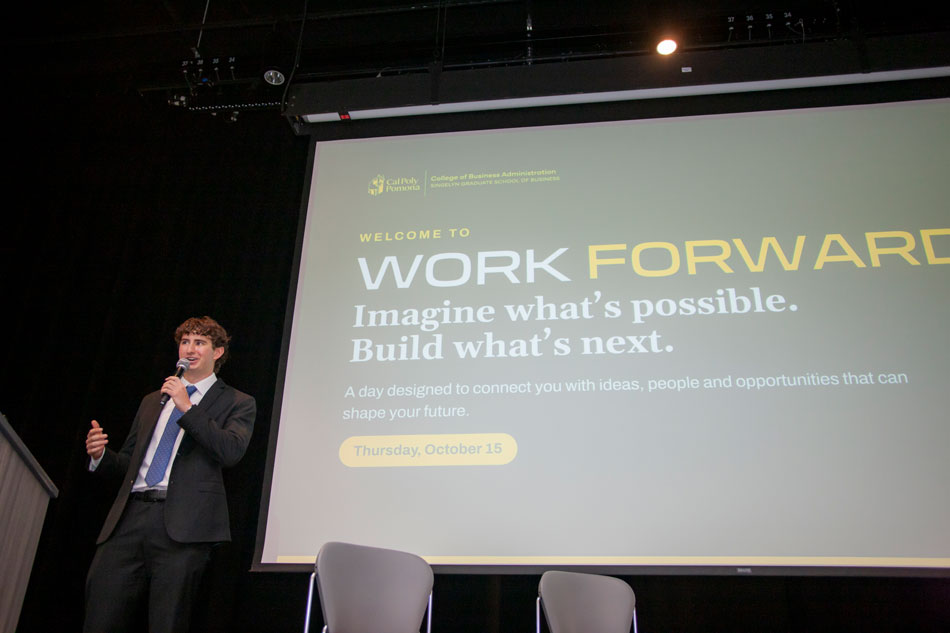
Student Austin LeMonte welcomes attendees.
Building Companies
Students Austin LeMonte (’27, finance, real estate, and law), and Rowan Trevino (’28, international business and marketing), led an on-stage conversation with Mark Bowles, a serial entrepreneur and venture capitalist from San Diego. Bowles co-founded ecoATM, the kiosk company that buys back used phones, which was acquired by Outerwall for $350 million. He also co-founded Truvian Sciences, a blood-diagnostics company. Bowles told students that founders often fall in love with their own ideas and should seek honest criticism before committing years of their lives and other people's money. "Ask people you trust, who can tell you, whether your baby is ugly," Bowles said. "Don't ask your mom; she loves you; she's going to tell you it's great."
Building Wealth
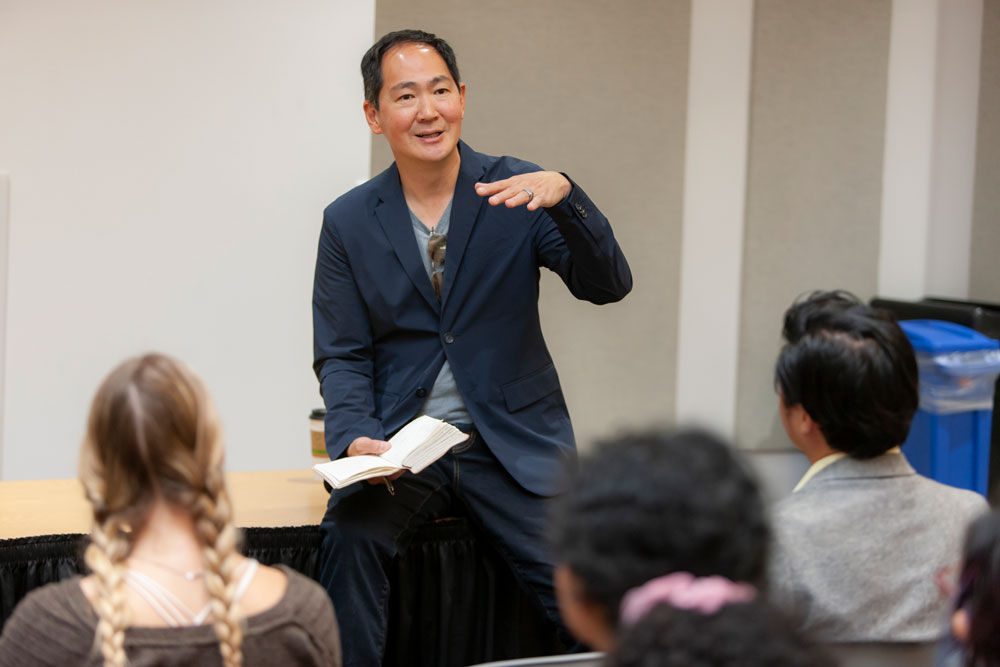
Entrepreneur and author Bill Barnett, who founded the video interview platform LikeLive and sold it to Educational Testing Service, led sessions on networking and wealth creation. He encouraged students to grow their LinkedIn networks to at least 500 connections, build a personal board of directors, pay off debt, and aim for five income streams by their mid-40s. "Competence will get you hired, but likability will determine how far you go," Barnett said.
Once the afternoon speakers wrapped up, the day closed with U.S. Bank executives meeting with and interviewing students, followed by a VIP reception.
For students looking ahead, the message from every stage was the same: Start building now.
 The day opened with a startup showcase, where founders of Novii, Emovid, and Neoflo.ai described their companies and the paths that led them to entrepreneurship.