Astronomy & Astrophysics
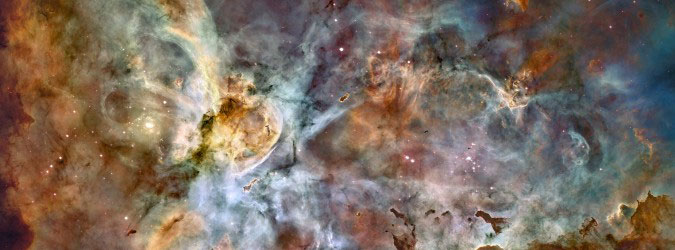
The Astronomy Group at Cal Poly Pomona is both very active on-campus and well-connected off-campus through collaborations with research institutions throughout California, across the country, and around the globe. The Astronomy Group maintains a dedicated computer laboratory for the use of our students, featuring powerful Macintosh computers running state-of-the-art astronomy and graphics design software packages. Students engaged in astronomy research gain a depth and breadth of knowledge in astrophysics well beyond our course curriculum and learn fundamentals of data acquisition and analysis, computer programming, communication and presentation skills.
About the Faculty
Shohreh Abdolrahimi
Associate Professor
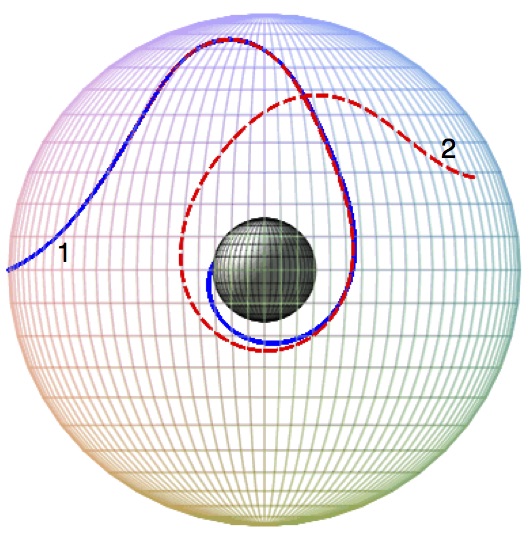
Professor Abdolrahmi works on theoretical gravitational physics and computational general relativity. She studies black holes. Black holes are powerful enough that they warp the fabric of spacetime and serve as a natural experiment where researchers can theoretically "test" the validity of Einstein's general relativity, and investigate alternative theories. Some of Dr. Abdolrahimi’s favorite topics include classical and quantum gravity, black hole physics, large extra dimensions and black hole production at the Large Hadron Collider (LHC) , quantum field theory in a curved spacetime, and quantum effects in accelerated frames. Students working with Dr. Abdolrahimi study different aspects of black holes, such as the black hole properties, study the images of the black holes, and investigate the motion of charged test particle which is the basis for understanding the influence of the magnetic fields on the accretion phenomena into a black hole.
Breanna Binder
Associate Professor
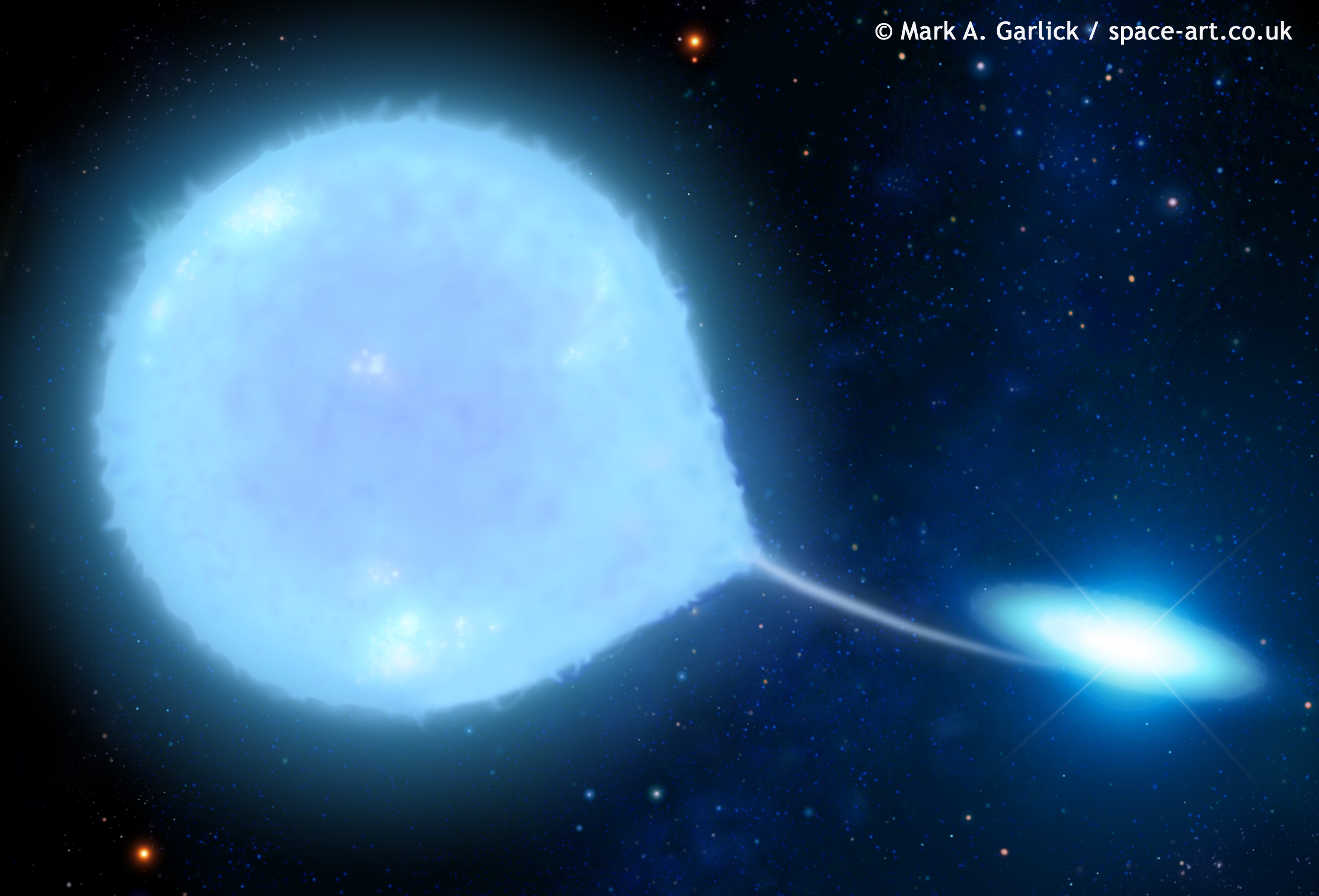
Professor Binder studies the births and deaths of massive stars, both in our own Milky Way and in nearby galaxies. She uses multiwavelength observations to study X-ray binaries — star systems composed of a black hole or neutron star that is gravitationally bound to a normal companion star‚ to better understand their formation and evolution. Students working with Dr. Binder have investigated black hole binaries, supernova "impostors," and the remains of binary merger events. Dr. Binder also collaborates with Dr. Matthew Povich to study massive star clusters and H II regions.
Matthew Povich
Professor and Interim Department Chair
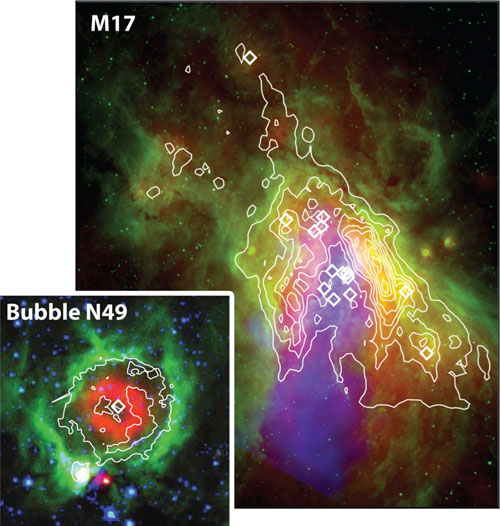
Professor Povich studies the formation and evolution of massive star clusters/associations and their H II regions in our Milky Way Galaxy. His research involves the analysis of large astronomical datasets obtained primarily through survey observations in the X-ray, infrared, and radio. Dr. Povich is a core member of the GLIMPSE and MYStIX research collaborations and lead scientist for the Milky Way Project. He was the first Cal Poly Pomona faculty member to receive an NSF CAREER award. Students working with Dr. Povich have pursued a variety of research projects involving star formation rates, H II regions, massive stars, protoplanetary disks, stellar wind bow shocks, citizen science, and SETI.
Coral Wheeler
Associate Professor
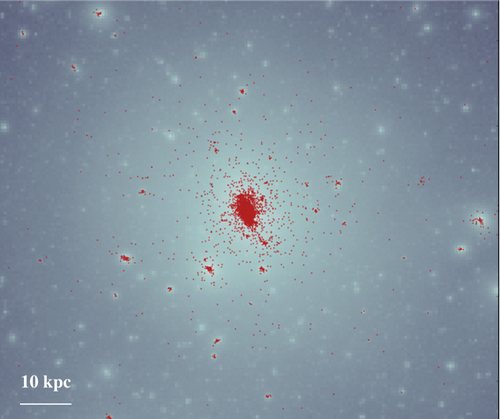
Professor Wheeler's research involves running and analyzing the next generation of high resolution cosmological hydrodynamic galaxy simulations to make testable predictions for low mass (102 MSun < M* < 107 MSun) galaxies that can be used to answer important questions about the Universe by looking no further than the neighborhood near our own Milky Way, where these tiny galaxies reside. The high dark matter content and shallow potential wells of these objects make them excellent testbeds for differing theories of galaxy formation. I simulate these low-mass galaxies at high enough resolution to test the extreme end of galaxy formation physics, investigate challenges to our current cosmological paradigm, and improve galaxy formation models. Armed with these theoretical tools and a wealth of observational data, my primary research objective is to answer important questions about our Universe such as: What is the nature of dark matter? What were the conditions of the early Universe? Do our galaxy formation models accurately describe all galaxies?