Physics Education Research
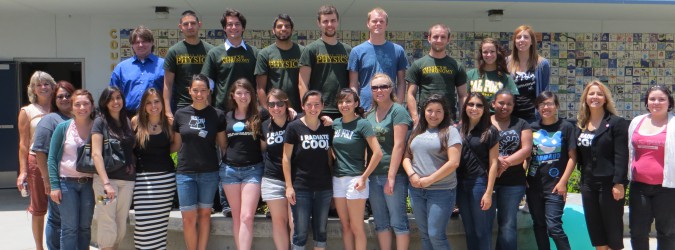
Physics Education Research (PER) faculty at Cal Poly Pomona combine the fundamental “knowledge about learning” and the “discipline specific knowledge of physics” to investigate ways of making the teaching and learning of physics more effective. PER faculty conduct research, curriculum development, and instruction to improve student conceptual understanding in physics and physical science from elementary through college. Our faculty study questions of how students learn in both lower-division and upper-division classes in Physics and Astronomy, and how to develop, implement, and test the effectiveness of pedagogical learning strategies and technology designed to maximize student learning.
Qing Ryan
Professor
Professor Ryan has the following research interests:
- Development of web-based computer coaches to improve students' physics problem-solving skills, at both the high school and college level.
- Studying student difficulties in upper-level physics courses.
- Understanding student difficulties of using mathematics in junior level E&M problem-solving.
- Development of research-based assessments in junior level E&M.
- Effectiveness of different range of scientific inquiry approaches in preparation of prospective and practicing k-12 teachers.
Her recent work involves studying student difficulties of using complex exponential math in junior level electrodynamics. She is also working on the development, validation, and statistical reliability tests for a new multiple-choice Electrodynamics Assessment Tool. Another project she is working on is the development of web-based computer coaches for high school physics.
Homeyra Sadaghiani
Professor
Professor Sadaghiani has a broad range of research interests including:
- Studying student difficulties in upper level quantum physics in two paradigms: Spin First vs. position first
- Development and validation study of research-based assessments in upper-level quantum mechanics
- Measurement of scientific reasoning ability and conceptual understanding of physics content.
- Effectiveness of different range of scientific inquiry approaches in preparation of prospective and practicing k-12 teachers.
- Conceptual and mathematical barriers to students learning quantum mechanics.
- Design and implementation of web-based instructional technologies and study of Hybrid-online and flipped classroom formats.
- Effectiveness of different curricula, course transformations, and pedagogical strategies.
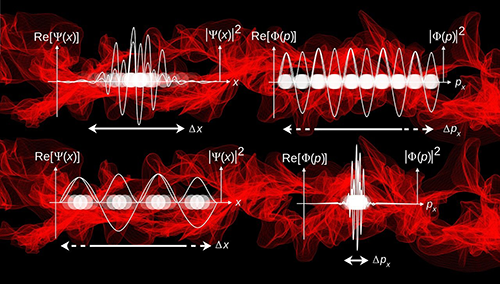
Her recent work involves comparing two different approaches in teaching quantum mechanics: “wave-function” (starting with continuous basis) vs. “spin first” (starting with discrete basis). She is also working on the development, validation, and statistical reliability tests for a new multiple-choice Quantum Mechanics Assessment Tool, which measures student learning of basic quantum topics. Her experimental techniques and analyses include student interviews, diagnostic tests, attitude and motivation surveys, exam question and video analysis.