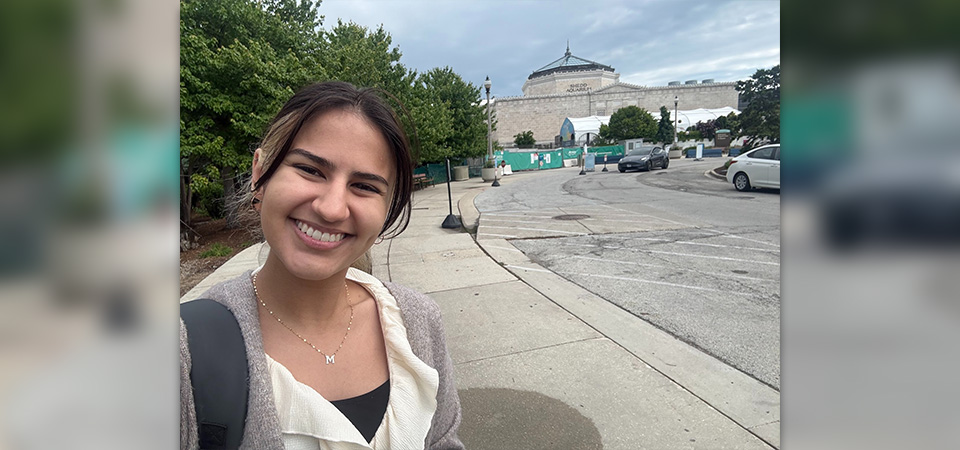
While vacationing in 2025, Madalena Arellano visited the renowned Shedd Aquarium in Chicago
As an animal health science senior from San Dimas who was interested in zoo and aquatic medicine, she was impressed to learn that the aquarium had just completed the first successful anesthetic procedure on a beluga whale.
Arellano subsequently discovered online that the Shedd Aquarium had an internship program.
“When I saw the internship, I knew I had to apply,” Arellano said. “One thing I mentioned both in my application and interview was how inspiring that procedure was to me.”
The Cal Poly Pomona student was selected for an eight-week, unpaid internship this past summer after participating in a Zoom interview with a senior veterinary technician from the aquarium – something that one of her instructors, Assistant Professor Jacqueline Mobley, helped prepare for.
But that didn’t mean Arellano – who stayed with relatives during her internship – didn’t have some butterflies, so to speak.
“I was worried that I would struggle at the internship, because I have never worked with aquatic wildlife,” she said.
Polytechnic Preparation
It turned out that the animal health science courses and faculty had prepared her well by giving her foundational skills in veterinary medicine that were more transferable than she thought at first.
For example, Arellano had no idea what it would look like to put a sea otter under anesthesia. But when she watched a procedure for the first time, she realized it was familiar.
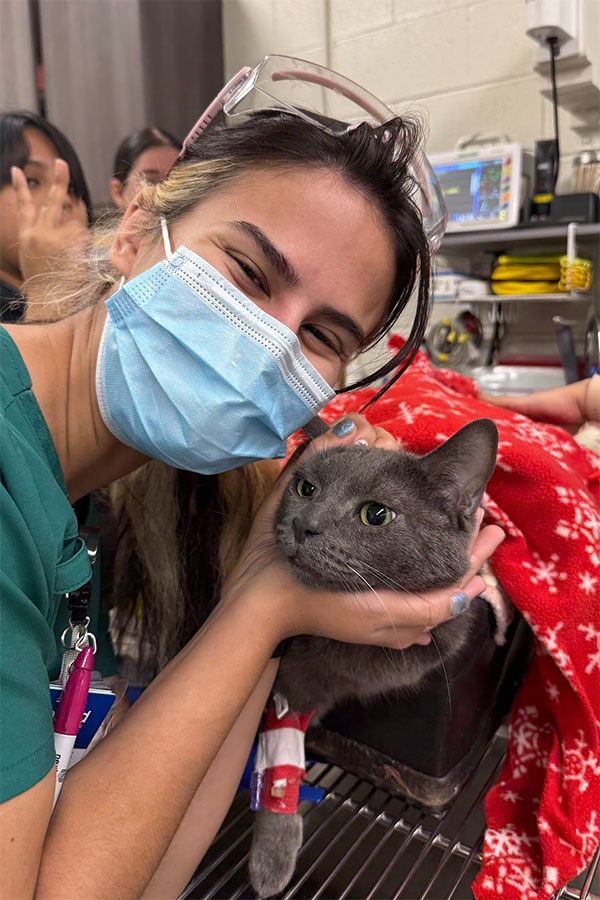
“The drugs that were used to induce and maintain anesthesia were drugs we use here in Cal Poly Pomona in our surgery class with cats and dogs,” Arellano said. “Also, when you’re monitoring a sea otter under anesthesia, you’re watching almost all of the same values you would monitor in a dog or cat under anesthesia, such as heart rate, temperature, and ECG wave to name a few.”
Internship Experience
As an intern, Arellano participated in procedures, exams and treatments. Because many of the patients can’t come “see” the veterinary team, so the staff had to make plans to accommodate everything from a swell shark to a two-toed sloth.
“It was so exciting and taught me so much about critical thinking, problem solving, and planning ahead based on the unique traits of the animals you’re seeing,” Arellano said.
The Shedd Aquarium staff were extreme supportive of her, providing resources to make the most out of the internship, including materials on how to care for the various animals at the aquarium.
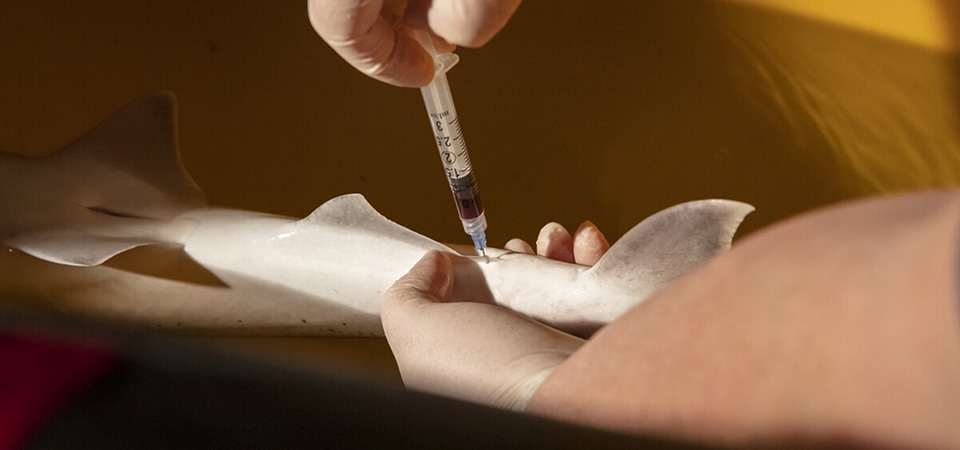
“The veterinary technicians and doctors would walk me through the patients we saw, important traits to know about their species, and how to interpret diagnostics such as bloodwork for these animals,” Arellano said. “They also provided me with many hands-on learning opportunities such as getting to assist patients, draw blood for lab work, and help monitor patients under anesthesia.”
Among the highlights of her internship were participating in a tracheal endoscope procedure where a doctor removed a mucus plug from a turtle and drawing blood from sharks.
Practicing Problem Solving
Veterinary medicine at an aquarium also poses unique challenges to the staff: for example, trying to take dental x-rays of beluga whales.
“No one makes dental x-ray machines for belugas, so they veterinary team figured out how to take dental x-rays using a portable x-ray unit often used by equine veterinarians,” Arellano said. “It’s actually the same unit as animal health science students use here in the Arabian Horse Center to perform imaging on our horses.”
At times, the aquarium staff conduct “voluntary behavior training”: getting the animals to practice behaviors that allow them to participate actively in their care. For example, dolphins can willingly float on a specific side so doctors can perform ultrasounds on them.
The internship confirmed Arellano’s desire to pursue a career in aquatic medicine.
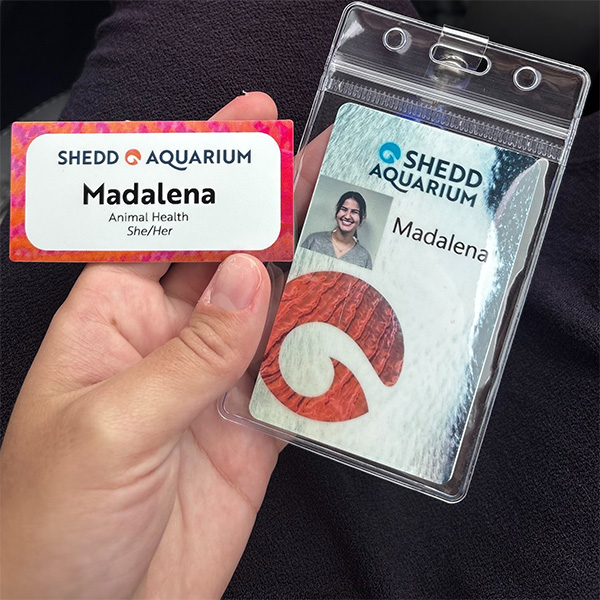
“I loved every day, and it’s so special because medical advancement, conservation, and public education are all central parts of the job,” she said. “The people who work at the Shedd Aquarium and other organizations like it are some of the biggest forces in ocean conservation and bringing public awareness to the majors issues we collectively need to care about to protect the planet that we live on and the animals we share it with.”
Since completing the internship, Arellano has attended the Association of Zoological Veterinary Technicians virtual conference to learn more about the zoological and aquarium medicine field.
She also signed up to get her SCUBA certification through Cal Poly Pomona ASI’s SCUBA program.
“I’m really looking forward to gaining more relevant experience and hopefully building towards a long-term career in the field,” Arellano said.


