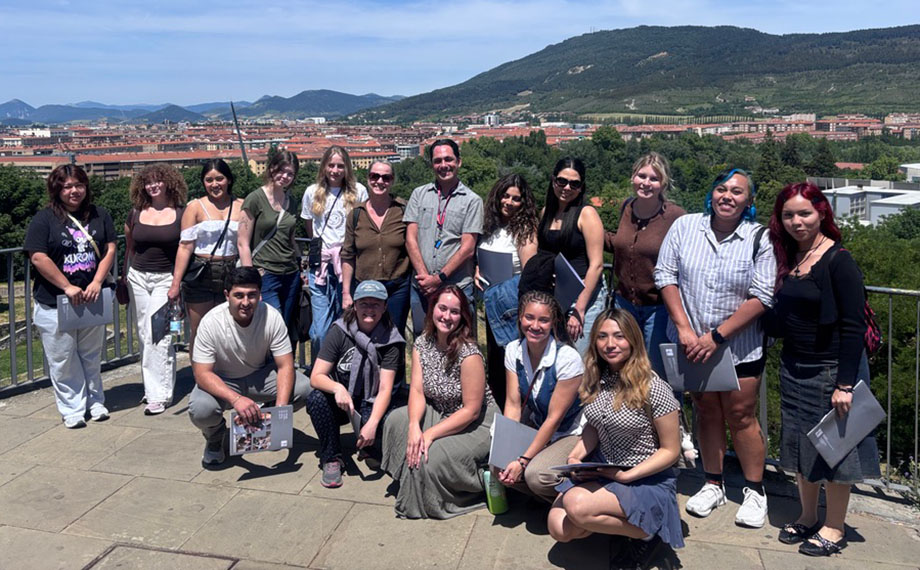
How did you spend your summer?
Karena Wong and Jocelyne Argueta traveled to Spain to learn about food production and technology, how beer and wine are made, and about Spanish culture and language.
The two students were part of the FST 4250: Food Systems in Nations Abroad course, which included hands-on lab sessions, visits to food industry processing facilities, and cultural field trips.
“I heard about the program through emails and had already been hoping to study abroad during my academic career, so I was excited when I saw the opportunity to study in Pamplona, Spain,” said Wong, a fourth-year agricultural science student from Fremont.
The four-week program was offered through the Department of Nutrition and Food Science. Fifteen students enrolled in the class and traveled to Spain, accompanied by Professor Gabriel Davidov-Pardo and Lecturer Jasmin Ilkay.
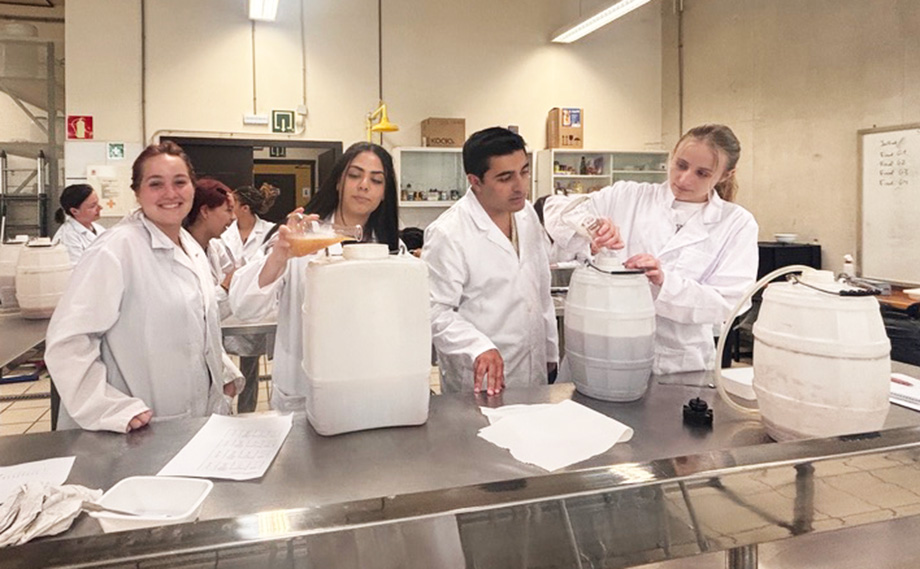
The students participated in hands-on lab sessions at the Public University of Navarre, learning about enology, high-pressure processing, beer fermentation and brewing, sensory evaluation of food products, and Mediterranean diet.
They also visited various Spanish companies to see first-hand how food is grown, produced and processed. Among the places they toured were:
- Aceites Artajo to learn about olive oil production
- Quesos Aramburu to see Idiazabal cheese production and local sheep farming
- the Pagos de Araiz winery to learn about wine production
- Cocuus, a start-up company focused on 3D printing of meat
- Viscofan, one of the world leaders in meat casing production
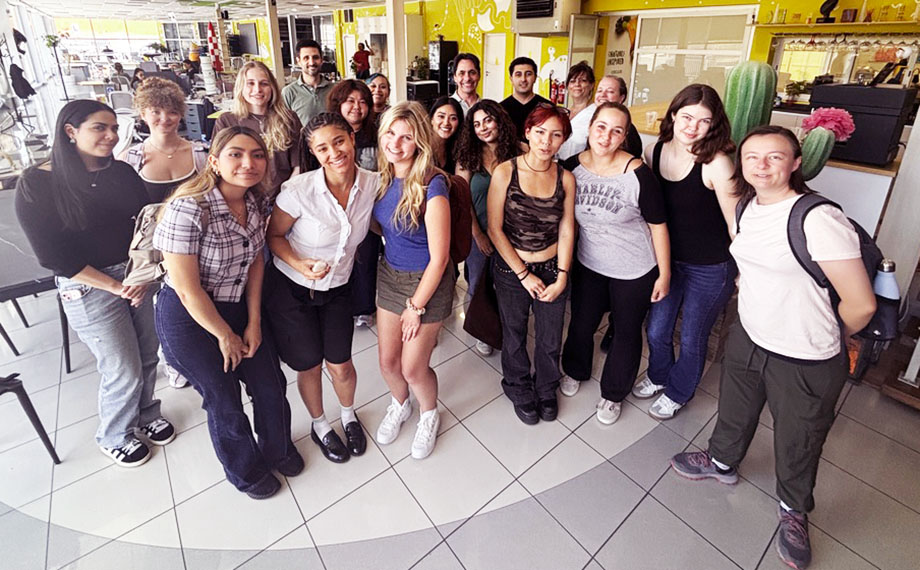
- European Business and Innovation Center of Navarra (CEIN), which promotes food technology, innovation, and entrepreneurship.
Argueta, a master’s degree student in food science from Los Angeles, said the trip gave her skills that she can apply in her career as a food scientist.
“I also gained hands-on experience and knowledge in areas that I did not know much about before, including beer production, enology, and 3D food printing,” she said. “It is exciting that I can now tell future employers that I have hands-on experience making beer, potentially opening up opportunities for me in different areas of the food and beverage industry.”
Prior to the trip, Wong had very little knowledge about food science, and she was a little concerned about how the trip would mesh with her major.
“It ended up aligning with my academic and career goals because going on field trips to see a vineyard, cheese farm, and an agricultural technology facility helped me see how agriculture, food production, culture, and science are all interconnected,” she said.
One of the most interesting parts of the trip was learning about sensory evaluation, Wong added.
“Being inside a sensory evaluation room and evaluating different products allowed me to see how these controlled experiments are conducted while also participating in them firsthand,” she said.
The trip cost the students $3,900 – which included lodging and two meals a day – plus airfare to Spain and tuition for the FST 4250 class.
“When I compared the cost with what it would have been to travel independently, I realized the difference wasn’t as substantial as I initially expected,” Argueta said. “Plus, the program included tour guides and trips to different cities on Fridays, which saved me a lot of the time I would have spent planning everything on my own.”
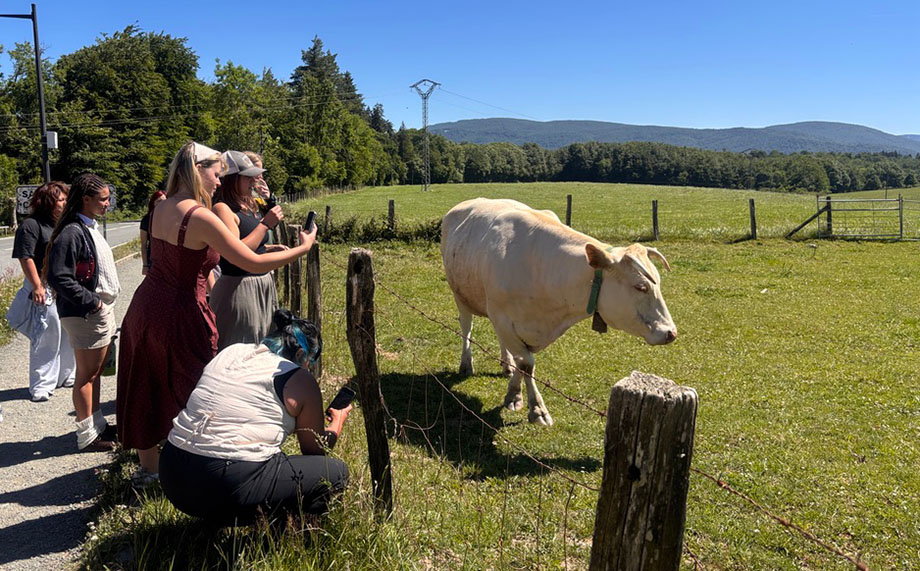
The group also took cultural field trips to Pamplona, San Sebastian, Olite, Burgos, Bayonne, Saint-Jean-de-Luz, and Saint-Jean-Pied-de-Port. The students sampled the local cuisine and even learned how to make paella.
“I had never heard of pintxos before coming to Spain, so trying these small, bite-sized dishes was something very new to me,” Wong said.
In addition, the students were able to gain certification in Spanish fluency, through Espalang, an educational services company.
“I felt that this study abroad was worth every cent,” Wong said, “because not only did I get to know other people on this trip, but everything was a huge learning experience for me.”


