For Curtis Carpenter (CIS ’16, MSIS ’21) technology has never been just about machines. It has been about access, opportunity, and the responsibility to give back.
Now in his 21st year at Cal Poly Pomona (CPP), Carpenter serves as director of Advanced Computing, adjunct faculty member in computer information systems, coach of CPP’s cybersecurity competition teams and advisor to the student club, Students With an Interest in the Future of Technology (SWIFT). His leadership spans infrastructure and instruction, with duties that range from managing the university’s high-performance computing cluster to mentoring students in classrooms, labs, and cybersecurity competitions.
For Carpenter, however, technology has always been about more than systems and servers. It has been about people, in fact, Carpenter’s own journey into technology began far from a data center.
Discovering Technology and a Calling
“I was introduced to technology in high school when a local business owner taught me to build and repair computers in his computer repair shop,” Carpenter said. “Little did I know that this would spark an interest that would lead to my career.”
At 16, Carpenter learned to assemble machines from individual components, long before major brands dominated the market. The experience not only sparked curiosity; it revealed the power of mentorship and hands-on learning. Those early lessons would shape his approach to teaching and service decades later. “At the time, the industry looked very different than it does today, but that experience is what opened my eyes to technology and gave me a lifelong passion to use it to create opportunities.”
Although Carpenter built a successful career in industry, he eventually made the decision to return to the classroom himself. He earned his bachelor’s degree in computer information systems from CPP in 2016 and completed a Master of Science in information security in 2021.
 |
|
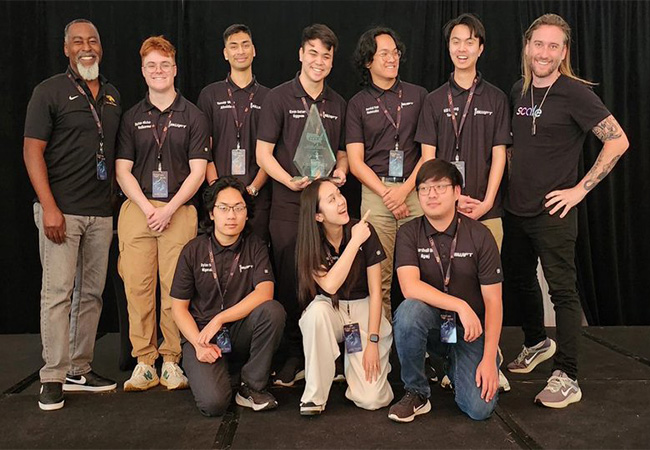
Curtis and Team at CCSD Finals2024
|
Competing and Graduating Side by Side
The motivation to pursue his undergraduate degree was deeply personal.
“My son was about to get out of high school, and I didn’t want him to think it was okay not to go to school, or that I didn’t value education,” Carpenter reasons. “I tried to go back and beat him to getting a degree because I’m very competitive.”
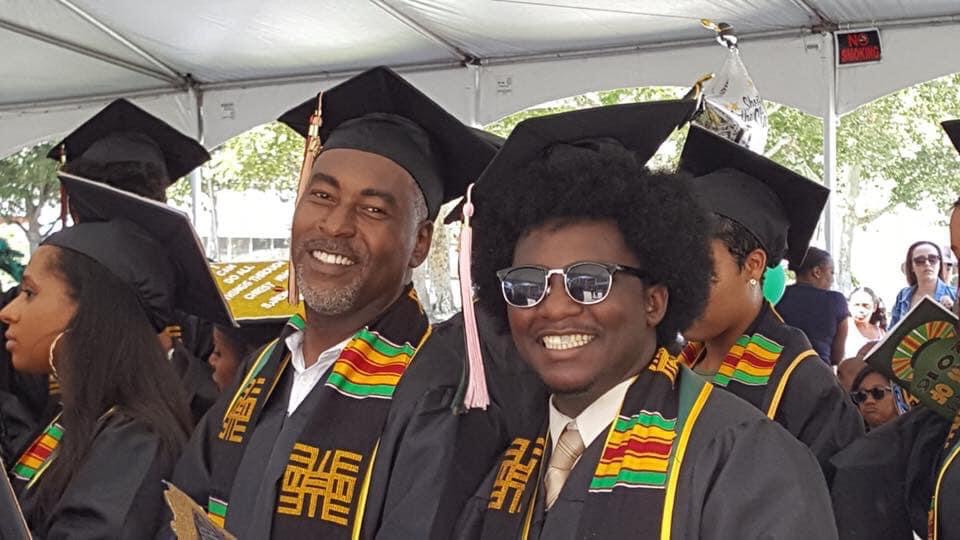
Instead, father and son reached the milestone together. “We actually graduated and walked across the stage together in 2016 as we both received our bachelor’s degrees at CPP’s Pan African Graduation ceremony.”
Returning to school was also a strategic move. In a rapidly evolving field, Carpenter recognized the importance of formal credentials. “It’s fairly hard to keep progressing without degrees,” he said.
After adding the academic degrees to his years of industry training and hands-on experience, teaching became a natural extension of his work.
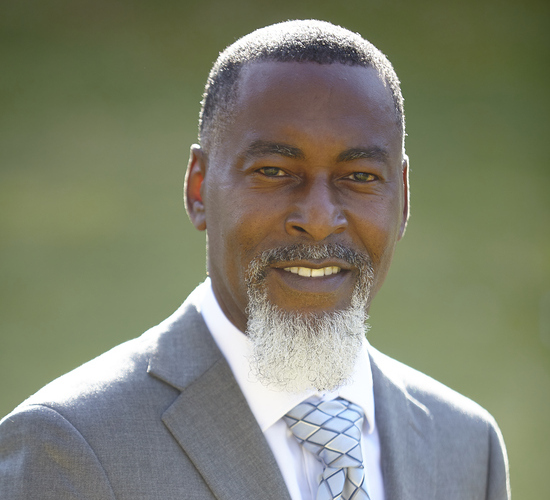
“My objective is to help students understand how technology can be used for a purpose. It is not just about building a platform, it is creating a tool that can be used by decision makers, researchers, and educators to facilitate access, improve decision making, and increase transparency.”
— Curtis Carpenter (CIS ’16, MSIS ’21)
In cybersecurity and information technology, Carpenter emphasizes that relevance depends on adaptability. “In technology, things change so fast that someone who has expertise today may not be relevant five years from now,” he said. “If this is the path you want to take, you’re going to have to be a lifelong learner.”
That mindset has guided his own career pivots. When he saw cybersecurity emerging as a critical discipline, he chose to pursue his master’s degree in information security at CPP rather than relying solely on certifications.
“We’re all going to be presented with a fork in the road that may determine our outcome,” he said. “You have to be willing to see what’s happening in the industry and make adjustments as necessary.”
Addressing Disparities and the Future of STEM
For Carpenter, the importance of preparation and representation extends beyond campus. A member of Alpha Phi Alpha Fraternity Inc. since 1993, he dedicates much of his time to mentoring and community service. Carpenter is a board member and co-founder of Reaching Our Kids, a nonprofit organization that provides mentoring, STEM training and college preparation for high school students in his hometown of Barstow. “One of the pillars of the fraternity is community service,” he says. “It aligns with a deeply ingrained passion I have to give back to the community.”
Students apply to the Reaching Our Kids program at the end of eighth grade, and the organization supports them and their families throughout high school. The main goal of the program is for all participants to graduate High School and attend four-year universities. Monthly workshops frequently center on information technology and cybersecurity but also expose students to a range of STEM careers. “Our inaugural class of students will be graduating this year, and we’re very proud of their accomplishments,” explains the proud mentor.
National data underscores why that work matters. According to the Pew Research Center, African American workers make up only 9% of the STEM workforce, and a 2019 study published in Educational Researcher found that 40% of African American students switch out of STEM majors before graduating.
For Carpenter, the solution begins with early exposure. “It’s hard to be something if you don’t know the role exists,” he said. “Students need to be able to see what’s available to them and see someone who looks like them working through these challenges and supporting them.”
 |
|
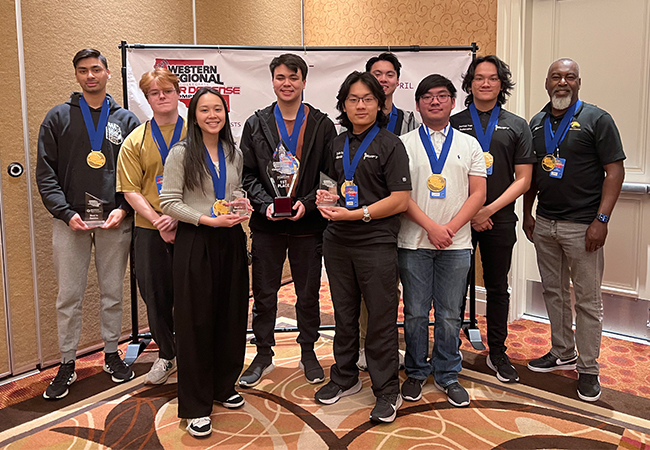
Curtis and CCDC regionals 2024
|
He also believes strongly in experiential learning, a philosophy that aligns closely with Cal Poly Pomona’s “Become By Doing” polytechnic mission. “Theory is great, and we all need to understand it,” Carpenter says. “But actually, putting your hands on something and working on it changes everything. That’s how experiential learning really sticks.”
Programs such as the Student Data Center, Security Operations Center and cybersecurity competition teams give CPP students the opportunity to apply classroom knowledge in real-world environments. Carpenter regularly hears from peers at other institutions who are surprised by the scope of CPP’s student-led operations. “When I talk to industry professionals or people from other colleges, they say, ‘Wow, we don’t have that,’” says Carpenter. “That’s such an advantage for our students.”
“What I’m doing now is really prepping me for years later in life because I want to continue to give back and become much better at training and providing opportunities to youth. That’s what my life is about.”
— Curtis Carpenter (CIS ’16, MSIS ’21)
Partnering with Industry for a Better Future
His service on the College of Business Administration (CBA) Cyber Advisory Board further strengthens the bridge between campus and industry. The board, composed largely of alumni and professionals, explores emerging technology trends and provides an avenue for students to network with industry professionals and alumni. “It’s about lending our expertise and industry connections to students as a way to keep Cal Poly Pomona positioned as a leading force within technology education,” says Carpenter.
For students hoping to follow a similar path, Carpenter offers straightforward advice: invest in your growth and take advantage of opportunities beyond the classroom. “Be open to consistently working on your skill set. You’re going to need the discipline to be a lifelong learner.”
He urges students to seek experiential opportunities through the Student Data Center, Security Operations Center, student clubs and competitions, touting that these student organizations, in particular, offer more than technical growth. “In these clubs, students learn skills and then turn around and train the people behind them,” he says. “There are tremendous leadership-building opportunities through club participation.”
Carpenter sees Cal Poly Pomona’s culture of engagement as a distinct advantage. “There are very few universities across the country that have student-led data centers or security operations centers,” he says. “When I talk to industry professionals or people from other colleges, they often tell me, ‘Those centers provide such an advantage for your students.’”
More than two decades into his career at CPP, Carpenter’s focus remains clear. Technology may be his profession, but mentorship is his purpose, and through both, he continues to expand what is possible for the next generation of Broncos.
Return to News List...


