SheCodes Supports Success of Women in CS
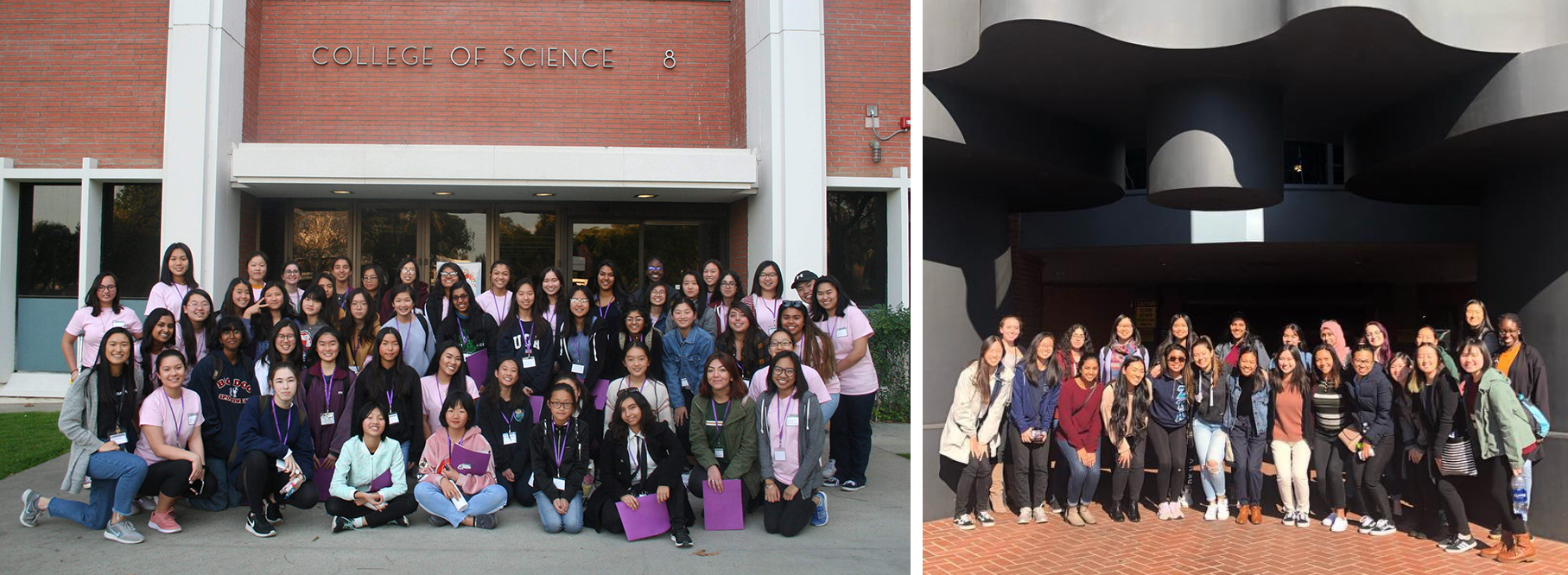 (Left) Participants in the 2018 Future Women Developers event pose in front of building 8. (Right) SheCodes members took a (pre-pandemic) field trip to Google.
When I was a child my mother took me to visit her computer science professor. The professor was a woman. At the time I thought nothing of the professor being a woman, after all, my mother was taking her class.
Though my mother never pursued computer science as a career, many of her classmates did and by 1984 the national percentage of women in computer science reached a high of 37 percent.
The percentage of women in the field has steadily declined since then and is currently below 20 percent. At the College of Science Department of Computer Science it’s 20 percent.
Some attribute the decline to the advent of personal computing and gaming, and the marketing of PC’s to a male audience. Small numbers of women in computer classes can also be discouraging.
“I was taking an introduction to CS class in high school and there was only one other girl, then she dropped. I felt scared because there seemed to be a lack of support,” said sheCodes President Patriz Daroy. “I was intending to major in industrial engineering but after I took that class and coded a website, I found the creative aspect fulfilling. I’ve always loved drawing and painting and this was another way to use my creativity.”
SheCodes is a CPP club that provides support to women in computer science. The club is a chapter of the Association for Computing Machinery – Women in Computing (ACM-W) The CPP club grew out of a “Girl’s Night of Code” event sponsored by the Computer Science Society. In 2016 sheCodes became an official club.
The club is built on three pillars: community, outreach, and growth. The club builds community through meetings, frequent communication, events, and mentorship.
One of the things they do for outreach is an event called Future Women Developers (FWD) which Daroy points out is also the abbreviation for “Forward”. It’s usually a day-long conference but in Spring 2021 the virtual version will last a week. Students from middle schools and high schools are invited and guests will include representatives from Northrop Grumman, and Microsoft.
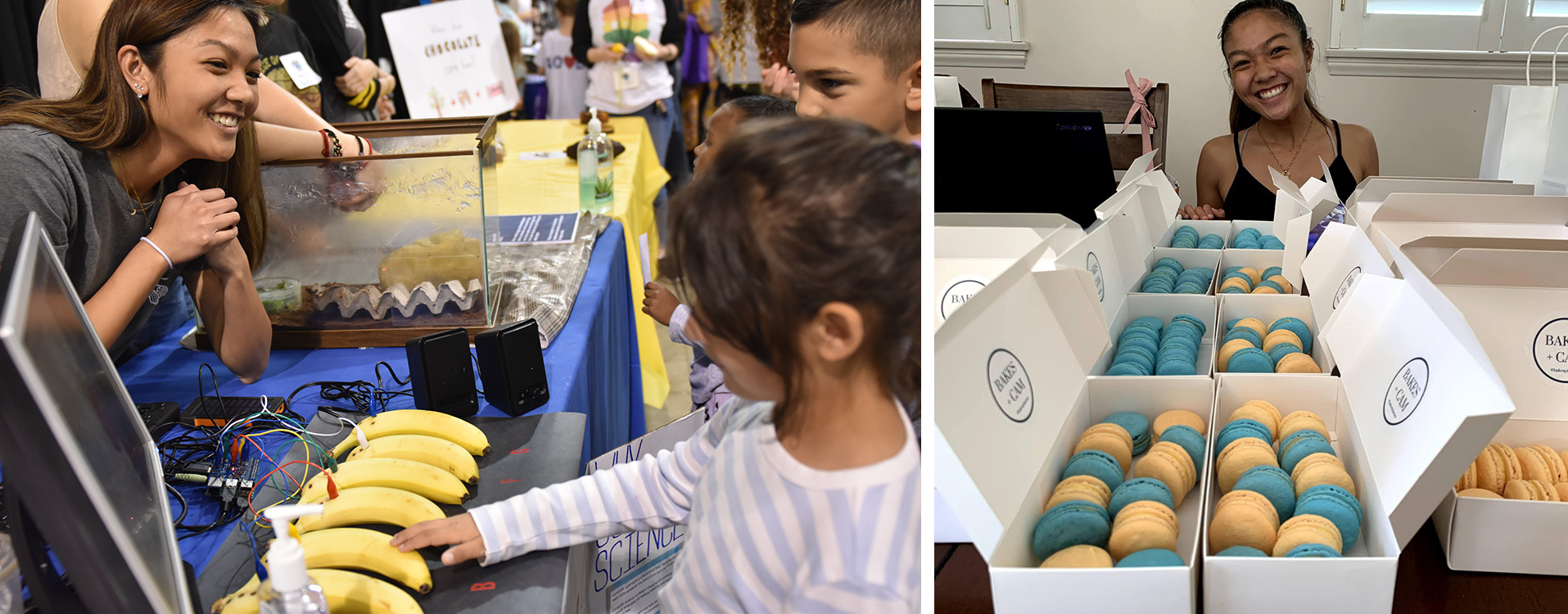
SheCodes has also participated in an annual outreach event called the STEAM Fair. Camryn Sumabat who is External VP for the club shared, “At the Fair a young girl and her mom approached my booth. After my demonstration of the banana piano, the young girl told her mom she thought it was so cool, and her mom said, ‘you can be a scientist like her!’ It was heart-warming to hear and made me realize I didn't really see women as scientists when I was younger. I hadn't even thought of myself as a scientist until that moment.”
There are many opportunities for growth. The club holds panels on topics such as how to do LinkedIn profiles and how to write resumes that stand out. In a physical environment their events included field trips to companies. They have visited the Google campus in Venice, Jet Propulsion Lab, Qualcomm, and Behr. Virtual events have included inviting software engineers, program managers, and e-recruiters to speak to the club. Even though the club’s purpose is to empower women, everyone is welcome to their events which they advertise on social media and on their website.
Daroy got hired by Microsoft through a recruiting event the club attended. She will work as a software engineer on a team that is working on the future of work. Daroy will be specializing in accessibility, something she’s passionate about. She realized that passion through her experience in Assistant Professor Ben Steichen’s lab.
Sumabat has combined her interest in computer science with her love of baking. “I currently run a small bakery from home and sell online. I donate some of my profits to Black Girls CODE, an organization that provides young black girls with the resources they need to be successful in CS. In terms of combining these two skillsets, I would love to work as a software engineer for companies that build things for small businesses, or at least make an impact in the small business/hospitality world,” Sumabat said.