Undergraduate Student Researcher Profiles
The goal of creating Student Profiles is to educate students about research and inherently spark their interest of conducting research of their own. Research is a particularly advantageous skill to incorporate into higher education and one’s career, yet many students are not aware of the opportunities at Cal Poly Pomona. Through the various works of research students across all disciplines, we aim to embolden students to conduct research so that they may gain knowledge and develop abilities that can assist them in the future.
George Matta
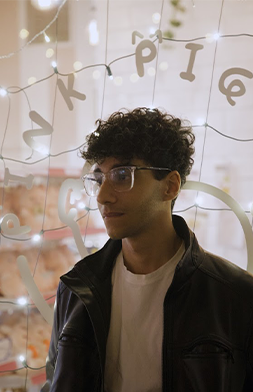 Major: Computer Science
Faculty Mentor: Dr. John Korah
“Before joining STARS (or starting research, for that matter) I hadn't even remotely considered grad school. Now, it seems like the direction my life is moving in and I can't imagine wanting it any other way” - George Matta
George is a first-generation college student who was born in Egypt. Moving to the U.S for him was very difficult but he’s grateful for the many opportunities it's provided him like education and being able to do research which is something he never thought he could do coming here. He says that being part of the research program has been a highlight for him since being at Cal Poly Pomona. The inspiration for George to start his research journey was when he joined a program on campus called the "Google ExploreCSR" program. This is where he met his mentor Dr. Korah who works closely with him on his research project as they meet weekly. George explains that his research project focuses on Celestial bodies.
Advice for student researchers
What George would like for undergraduates seeking research opportunities to know is, “You might not find your passion in research, and that's okay! The point is that you allow yourself to be involved in the programs and projects around you. Don't let a bad experience with research push you away from the idea in general - find something you love doing and you'll be able to contribute so much more to the project.”
Zoe Nelson
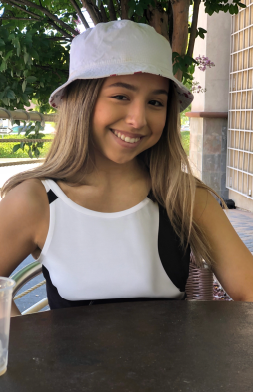 Major: Biology
Faculty Mentor: Dr. Janel Ortiz
“As a Mexican-American woman, I motivate other underrepresented women like myself to acknowledge in their capabilities. Taking on projects arrives with a rewarding feeling, not only for yourself but also for those who root and look up for you.” - Zoe Nelson
Once upon a time, there was a determined young woman named Zoe Nelson, known for her unwavering determination and a heart full of visions and dreams. At the age of 22, she found herself on an incredible path, and got into a community college, uncertain of the future that lay ahead.
Zoe had always been fascinated by the wonders of the natural world, but the world of science seemed like an unconquerable challenge. Despite a few stumbling obstructions, Zoe's persistence paid off, and she discovered herself greeted into the tight-knit STEM community, her heart dancing with pride.
As she dived more in-depth into her research, Zoe's love and ambition for biology blossomed, and she determined to major in the subject. She also decided on psychology as her minor, acknowledging the importance of comprehending human behavior in the goal of scientific understanding.
A turning point came when Zoe entered the biology lab of her community college, where she passionately lab simulations for students learning Microbiology. Her dedication to assisting her team members captured the eye of a mentor who noticed her potential talent and ability.
Dr. Janel Ortiz, her mentor, noticing Zoe's potential, advised her of an incredible chance – the SURE (Summer Undergraduate Research Experience) program. Thankful and enthusiastic, Zoe took the challenge that stood in front of her.
In the mission of her study dreams, Zoe got to know a delighted announcement. She had been accepted into her dream university, the University of California, Irvine (UCI), and the possibility of beginning her journey there in the fall filled her with happiness and expectation.
Zoe's study project in the SURE program was nothing short of fascinating. She tackled a quest to explore the differences in nature populations across various cities in the San Gabriel Valley. Armed with trail cameras and a wealth of data, she aimed to discover the correlation between these distinctions and the recreational green spaces located in wealthy and urban areas.
Coached by her mentor, Dr. Janel Ortiz, Zoe navigated the challenges of her exploration with enthusiasm. Performing on a subset of a graduate student's dissertation, she acquired priceless understanding and sharpened her abilities and skills. The freedom of the SURE program also allowed Zoe to complete her own plan and navigate the school's database with comfort.
Advice for student researchers
In her exploration for victory, Zoe had collected priceless knowledge to convey to her peer undergraduates. She instructed them to be punctual, form sincere connections with mentors, counselors, and fellows, and approach seminars and meetings with thorough preparation – qualities that she learned would help them nicely in any work they sought.
Alyssa Tran
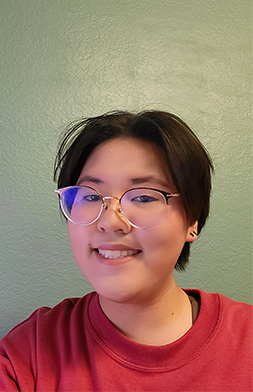
Major: Chemical Engineering
Faculty Mentor: Dr. Chantal Stieber
“I was inspired to take on this project because I have always been interested in climate change. Climate change is a huge issue in sustainability and I want to help maintain the world we live in.” - Alyssa Tran
With a mind fueled by curiosity and a determination to make a difference, Alyssa embarked on her journey as a first-generation Asian American college student. Passionate about the world of chemistry and drawn to the boundless possibilities it offered, Alyssa chose to pursue a major in chemical engineering. She says, “The field is so expansive and flexible.” In her quest for guidance and support, Alyssa stumbled upon the STARS program, a beacon of hope amidst the vast sea of possibilities. It was through her research advisor that she discovered this structured, paid undergraduate research experience. It seemed like the perfect opportunity to gain hands-on experience in a chemistry lab at a higher level, even as an undergraduate student. Alyssa’s research centers on carbon dioxide activation using metal NHC complexes. She was inspired to take on the project because she has always been interested in climate change. Says Alyssa: “Climate change is a huge issue in sustainability and I want to help maintain the world we live in.” Alyssa and her team will recycle captured carbon dioxide using metal catalysts, which will help reduce the amount of carbon dioxide in the atmosphere.
The path of a researcher was not without its challenges, and Alyssa faced them head-on. Alyssa states that the most challenging aspect of research is simply starting the research project since there is such a large knowledge gap. Furthermore, her project has a lot of technical and theoretical knowledge that is difficult to decipher, which is especially arduous when papers are written with such complex and dense academic language. But Alyssa was fortunate to have a support system in place. Her research advisor and lab mates became her guiding lights, patiently explaining the intricate details of the project in simpler terms. With their help, Alyssa steadily navigated the labyrinth of scientific understanding.
Alyssa's experience with the STARS program resonated deeply with her aspirations for the future. She envisions this project connecting to her future as she wants to work in sustainability, either in industry or in academia, reflecting: “ Beyond the technical knowledge that I acquired, it also teaches me valuable skills in problem-solving and critical thinking.”
Advice for student researchers
Alyssa’s advice for new researchers is: “To not be afraid of asking questions and standing up for your needs. It is normal to not fully understand your respective fields at first since people expect you to be inexperienced. If you need something, advocate for yourself respectfully. With each step you took, you will realize that the path of a researcher was not meant to be walked alone, but rather in the company of those who shared her passion and supported her along the way."
2023 - 2025
Expected Graduation: Spring 2025
Major: Chemistry
Minor: Culinology
Faculty Mentor: Dr. S. Chantal Stieber
“One of the most important lessons I have learned from research is to not be afraid of failure. It is through failure that we learn and seek other options. If everything worked the first time, research would not be needed.” - Ethan Charavin
Ethan Charavin, like many high school seniors in 2020, first transitioned to Cal Poly Pomona fully online and did not step onto campus until Fall 2021. The transition to Cal Poly as a full-time student on campus, versus the online learning that he was used to was now a massive change. The in-person learning experience was distinct for him and being thrown back into the swing of things with his rigorous courses took him by surprise. Despite all these challenges, he found my happiness in the research he was conducting in the Stieber lab. The welcoming environment of the lab and the continuous support of Dr. Stieber gave me the confidence Ethan needed to stay in school and persevere for the semester and the semester following it.
Ethan is majoring in Chemistry and minoring in Culinology. Although Chemistry as a major was not what he envisioned at the beginning; he is extremely grateful that he took high school courses in Chemistry, which led him to Cal Poly Pomona. Ethan notes “taking my chemistry courses at CPP made me realize why I really chose chemistry. Chemistry has this certain beauty to it.” The chemistry department and his courses here at Cal Poly Pomona shaped Ethan’s research journey and fostered his love for the subject. With his newfound love for chemistry and the help of the SEES & RIO programs, Ethan was able to start his research journey.
Ethan is a part of many different clubs and programs that helped establish a sense of community in the Chemistry department. Ethan has recently received the Conference Presentation award as well, for his research accomplishments that he was able to present at different conferences. He was involved in the RIO (Research through Inclusive Opportunities) Program, SEES (Science Educational Enhancement Services), and the Science Council club here at CPP. The RIO program jumpstarted his research journey and it allowed him to further explore the different aspects of his research project and taught him some extremely valuable skills. Ethan feels extremely connected to the SEES program because it helped him build a sense of community and because of the connections he has made with other students in the program. Ethan cannot imagine what his life would look like without involvement in these programs.
Ethan had always liked the prospect of participating in research, but he never knew how involved he would become in research as he is today. During Summer 2021, he attended a remote supergroup for chemistry undergraduate students. His current faculty mentor, Dr. Stieber, was a representative for the CPP Chemistry department. This supergroup made Ethan realize how important research was to him and motivated him to push himself to join a lab group. His research journey continued to evolve through participation in the RIO program because it showed him a different side to his ongoing research.
Currently, Ethan is doing research over the summer and hopes to continue it throughout his time at Cal Poly Pomona. A recent highlight of Ethan’s research journey was his participation in the RSCA (Research and Creative Activities Conference) hosted by the OUR which led to his presentation at the 36th Annual CSU Research Competition. His research project was selected to represent CPP’s chemistry department, and he gave an oral presentation about his research among presenters from other California State University students. Ethan is extremely honored for being able to participate in this competition to represent CPP and his lab.
Ethan has a great understanding of challenges that he may face while doing research and wanted to share that all research comes with struggles that students could encounter. He wants to let students know that one of the most important lessons that he has learned from research is to not be afraid to fail. He believes that the struggles that he has had in his research pushed him to think of different solutions to fix the problem. He overcomes research struggles by analyzing the problem, thinking of solutions, as well as getting a second opinion to ensure that he is set up for success.
Ethan has worked very closely with his faculty mentor. He was extremely excited to work with Dr. Stieber because of her incredible work and how she represented herself in the supergroup that he participated in during Summer 2021. His work with Dr. Stieber helped him gain confidence in the lab. He believes that he still has a lot to learn but truly feels that he is getting the learn by doing experience.
“She showed me how the lab operates, why the work we do is important, taught me techniques, and was always willing to answer my questions. I think this has benefited me a lot. It wasn’t a situation where she was watching every move I made, but she guided me through the process, and I knew she would be there if anything were to come up. “Ethan adds.
Research is the first step in this long academic journey for Ethan. He is excited to hopefully pursue a future career working in the HIV and AIDS research field. He loves that Chemistry is a broad subject and that it can be applied to many real-life scenarios. He looks forward to using the experience that he has gained in Dr. Stieber’s lab in order to help further success in the future.
After his time at Cal Poly Pomona, Ethan plans on going to graduate school to pursue a PhD in Chemistry. He is not sure what he would like to specialize in, but he knows that he can see himself doing research as a career. In addition to this, Ethan would like to travel.
“The world is so big, and I would love to get the chance to explore it!” Ethan states.
Advice for student researchers
“I would say just do it. Do not be afraid to fail or mess up. This entire process is a learning experience. Get invested in your project and make sure it is something you like. Also, build connections with other faculty members. It does not hurt to build your network. Who knows you might just need to ask a favor in the future.”
Expected Graduation: Spring 2023
Major: Animal Science
Faculty Mentor: Dr. Juanita Jellyman
“Since I was a little girl, I have had a love for animals. I was always obsessed with learning facts about them and anytime I saw a lost pet I would try and find its owner. When I found out how much I loved biological sciences, it was only natural to see that I would fit right in as an animal science major...” - Gabrielle Rodriguez
Gabrielle Rodriguez has always had a passion for everything science ever since middle school. Her previous educational experiences created a foundation for how exciting science can be. She decided to pursue a career in animal sciences because of her love of animals as well as her love of biology and ecology. Her journey to Cal Poly started when Gabrielle researched animal science programs and found her perfect fit and immediately fell in love with the program. Gabrielle is immensely grateful for her time thus far at CPP.
“I have gained so many amazing opportunities to do hands-on learning which I personally think is the best way to learn, I have the most passionate professors who encourage me to do my best in school, and I have made memories with the best people that will last a lifetime. I think choosing to go to Cal Poly was the best decision I have ever made.”
Gabrielle is majoring in Animal Science here at CPP. She decided to pursue this major because of the versatility it has, and it allows her to study both of her passions: biology, and animals. She was motivated to study animal science because she can take a wide variety of science courses, while also being able to learn about animals.
Gabrielle loves being involved here at CPP, and it helped her begin her research journey. She was the President of Kappa Delta Sorority, Epsilon Upsilon chapter here at Cal Poly Pomona. Kappa Delta has taught her leadership skills and has increased her confidence. Kappa Delta became a pivotal part of Gabrielle’s research journey because it exposed her to research. She was able to create connections in her sorority, which in turn, allowed her to begin working with her research team and her faculty mentor STAR, Dr. Jellyman.
Gabrielle’s motivation to pursue research first begins with her parents, who are her biggest motivators. They have allowed her to make the most out of her educational experiences and it allows Gabrielle to take every opportunity that is presented to her. Her motivation to pursue research comes from the idea of being able to study science. Before research, Gabrielle had only been exposed to textbooks, did in-class labs, and listened to lectures, all vital information, however, she felt that there was no discovery in that.
“Research truly can change the world, for the first time in my life what I am working on could impact the world.” - Gabrielle
Gabrielle’s most recent research is working with her faculty mentor Dr. Juanita Jellyman. She researches how high-fat diets during pregnancy can cause the offspring to have an increased risk of developing insulin resistance and obesity later in their life. Gabrielle in the fall was able to take glucose samples of sheep and lambs and was able to put into practice the techniques that she had learned in her lab classes. She was excited to be able to put these techniques into practice and found it educational and inspirational. Gabrielle’s favorite part of her research was this past spring when she conducted the second trial and was able to care for the sheep every day. Gabrielle believes that this research has been an amazing and rewarding experience.
Gabrielle’s biggest struggles with research are rooted in the pandemic, like many other students. She first started her research journey in September 2020, which made it difficult to navigate in the beginning stages. She found that it was difficult to stay motivated when she was not able to be physically on campus doing the work hands-on. She learned from these experiences that doing background research is just as important as being in a lab or taking data. Gabrielle was able to understand the subject better before jumping straight into the lab work.
Gabrielle worked very closely with her faculty mentor Dr. Jellyman. Gabrielle has found that her mentor has inspired her to always do her best and answer all the questions necessary. She appreciates that her mentor encourages her to figure out the answers to her questions, before telling her the answers because it allowed her to grow from her mistakes and grow from them. Gabrielle is enamored by watching Dr. Jellyman work in her field and has shown her how much passion she should put into her goals. Gabrielle is thankful that she gained an amazing mentor out of this relationship, someone who is willing to push her to do her best while also having her back and supporting her.
Gabrielle’s research connects with her future goals because she wants to continue in the science field and believes that her research is the steppingstone to having her very own study. She was greatly inspired by her faculty mentor and wants to have her own research. In her upcoming senior year before Gabrielle graduates in 2023, she hopes to make more connections in order to discover what she would like to do after graduation. Since animal science is very versatile, Gabrielle is continuing to explore what specialization she would like to pursue to further her education. She also hopes to continue her research.
Advice for student researchers
“Go out and talk to professors, even ones you have never met, if their research interests you, go talk to them see if you can join or even just discuss what they are researching in more detail. It never hurts to ask. Also, remember when you first join research it can be overwhelming, you may feel like you have imposter syndrome, like how the heck did I make it here, but remember the whole point of undergraduate research is to learn. If you made it to this point, you deserve to be here. Don't be afraid to ask questions, a good scientist asks many.”
Expected Graduation: Spring 2023
Major: Biology
Minor: Chemistry
Faculty Mentor: Dr. Juanita Jellyman
“Biology started becoming interesting to me once my mom was enrolled in her nursing program, and I as a middle schooler would take interest and read her notes with her. This is when my spark for biology, and particularly women's health since it is the field she works in, took hold of me. It was just fascinating how our bodies work 24/7, without any commands, just to keep us alive and the many fascinations that still need to be figured out.” - Nairi Azazian
As a first-generation Armenian student, Nairi started attending CPP in Fall 2019 and is going into her fourth year. She has loved her time here and has had an informative experience. Some of the highlights of Nairi's time here at CPP have been her involvement in research and the Kellogg Honors College. Nairi states that most professors are extremely helpful and approachable. Nairi cannot wait to begin her future career prospects and has felt very prepared thus far. She is continuously grateful for her family's support in her educational and research journey and hopes to continue to make them proud.
Nairi is majoring in Biology and minoring in Chemistry. She has always taken an interest in biology, specifically in endocrinology and women’s health despite first starting here at CPP as a Political Science major. After quickly realizing that political science was not her calling, Nairi decided to tackle Biology head-on despite the competitive nature of the major. Her passion for Biology began in middle school when her mother was enrolled in a nursing program, and Nairi would read her notes alongside her. After pursuing Biology, Nairi became passionate about organic Chemistry and decided to add a Chemistry minor. Her main inspiration for Chemistry solidified when her professor Dr. Osberger inspired her to continue her journey and appreciate the breakthroughs in organic chemistry research.
Nairi was the vice president of the Research Scholars Association club during the 2021-2022 academic year. She is also part of the Kellogg Honors College here at CPP. Nairi believes that being involved in campus life was a big contributing factor to her research successes because of the community that it builds. She also worked as a CHM3150 (Organic Chemistry II) facilitator on campus for the SEES program from Fall 2021-Spring 2022 which also led her to pick up a chemistry minor with hopes of working in the pharmaceutical industry in the future.
“Being involved in a club that focuses on what you are interested in can be very beneficial because of the invaluable information that you gain. It also allows you to meet like-minded individuals and make connections to potential work and research opportunities.” - Nairi
Nairi’s main motivation to become involved in research was to build on top of the knowledge we already know and to contribute to scientific findings. After she read some of Dr. Jellyman's published research articles, she was motivated to also join her research lab and further her understanding of endocrinology, including diabetes. Nairi also wanted to get some experience in research to know if she wanted to continue her career in that field.
Nairi joined her current research project during her second year at CPP. The research that Nairi has been doing thus far has been in collaboration with Claremont Graduate University and involves looking to see if implementing a cost-free, year-long CDC-recognized Diabetes Prevention Program in LA county would decrease the participant's risk of type 2 diabetes. Upon completion of that project, Nairi and her team found that there was no reduction in the risk of type 2 diabetes when sessions were held through zoom. Now, Nairi is collecting and analyzing data independently from an in-person cohort that takes place in Altadena to determine if an in-person cohort in a library setting would lead to a reduction in the risk of type 2 diabetes. The project is set to be completed in December 2022.
Nairi did not experience a lot of research struggles but had to adapt to the research processes and learn from her mistakes. She is extremely grateful for the support of Dr. Jellyman and her research time because she was able to improve her time management skills. Nairi was glad that she had to work through these problems because she was able to adapt quickly and in turn created better habits that helped aid in her research.
Nairi worked closely with her faculty mentor, Dr. Juanita Jellyman, and a recently graduated graduate student, Nereyda Zeceña, throughout her research projects. Some benefits that she has gained from this kind of relationship are learning more about the field and how to get more involved to strengthen her resume. Nairi has also learned better writing skills because of draft corrections from my faculty mentor.
The research that Nairi has been doing goes hand-in-hand with her future goals. She plans to continue her education in endocrinology, including women's reproductive health, and go for a master's and Ph.D., while incorporating research in her future career, perhaps by working for the pharmaceutical industry. Some research topics that Nairi hopes to carry out in my career are creating more birth control options and studying gestational diabetes in depth.
After her time at CPP, Nairi plans to take a gap year to thoroughly research graduate school options, to study for the GRE in depth before applying, and take the opportunity to work and gain more experience in the field. After the gap year, Nairi plans to continue her education by studying endocrinology and women's reproductive health by applying and going to either a graduate or a graduate-PhD joint program. Additionally, Nairi wants to continue incorporating research in her schooling and career after her undergraduate program.
Advice for student researchers
“Some advice I would give is to create close bonds with professors and to make connections with fellow students. Additionally, don't be afraid to review a professor's research interests and to reach out for the ones you felt were more in line with your future career choices. Join clubs and programs to get more information on research and to make the most out of your undergraduate years!” - Nairi Azazian
2022
Expected Graduation: Spring 2022
Major: Psychology
Minor: Marketing Management
Faculty Mentor: Dr. Chantal van Esch
“The research project under the mentorship of Dr. van Esch sought to understand topics that I found interesting. Specifically, gender inequalities, gender biases, and marginalized groups. This project helped me discover my passion for expanding my experience with data-driven organizations that work to give back and uplift established communities.” - Marlene Colin
Marlene’s journey here at CPP was an incredible experience for her. Although she transferred during the unprecedented Covid-19 pandemic, the unique situation allowed her to get more involved with CPP. As a first-generation student and the first female in her family to go to college, Marlene often found herself nervous to try new things and to get involved. She also found the academic system to be overwhelming and complex to understand. She wanted to be that guiding light to her family and specifically her siblings to help them pursue their school-related dreams.
Marlene first started at CPP as a Business major but for as long as she could remember, she has had the curiosity to understand the complexities of people and the reasons behind their actions. During her first year, Marlene took an introduction to psychology course and has been passionate ever since. Marlene graduated from CPP in 2022 with a bachelor's in Psychology and a minor in Business Marketing and Management.
Clubs and programs played a pivotal role in Marlene’s research journey. She was one of two students to receive funding from the Research through Inclusive (RIO) program to conduct a mixed-methods research project under the mentorship of Dr. Chantal van Esch during her first semester at CPP. She also joined the Psychology Club, Psi Chi, which gave me so much information on the career paths she could take with a degree in Psychology, how to write a CV, how to get involved in research, and so much more.
Marlene’s motivation to pursue research came from the RIO program. Once she navigated the RIO website, she knew that it was the program that best suited her. She is extremely grateful to have been involved with the Office of Undergraduate Research (OUR) because of the opportunities that they provide for students coming from similar backgrounds to her.
“I was always nervous about joining any research groups because I had no experience in real research or working closely with faculty, but this program was specifically for first-generation, Pell-eligible, and underrepresented minority students who are seeking to get involved in research. It made me feel better about being a part of a project...” - Marlene adds.
Marlene’s most recent research project sought to understand student evaluations of how their instructor’s handled the transition to virtual learning during the COVID-19 pandemic. Particularly, research has revealed that student evaluations are often biased against women and other minorities. Marlene and her team were interested to see how evaluations in this novel context support or divert from these biases.
Marlene struggled a lot during her research journey, at the beginning phases. She had a hard time feeling comfortable asking questions because everyone else seemed to know what was going on. Once Marlene realized that Dr. van Esch was simply trying to figure out where we were with our knowledge of the research process, she felt more confident asking for help.
Marlene was fortunate to work closely with her faculty mentor Dr. van Esh. As a first-generation student, she had no idea how to navigate college life or set herself up for success after graduation. Marlene’s mentorship was very important to her. Dr. van Esch supported her and helped Marlene navigate the system while presenting her with several opportunities to build and strengthen her research skills.
Marlene learned an immense amount of knowledge while doing research and as a result, her research heavily influenced her future in multiple ways. The research project that Marlene worked on while under the guidance of Dr. van Esch sought to understand topics that she was passionate about including gender inequalities, gender biases, and marginalized groups. This project helped Marlene discover her passion for expanding her experiences with data-driven organizations that work to give back and uplift established communities.
During Marlene’s research experience, Dr. van Esch allowed her to be extremely involved throughout the entire research process. It allowed her to explore her strengths and weaknesses as well as identify what parts of research she enjoyed in comparison to others. To her surprise, Marlene fell in love with the data processes within her research project. She is extremely grateful to have had this opportunity, and now is planning on going into the field of data analytics in hopes of contributing to progressive change.
Advice for student researchers
“I would advise undergraduates to build relationships with their professors. The faculty at CPP really do care and appreciate their students coming to office hours and asking questions. CPP has several resources that show you how to succeed on campus and prepare you for post-grad life.”
Expected Graduation: Fall 2022
Major: Biology
Faculty Mentor: Dr. Juanita Jellyman
“I believe research also provides vital professional skills that will only enhance your marketability. Skills such as project management, data analysis, coding, medical terminology, as well as hands-on lab procedural experiences can be learned while being involved with biological research. - Maya Shattuck
Maya has had a great experience at Cal Poly Pomona over the years despite some of the challenges that she faced along the way. Maya likes to focus on her positive experiences and is grateful that she was able to begin her academic career here at CPP. She wholeheartedly believes that the curriculum for her biology degree prepared her well for her endeavors in higher education with the help of her professors and faculty mentors.
Maya majored in Biology here at Cal Poly Pomona and has taken involvement as a student to the next level. She has been a part of many wonderful organizations here on campus, including but not limited to the Pre-Medical Student Association, Research Scholars Association, Kellogg Honors College, and LTD’s (Learn through Discovery) Project Hatchery. These organizations and clubs have helped Maya to discover her passion for mentoring others and leadership, especially in the field of healthcare. Her research under her mentor, Dr. Jellyman, has also been a vital part of her academic journey. Dr. Jellyman is not only an amazing professor but also a great mentor to all her students. Maya was grateful to be her mentee and to have been a part of one of Dr. Jellyman’s many research projects.
“I chose my major, because I have always been interested in science and the medical field. I hope to use my degree in biology to continue on to higher education to eventually work in the healthcare field.” - Maya Shattuck.
The clubs and programs that Maya was involved in played a pivotal role in her academics and allowed her to create a sense of community here at CPP. She gained many professional skills by serving on the executive board in the clubs she joined. For the Pre-Medical student association, she served as Vice President and Health Conference Chair. Maya was also the President of the Research Scholars Association. The most important skills she gained included professional skills such as project management, time management, organization, public speaking, teamwork, and more. These clubs are also where Maya had the chance to become a part of a community of like-minded individuals, where Maya and other students could share resources with one another regarding information or project opportunities.
Maya was motivated to get involved in research after she learned how important it is to understand data and scientific findings as a future health care professional. By understanding the data collection and analysis processes, she will be able to continue her career in research and be able to integrate her practices from her research into her future career prospects.
Maya first became involved in research with her first project at Cedars-Sinai Medical Center as a Neurology intern. Maya’s most recent research was with a group consisting of a team of four individuals, made up of her mentor, Dr. Jellyman, a graduate student, Kenneth Parades, an undergraduate student, Diana Truong, and herself. Her project was focused on studying the effects of THC in chicken embryos, independent of maternal physiology and physiology of the placenta. Maya was given the opportunity to take the lead on planning and pitching for funding with the Projects Hatchery. This project is ongoing, and Maya and her team hope to someday use their findings to benefit the scientific community.
Maya wants other students to know that there will always be difficult parts of research. Maya notes that “Having a great team who understands your struggles and allows you to ask for help in times of need is what has made our experiment successful.”
Maya worked very closely with her faculty mentor, Dr. Jellyman, who was an amazing role model for Maya during her research journey. She first met Dr. Jellyman when she taught a course on human physiology that Maya took her sophomore year. Maya continued to work with Dr.Jellyman her senior year for her Kellogg Honors College senior project. It has been an amazing experience working with Dr. Jellyman and her research team. Maya is inspired by Dr.Jellyman because of her incredible mentorship and is grateful that she provides her many opportunities to learn and perform hands-on lab procedures that she has never tried before.
“I like to think of her as my role model, because she is an amazing person who always strives to further herself and the people around her. She is incredibly academically, professionally, and personally successful and I am so grateful that I got to work under her as a mentee and learn from her.” - Maya Shattuck.
Maya is continuing with her education at Columbia University to study public health with a concentration in epidemiology. Epidemiology relates to her research, because she will study the trending patterns of causation in a particular disease, and how to promote community health using this knowledge. Maya is passionate about learning more and is excited to continue her research journey.
Advice for student researchers:
“Don't be afraid to ask. It can be hard to ask for help or to send out cold emails to professors asking if there are positions available in their lab. But if you don't ask, you will never know the answer they have for you. The hardest part is getting started!”
Graduation: Spring 2022
Major: Chemistry
Faculty Mentor: Dr. S. Chantal Stieber
“After taking a singular general chemistry course, I realized that my passion lied in creation of the products rather than the business side of things. I enjoyed even the simplest laboratory experiments and decided immediately that I wanted to be a chemistry major.” - Nicole Avila
Nicole first started at Cal Poly Pomona in 2016 as an economics major. She had big dreams of opening a makeup company and wanted to focus on sustainability. She decided to take a general chemistry course for fun, to see the compositions and see if it would help further her passion. She then realized that her passion lay in the creation of the products instead of the business side of things. This one class changed the entirety of her academic journey here at CPP.
Nicole is extremely grateful for the path she decided to pursue and changed majors in the summer of 2019. She wanted to make a great impact and inspire those that come from similar backgrounds to herself. Nicole is an underrepresented minority and is one of the first people in her family to pursue a STEM degree. Although she went through many difficult times, Nicole said that her presence as a Mexican woman in chemistry will make it easier for future minorities to pursue STEM has made it all worth it.
She studied Chemistry here at CPP and was able to experience her major lab courses in person, despite the challenges of the pandemic. During these adjustments, Nicole met her incredible faculty mentor Dr. Stieber. She states that Dr. Stieber truly allowed her to graduate as a chemistry major and inspired her to pursue a doctoral degree.
The motivation for Nicole to pursue a degree in Chemistry was her interest in sustainability. She loved that there were so many opportunities to engage in sustainability within her field of study and going forward, she knew that it was the perfect fit. Nicole loved that she would be at the forefront of sustainability efforts.
Nicole was involved in student organizations while on campus. She worked as a peer mentor in the Women in Science and Engineering club on campus. She felt so happy and lucky to participate in a club with such a strong message. Nicole also made friends and connections that will last beyond her time at CPP. Furthermore, Nicole shares that she developed skills, such as communication, writing, and mentorship, that will undeniably aid in her goals of being a mentor as amazing as her faculty mentor Dr. Stieber.
Nicole and her motivation to pursue research stemmed from her apparent interest in environmental science and she has always wanted to connect her career to this field. Dr. Steiber, her faculty mentor, aligned with these goals perfectly. Nicole then took the leap of faith and enrolled in a chemical communication course with Dr. Stieber, and from that point on, knew that she wanted to be a part of her research group. Prior to this course, Nicole had not considered pursuing research at CPP, but she is so glad that she had the opportunity to discuss and learn from Dr. Stieber.
“Prior to her course, I had not really considered pursuing research at CPP. However, after listening to her discuss her research I immediately became passionate. After attending multiple group meetings, I began to create research project goals for myself” - Nicole adds as one of her main motivations for pursuing a research project.
Her most recent research project has been computationally investigating structures and spectra of nickel nitrosyl complexes. Due to the nature of her project and the pandemic, Nicole encountered struggles related to her research. One of these struggles was that the content of her research was beyond any course level that she had taken here at CPP. Her project, inorganic chemistry, was typically a senior-level course. She was motivated by this feat and immediately took matters into her own hands. She took these challenges head-on and began reading materials to help her better understand computational chemistry.
Additionally, Nicole’s research primarily took place during the pandemic, which made her research journey at Cal Poly Pomona more difficult. Her mentor, Dr. Stieber, was her greatest supporter and they worked extremely closely together and made her path much easier. Beyond her research, Dr. Stieber advocated for Nicole through difficult scenarios and even helped her apply for graduate schools and fellowships.
“I truly believe having Dr. Stieber as my mentor allowed me the ability to pursue research and graduate school to the capacity that I have.” Nicole states.
Nicole’s research opportunities have allowed her to reach new heights and continue to graduate school. Although she has changed research paths and has now decided to fully pursue inorganic chemistry, her research and knowledge truly aided in her research and school accomplishments. After graduating from Cal Poly Pomona, Nicole will be pursuing a doctoral degree in inorganic chemistry from Brown University. She is extremely grateful to Cal Poly Pomona and her efforts for allowing her to have this great opportunity.
Advice for student researchers:
“My best piece of advice is to seek a mentor and research advisor who is supportive, intelligent, and willing to work with you. My journey was very difficult, and I cannot how I could have completed my journey at Cal Poly Pomona without Dr. Stieber! Further, I would begin asking to join a research group as a freshman. There are so many opportunities for growth in writing, understanding subject matter, and communication.”
Expected Graduation: Spring 2022
Major: Philosophy (Law and Society)
Minor: Political Science
Faculty Mentor: Dr. Alex Madva
“I was allowed to start my own undergraduate research journal within the department of philosophy to foster student interest in research and provide a space for the creative work of students. Being able to work alongside supportive faculty members and lead a group of passionate student editors was an opportunity I will never forget.” - Mia Miller
At Cal Poly Pomona, Mia received immense support from her professors and has been motivated to grow in ways that she was inexpressibly thankful for. Here, Mia was given the opportunity to implement numerous ideas to enhance the Cal Poly Pomona experience. Mia started her own undergraduate research journal within the department of philosophy to foster student interest in research and provide a space for the creative work of students.
Mia majored in Philosophy with an emphasis on Law and Society and minored in Political Science. She was motivated to pursue this major because she intends to work towards getting a law degree. Mia chose to study philosophy because this major helped her strengthen her critical thinking and close reading skills that are required to excel in law school.
It was very important to Mia to be involved here at CPP, she wanted to make the most of her college experience. She was involved in ASI Student Government as an Attorney General. Mia loved being a student leader because she was able to serve her campus community on their behalf and advocate for important matters. Mia advocated for the students regarding the high costs of textbooks and helped talk about food insecurity. Mia began spearheading a couple of projects here at CPP related to her research and to benefit the campus. Mia started the Undergraduate Journal of Ethics, Policy, and Social Justice in collaboration with her faculty mentor Dr. Alex Madva and Dr. Cory Aragon. She also worked on a project to place a Little Free Library in front of the Children’s Center so that parents can exchange children’s books with one another without paying a dime.
Mia’s motivation to pursue research first began when she took an independent study course with her faculty mentor Dr. Alex Madva, where she was allowed to write papers on a topic of her choice. Mia is very passionate about animal rights, and this assignment gave Mia the opportunity to delve into the important issue concerning animal ethics.
Mia’s most recent research project was a philosophy paper that refuted common objections against ethical veganism. She ultimately argued that if one ought to minimize suffering when feasible, the commodification of animals for human sensory pleasure is morally impermissible.
Mia worked very closely with her faculty mentor and is thankful for the opportunity to conduct research with Dr. Madva. She worked with her mentor on research opportunities such as the Office of Undergraduate Research’s Annual RSCA conference, where she presented her research regarding the moral consideration of animals. She is grateful for the guidance that she had with Dr. Madva and states that he is truly a supportive professor that truly cares about the success of his students.
“I am very thankful to have worked on this research project with Dr. Alex Madva, an associate professor of the philosophy department. I did not know about the various research opportunities open to students until Dr. Madva informed me of them...”
Mia’s research connects with her future goals because conducting further research regarding the moral status of animals has led her to advocate in support of animal rights legislation. Mia will continue advocating for such legislation in the future.
Mia intends to continue working at the law firm under which she is employed and then apply to law school to pursue her dream of becoming a practicing attorney. Additionally, Mia will continue working towards obtaining more ratings as a pilot with the goal of ultimately flying jets on the side. As a hobby, Mia will also be seeking a farm apprenticeship with the potential of having her own farm one day.
Advice for student researchers:
“I would recommend reaching out to one’s professors to seek their mentorship as they are tremendous resources”
Expected Graduation: Spring 2022
Major: English (applied languages option)
Minor: Teaching English to Speakers of Other Languages (TESOL)
Faculty Mentor: Dr. Alyssa Kermad
“Ever since I was a child, I knew I would become an English major. However, upon beginning my research project through RIO, I was compelled to move away from English Literature, and into the field of Applied Languages. Guided by my faculty mentor, my interest in linguistics and languages has blossomed into a lifelong passion that has informed my future career choice, and desire to participate in research.” -Aliann Safavi
While at her community college, Aliann Safavi found herself having a difficult time and felt some hesitation with completing her A.A. However, she found the motivation and finally achieved her goal, but she did not stop there. Aliann was on a mission to seek out a university that would continue to push her on her academic journey, but more importantly she wanted to transfer to a university that was truly fulfilling and would prepare her for her career. Soon enough Aliann found Cal Poly Pomona, made the transfer, and is now a CPP Bronco.
“I am very happy to say that I made the right choice in CPP. Cal Poly Pomona’s ‘learn by doing’ philosophy has helped propel me in exciting new directions in my field of study,” said Aliann.
Aliann is majoring in English (applied languages option) and minoring in Teaching English to Speakers of Other Languages (TESOL). She told us that since she was a child, her passion lay within the field of English and knew that her journey would lead her to become an English major one day. With her ambition to continue to learn and the help of the Research through Inclusive Opportunities (RIO) program, she began her research journey and continued to explore her field of studies.
Through RIO, Aliann found that there was a wide variety of studies within the field of English, leading her to move away from English Literature and into the field of Applied Languages. With the guidance of her faculty mentor, Dr. Alyssa Kermad, her interest in linguistics continued to blossom into that passion she had for English when she was a child. With the aid and guidance the RIO program provided her, she also gained confidence and insight into the research process, further driving her to reach her goal of getting involved in research and moving forward into a master’s program within the English field.
“What I love most about this field is getting to understand language on a deep, meaningful level. It has fostered my interest in learning other languages, such as Japanese and Spanish,” Aliann remarked
Her research involvement began just the way a lot of students do---by surprise and unexpectedly. Aliann mentioned that she had no inkling that she would ever be involved in research, until she saw an advertisement from her faculty mentor, Dr. Alyssa Kermad’s linguistics class, inviting students to apply to become her research assistant. Aliann had become enamored with linguistics by that time, so she eagerly signed up to join and was very excited about the idea of exploring beyond the classroom and into the world of research. Once she was accepted in the RIO program and as one of Dr. Kermad’s students, her research began, starting with two research projects
In the first research project she worked on, Aliann and Dr. Kermad sought to uncover prosodic differences in speech between native speakers of English, non-native speakers, and bilingual speakers. The purpose of their research was to inform ESL and EFL pedagogical methods. In the second research project, they studied listener perception of prosodic patterns in speech, based on factors such as politeness, comprehensibility, and intelligibility. Similarly to the first study, they focused on native speakers, non-native speakers, and bilingual speakers of English. Through these projects, Aliann learned how to use audiovisual software to analyze speech, perform statistical analysis, and interpret data, which is great preparation for graduate studies.
These projects were not a walk in the park, as Aliann and her mentor did come across some stumbling blocks during their projects. Aliann mentioned that one of her main struggles during her research was that she had very little experience with the research topics beforehand, so she felt as though she had been thrown into a strange new world where she didn't know any of the terminology and found herself lost as some points within the work. Nonetheless, she was able to overcome this struggle with the aid of her faculty mentor who provided her with an abundance of material to study and learn from. Aliann also gained familiarity and confidence simply through the hands-on work component, which she believed proved true to Cal Poly Pomona's "learn by doing" philosophy.
Aliann expressed that she also struggled with balancing a full course load, part time job, doing research and juggling home responsibilities. For years, Aliann was a caretaker for her grandmother, who had dementia, as well as her sister, who suffered from schizoaffective disorder. She struggled to balance her caretaking duties with school, with varying degrees of success. While it was challenging, Aliann ultimately was able to balance everything by engaging in good time management practices and staying organized and having the support from her faculty mentor.
Dr. Kermad worked very closely with Aliann and was a true guiding force in her student’s research. Aliann told us that to be able to have a mentor who is both an expert in her field, working on the forefront of prosodic research, and who is such an adept mentor, was a huge help.
“My mentor acted as a guide into unfamiliar territory, and this support made the research experience far less terrifying than had I been working on my own. Furthermore, even though I was an amateur in the field, she always listened to and acted upon my suggestions, which made the research experience entirely collaborative,” added Aliann.
From her research experience, and through the RIO program Aliann found that she had created a strong foundation for herself, setting her up for a future in research and academia. Being a student researcher, it has inspired her to become an English language teacher and has shown her the importance of prosodic features in language learning. Furthermore, this has helped inform the pedagogical approaches she will aim for as a teacher in her near future.
Ultimately, after Aliann completes her undergraduate studies at Cal Poly Pomona, she plans on applying to their English MA program, TESOL option. Upon completion of the MA program, she hopes to become an EFL (English as a Foreign Language) teacher in Japan and perform linguistic research there.
Aliann has also helped the Office of Undergraduate Research during the summer of 2021 and has been an amazing help with the SURE program, summer seminar series, CARS, and all around having a helpful and positive attitude! We appreciate you and wish you the best of luck in your future academic pursuits.
Advice for student researchers
“It is completely normal to feel overwhelmed in the beginning of the research process. It may be stressful at first, but it does get easier, and ends up being very fun and satisfying. I would also advise students to read as many academic journals in their research field as possible. This has the double benefit of familiarizing oneself with terminology and identifying what findings have already been made in the field.”
Expected Graduation: Spring 2022
Major: Communication Studies
Minor: Teaching English to Speakers of Other Languages (TESOL)
Faculty Mentors: Dr. Alyssa Kermad (RIO) & Dr. Olga Griswold (McNair)
“I was inspired to become involved in research because of my pursuit of knowledge. I always want to learn more and dig deep into the theories that interest me.”
–Jezzabella Jimenez
Traveling from a junior college 400 miles away from Cal Poly Pomona, Jezzabella Jimenez demonstrated what determination and motivation are. As a first-generation student who grew up in a low-income household, Jezzabella had to find her own way and navigate her whole life on her own as she made her way through her academic journey. She was faced constantly with multiple challenges. Nevertheless, she faced these obstacles head-on and conquered each one!
Jezzabella is a Communications Studies student in CPP’s College of Letters, Arts, and Social Sciences. She is also pursuing a minor in Teaching English to Speakers of Other Languages, as known as TESOL. Her ambitious inspiration to pursue this specific academic field arrived as she found that this major exposes her to a wide range of topics she is interested in, as well as gives her the opportunity to learn about the world around her.
“I was motivated to choose my major in Communication Studies because I wanted to help others overcome their fear of public speaking,” Jezzabella added.
Furthermore, Jezzabella has taken being an involved student to a new level. Since her time at CPP, Jezzabella has been involved in a total of 5 programs, many of which are offered by the Office of Undergraduate Research. She has been involved in: Research through Inclusive Opportunities (RIO), Achieve Scholars Program (ASP), OUR GRAD, McNair Scholars Preparatory Program, and the McNair Scholars Program.
“I believe that getting involved in programs and clubs helps to build a sense of community and belonging in being a part of something bigger than ourselves,” stated Jezzabella.
Through her involvement with these programs, Jezzabella grew more curious and ambitious to dig deeper within her field, so she began her own research journey and started working on her projects.
Jezzabella is currently in the process of designing an empirical study entitled "Transitional Bilingual Education versus Dual Language Immersion Programs: Students Views on their Preparedness for College." This study compares and contrasts TBE and DLI programs and closely look at how these programs influenced students' perceptions on their preparedness for college level coursework.
Jezzabella mentioned that she did come across some struggles during her time working on one of her research projects. In her first research project, Jezzabella expressed that she struggled to understand the research process overall since she was new to research and had never conducted a project before. However, her secret to overcoming this struggle was to do her own research about research itself and dig deep to understand why research methods are important to all research projects.
Jezzabella also worked closely with her faculty mentor(s) throughout each project, giving her a great support system to help mentor her throughout her projects. For her research project while in the RIO program, Jezzabella had the opportunity to work under Dr. Alyssa Kermad. In addition, she worked with Dr. Olga Griswold during her project with McNair Scholars.
“I worked closely with my faculty mentor. It is extremely beneficial to learn from someone who has already gone through the process of doing research themselves. Not only did I get to learn about research from my mentor, I also learned about organization,” Jezzabella stated.
Since beginning her most current project, Jezzabella has presented her anticipated findings at the Summer 2021 OUR Creative Activities and Research Symposium (CARS) and the Summer 2021 McNair Conference. Furthermore, she also plans to present her preliminary findings at the California State University, San Bernardino (UCSB) Southern California Conference on Undergraduate Research (SCCUR) Conference in Fall 2021.
Her journey and involvements within the research community have helped Jezzabella gain not only confidence in her work as a scholar but has also motivated her to continue her work and pursue higher education. After she graduates from Cal Poly Pomona, Jezzabella plans to attend graduate school beginning in Fall of 2022 and aims to complete her master’s program by Spring of 2024. In addition to wanting to pursue her master’s, Jezzabella also intends to complete a PhD in Linguistics by Spring of 2028, planning to become a professor.
Advice for student researchers
“Please reach out to professors if you are interested in working with them. They are there to help!”
2021
Expected Graduation: Spring 2021
Major: Chemical Engineering
Minor: Materials Science and Engineering
Faculty Mentor: Dr. Vilupanur Ravi
“I knew there were inherent challenges in studying a material not a lot of people have fully understood yet, but I saw potential in discovering something new and beneficial for the scientific community and to the progress of society.”
– Rogine Gomez
Rogine Gomez is a student who has demonstrated persistence and determination in the face of her obstacles. Rogine is a first-generation student who immigrated to the United States when she was 13 years old. From this journey she was challenged and faced with quite a few roadblocks that many first-gen and immigrant students face frequently. Rogine was given very limited guidance and knowledge on how to navigate the American education system, because her family was also entering unfamiliar territories and was on their own journey navigating through their life as an immigrant parent.
Having to sort out her life and education path on her own, left Rogine to have many trials and errors. Throughout her American education experience, Rogine mentioned that she felt like she had to traverse the journey alone and seek out opportunities by herself, as she knew that no one would be there to help her get there. However, she was not alone at Cal Poly Pomona and found programs and people that could help her navigate college better and helped her pave her path. It was with the help of programs like Achieve Scholars Program, Kellogg Honors College, and Dr. Vilupanur Ravi's Research group that Rogine found a community of peers and a support system who were also going through the same journey she was and were willing to guide her towards success.
Her Cal Poly Pomona experience has been very surreal for herself and many students who have experienced what Rogine has gone through. She mentioned it was here where she experienced what it is like to feel like she was at the bottom. However, it was also here where she learned how to keep getting up after each fall, making her stronger than ever. Cal Poly Pomona was where she found herself the most confused about what path she would go down, but it was also where she discovered what she finally wanted to do and the direction she wanted to take.
“Cal Poly Pomona has helped me get to where I am today, and I will continue to attribute my success, resilience, and growth to the university and the people who chose to pursue the mission of educating and guiding students like me,” said Rogine.
Since her time at Cal Poly Pomona, Rogine has been actively involved in student life on campus. She has been an active board member of Material Advantage from 2018-2021, where she served as the President in her Senior year. Rogine also served as the Vice President of Communications for the Society of Women Engineers during her Senior year. She has also been a part of Achieve Scholars Program and the Kellogg Honors College since 2017. Rogine stated that outreach has always been an interest of hers because she believes in giving back to the community that has provided so much for her when she was the one struggling. Through her involvement, Rogine was able to meet so many talented and brilliant students who inspired her to go further than ever before and has had many contributions in making her into the person she has become.
As she began her journey at Cal Poly Pomona, choosing a major came rather quickly for Rogine, as she has always had a passion for her study of choice. She discovered her love for chemistry in high school, so naturally, she felt as though Chemical Engineering would be a great choice of transition. However, throughout her undergraduate journey, she also realized that Materials Engineering aligns perfectly with her career and educational interests, so she decided to pursue a Materials Minor on top of conducting research with Materials Science and Engineering topics.
Furthermore, Rogine’s undergraduate research experience focused on characterizing the corrosion behavior of aluminum foams for various applications like energy and marine. During her three years of research, she mentioned that she had gained experience in sample preparation, various corrosion testing techniques (i.e., electrochemical testing, immersion testing, salt fog testing, microbially induced corrosion testing, etc.) Additionally, for her senior project, Rogine delved into a novel fabrication process of metal foam using electrodeposition of metallic ions on a 3D printed substrate. Due restrictions arising from COVID-19, her final research project was conducting a comprehensive literature review on the novel technique, Localized Electrochemical Impedance Spectroscopy, alongside drafting a Standard Operating Procedure for the techniques for future students to follow when the time comes for in-person lab research.
What was keeping Rogine from initially pursuing her research was that although she had always been interested in conducting research, she did not have direct insight into how to get involved However, she was advised by her ASP mentor, Ho Lun Chan, that it would be very beneficial for her to attend Dr. Ravi’s research meeting that he hosted for students interested in participating in research. It was at that first meeting where it dawned on Rogine that she wanted to be a part of this research group after seeing how highly motivated and dedicated the members were. What also inspired Rogine to get involved and pursue research was during her first year of working with her ASP mentor, Ho Lun Chan. Chan helped motivate and challenge Rogine to gather the confidence and strength to run her own project.
“I wanted to be surrounded by peers who will challenge me to be better not only as a student but also as a person and a future professional,” Rogine added.
During her research, Rogine did encounter some complications along the way. What had attracted Rogine to the study of metal foams is their novelty and the creativity required to study a material that not a lot of people have a comprehensive understanding of. However, this was in fact the biggest struggle she encountered because there was little data, minimal publications, and previous research conducted on her research topic. This left Rogine and her research group to essentially build their foundation from the ground up on their project. They were able to sort out this issue by using the previous team’s work, which had been the first published work on studying the corrosion behavior of metal foams, becoming the baseline of their two research projects. Rogine and her group were able to turn this challenge into an advantage as it gave them more freedom to explore the material in ways no one else has. In addition, this opened up doors in their research that brought them one step closer to filling a gap in knowledge regarding the material.
Through her entire research journey, Rogine was able to have the opportunity to be mentored and supported by Dr. Vilupanur Ravi. She worked closely with Dr. Ravi, and mentioned that throughout their time together, he has become more than a faculty advisor to Rogine. Dr. Ravi had become not only her mentor, but a life coach as well. Rogine stated that it was undeniable that Dr. Ravi took his role as a mentor seriously, but more so with passion. Rogine said that Dr. Ravi cared about his students and wanted to help them discover and reach their full potential and be beyond mediocre engineers. More so, Dr. Ravi has also helped Rogine with guidance on her next steps in life and helping her figure out her next chapter.
“He strived to give us opportunities that can be found nowhere else. He cares deeply about our successes, and I attribute my preparedness for applying and getting accepted into graduate school to him. I had come from not having a role model in higher education to having a lifelong connection with a mentor, and I would have it no other way,” exclaimed Rogine.
After graduating from Cal Poly Pomona in Spring 2021, Rogine has been determined to continue her research as it has now become one of her educational passions. She is currently pursuing her PhD in Materials Science and Engineering at the Ohio State University. Additionally, through her research experience, Rogine has become fully prepared and equipped for her position as a Graduate Research Assistant for Dr. Aeriel Leonard of the Ohio State University. Rogine hopes to continue her education and later pursue a career in research on materials science, engineering and metals, understanding their behavior for specified applications.
Advice for student researchers
“My advice for undergraduates seeking to be a part of a research group is to simply be bold and try. Opportunities come to those who seek it, not those who wait idly. I can say that the opportunities I have been so lucky to earn had been a product of simply asking or trying despite the initial doubts that one might not be qualified enough to be eligible. There is something inherently admirable to those who try and believe that they have what it takes to change the world.”
Expected Graduation: Spring 2021
Major: Psychology
Faculty Mentor: Dr. Alejandro Morales
“One of the most important aspects of my journey that have contributed to my success are the connections that I’ve made with other students and mentors; they have really shaped my journey at CPP!” – Daniela Navarro
Daniela Navarro’s story is unique, but one a lot of people can relate to. Daniela was born and raised in Mexico. However, her life changed as she and her family moved away from their home country. The Navarro family immigrated to the United States when Daniela was just 8 years old and they have been here ever since, creating a new life for themselves.
Nonetheless, the obstacles Daniela faced while here were much greater than any 8-year-old could have anticipated. Daniela had to quickly learn on her own how to navigate her way around a completely new cultural environment, especially learning to navigate the US educational system. The educational systems of the two countries were drastically different, so she found this to be the biggest challenge yet!
“I am a first-gen, immigrant Latina; these experiences have led me to where I am today and have inspired me into what I want to pursue in the future,” Daniela stated.
Since her start at Cal Poly Pomona, Daniela has been very involved within the college through being a member of multiple clubs. During her first year, she decided to join Psi Chi, which is CPP's Psychology club. She enjoyed being a part of this club and getting an opportunity to meet other students who have similar interests. Daniela was inspired as a first year to see her peers going to graduate school; it served as a major motivation for her. Daniela then decided to run for an e-board position and has successfully been elected these past three years. For Psi Chi she has served as Fundraising Chair, Treasurer, and now Vice President. This particular club has given her many opportunities and lifelong friendships, but her greatest joy has been being able to give back and help others through her leadership.
Hermanas Unidas is another club that Daniela has been involved in since her sophomore year at CPP. Through this club, she gets to interact with other Latinx individuals who have gone through similar experiences and connect on a deeper level with these peers. Daniela also believes that some of her most rewarding friendships and connections have been from Hermanas Unidas.
Lastly, Daniela has been part of two research programs on campus, McNair Scholars Program and Early Career Research Apprenticeship (ECRA). Daniela learned about McNair Scholars through Psi Chi and was able to apply and get accepted. Through the McNair program, Daniela conducted research with Dr. Viviane Seyranian and has been able to present her findings at both regional and national conferences. Daniela also joined ECRA through an opportunity from Psi Chi and worked under the mentorship of Dr. Gabriele Plickert. Both the Psi Chi and Hermanas Unidas clubs showed Daniela the importance of getting involved in campus programs and how meaningful the connections can be when you meet others on campus with similar experiences.
At the beginning of her Cal Poly Pomona career, Daniela was set on pursuing a degree in Animal Science, in hopes of one day becoming a veterinarian. However, after taking a psychology class, her interests shifted and decided to walk towards a different route. Daniela ultimately decided that her heart belongs in the Psychology field and made the switch! Daniela began to envision a future within Psychology and dreamed of all the possibilities that can come from this choice. And so, her new journey began.
Getting involved in her first research project came to Daniela unexpectedly. Her advisor, Dr. Viviane Seyranian, saw Daniela’s drive and motivation. Dr. Seyranian believed that Daniela would be a perfect fit for her research team! Daniela had heard of other students in Psi Chi who had been involved in research, so she was ecstatic to follow in their footsteps.
In the first project Daniela worked on in Dr. Seyranian’s lab, Daniela was responsible for entering data. Daniela found joy in learning this type of skill set. Through her time with Dr. Seyranian and her team, Daniela was able to begin collecting data on her own as well. This was a great learning opportunity for Daniela, and she was able to obtain research skills which she took with her as she began working on her personal research.
During Daniela’s third year, Dr. Seyranian was also her mentor for the McNair Scholars program and helped Daniela with her project titled “Do I Belong? Comparing White and Latinx College Students in Psychology.” This project focused on the sense of belonging and experiences of Latinx students at CPP in STEM majors. Daniela had the opportunity to present this project in different conferences, including the 2020 RSCA at Cal Poly Pomona and more recently, the National Latinx Psychological Association (NLPA) Conference in October 2020.
Daniela’s most recent research experience started this past summer and will continue on into the summer of 2021. Her research was done through a Research Experience for Undergraduates (REU), which was funded by the National Science Foundation at New Mexico State University. The primary topic of her research is on immigration policy and border communities and was mentored by Dr. Morales. Furthermore, this past summer Daniela was able to transcribe and analyze phone calls with detained migrants. Daniela and her team analyzed the data collected and created a report on the realities of immigrant imprisonment during COVID-19 times. In the near future, they are planning on holding a webinar and hopefully making an impact by working towards changing policies for immigrant communities.
Since Spring 2020, Daniela has been working under Dr. Alejandro Morales’ mentorship. However, she also met with and worked with him the last 3 years through her e-Board positions in Psi Chi since 2018. Since Fall 2020, Daniela has been working on her senior project under his mentorship. The focus of her senior project is about Latinx cultural values in the United States. From this project, they are hoping to create a list of Latinx cultural values through analyzing and synthesizing previous research. Daniela and Dr. Morales are also looking for Latinx cultural values that have not been researched as much as others in hopes of increasing the research conducted on these.
In the midst of her research work, Daniela did experience some obstacles that she worked to overcome. Moving to the United States at the age of 8, Daniela’s only language during the time of her arrival was Spanish. As she moved forward, she proceeded to learn English. Since English is her second language, Daniela struggled with confidence in her writing skills. Daniela explained that it was sometimes difficult for her to be confident about her writing skills as a scholar. Daniela consistently went above and beyond to make sure her writing was of the highest quality. Daniela mentioned that one of the ways she overcame these struggles was by always asking for feedback on her writing, whether that be from her peers or mentors. By doing this, it has helped her identify the things she must work on and other things she can improve on. Since her time at CPP, she has noticed a drastic improvement in her writing and her overall confidence as a research scholar.
Working closely with faculty mentors like Dr. Viviane Seyranian, Dr. Gabriele Plickert and her most recent faculty mentor, Dr. Alejandro Morales, Daniela was also enlightened with knowledge and acquired skills that are useful beyond just research.
“As a first-gen student, working with a faculty mentor has been crucial to my success since they provide that mentoring and knowledge that I did not know coming into college. They are also very supportive in the graduate application process, they can write letters of recommendation, and just getting to know them is very inspiring,” Daniela explained.
The research Daniela has been involved with also played a huge part of her academic career since she plans to use these experiences in her future. After graduating from Cal Poly Pomona, Daniela plans on attending graduate school, where she is currently in the application process.
PhD programs are heavily based on research, so this is one reason Daniela believes it is important to continue research after her undergraduate career. Apart from this, she would like to go into academia, so research is definitely a crucial part of her future career choice. Her long-term career plans are to hold an academic position where she is able to teach, mentor students, and conduct research. Daniela is also hoping to work with Latinx community members to give back and provide aid to them. Therefore, to achieve this goal, Daniela hopes to attend a PhD program in Counseling Psychology.
Her rigorous and long journey to Cal Poly Pomona is what makes Daniela Navarro’s story truly inspiring. From being an immigrant herself and dealing with those obstacles alone, alongside managing the everyday struggles of a student and research scholar, Daniela was able to achieve success in multiple ways and triumph through her endeavors.
Advice for student researchers
“The most important thing is to connect with professors! I always advise other students to look into their professor’s research and what they specialize in, so that they can get a better idea of the work they do. Apart from this, I recommend looking into research programs from OUR and the McNair Scholars Program, since these programs are great experiences to have. Also, looking for research that interests you outside of CPP is important. I would suggest applying to many summer research programs; these are often paid and are a great experience to have!”
Expected Graduation: Spring 2021
Major: English – Applied Language Option
Minor: TESOL – Teaching English to Speakers of Other Languages
Mentor: Alyssa Kermad
“Research has impacted my life presently by providing a reference to my capabilities in Linguistics as I pursue a degree in higher education.” – Destiny Alvarez
As a first-generation college student, Destiny Alvarez has faced many obstacles throughout her journey at Cal Poly Pomona. One of the barriers she is facing is upholding the standards as the family role model and striving to do her best not only for herself, but for her family as well. However, as her time has progressed at CPP, Destiny has been able to create a path of her own and still be an example of strength and perseverance for her family, especially to her younger siblings.
During her first two years at CPP, Destiny was a Literary Studies major. However, with thorough exploration of classes within her department, Destiny was introduced to the world of Applied Language. A huge part of her growing interest in this topic came from the enthusiasm of her professors and the way they made her classes interactive, or as Cal Poly Pomona likes to say, the “learn by doing” approach. This in turn ultimately led her to changing her major to Applied Language instead.
“I had never looked at language in such a way aside from creating beautiful literature. I love applied linguistics since it is much more complex than it seems. Learning about child language, second languages, and language development has always fascinated me,” Destiny explained.
This newly found love of language also influenced Destiny’s path, as she began to be introduced to new sectors of Applied Language. The variety of ways language is important and the different uses of languages intrigued Destiny, so much that she decided to pursue a minor in Teaching English to Speakers of Other Languages (TESOL). From this, Destiny decided that it was finally time to engage in her field of interest and had a perfect opportunity arise with her professor, and now mentor, Dr. Alyssa Kermad. During one of her classes, Dr. Kermad mentioned that she needed a research assistant. Destiny met the requirements, quickly jumped on the opportunity, and soon their research work began.
Destiny and Dr. Kermad’s research project was studying how non-native English speakers use prosody in different ways from native English speakers. Furthermore, they found how this can sometimes cause a lack of focus or speaker intent, and at other times, cause speakers to sound more accented or reduce their comprehensibility or intelligibility. They used previous research flaws that have mostly been gathered from monologic tasks as speakers interact with computers to improve their research and take a different approach. The purpose of their study was to make comparisons between non-native and native speakers of English and their use of prosody across speech acts. The way they measured this was by conducting discourse completion tasks that were hypothesized in informal and formal settings that participants may find themselves in. Furthermore, they predicted how the two groups would use prosody in realistic interactive contexts throughout the acts.
During her research, Destiny mentioned that they encountered some struggles. The biggest barrier they had to come up against was the sudden outbreak of the Coronavirus. Covid-19 put all their work to a halt, which also meant that they were not able to physically test their experiments. However, Destiny mentioned that with the motivation and help of Dr. Kermad, she was still able to gain new learning experiences and growth opportunities from this research.
Working closely with Dr. Kermad, Destiny was able to create a mentor-mentee relationship and bond. Dr. Kermad pushed Destiny to expand her opportunities, encouraging her to participate in internships and become more involved with offices, like the Office of Undergraduate Research.
Destiny added, “In the future, I hope that this research is a springboard for other topics I am interested in when I pursue my PhD. The research that I have done affirmed what side of linguistics I plan on pursuing further. I am certain that I want to go into applied linguistics now that I have a more sustainable understanding of the field.”
After graduating from CPP, Destiny plans on attending graduate school to pursue a master’s degree in TESOL or linguistics. She also plans to continue her and Dr. Kermad’s research to expand their finding and knowledge within this field. Destiny’s long-term goal is to become a professor to conduct her own research and contribute her findings to the broader audience and scholars of her discipline.
Struggling with not only the troubles of a first-generation student, but also with those she encountered as a student researcher, Destiny has truly shown us what it means to persevere and grow from any experiences—positive or negative—that you come into contact with!
Advice for student researchers
“The advice I would give other undergraduates doing research or interested in doing research is to apply to opportunities the OUR has to offer. It has helped me develop my network and led me to other opportunities as well.”
Expected Graduation: Spring 2021
Major: Biotechnology
Mentor: Dr. Glenn Kageyama
“I'm focused and not finished. I will change the world for the better!” – Zuhayr Khan
Zuhayr Khan has been a part of the CPP community for the past nine years. He began as an International Polytechnic (IPoly) High School student and then transitioned to Cal Poly Pomona for his undergraduate degree. He was exposed to many sciences during his time at IPoly, allowing Zuhayr to quickly determine the academic path he wanted to take. After some trial and error, he determined that Biotechnology was the major for him.
During his freshman year at Cal Poly Pomona, Zuhayr jumped right into his first research project. He met his first mentor, Jon Sacro, a graduate student who taught Zuhayr’s freshman BIO115A class. Zuhayr assisted Sacro on his research on understanding pollinator behavior; more specifically, on the honeybee’s working ability among watermelon flowers. Zuhayr’s task was to empirically and mathematically analyze thousands of recorded data sets through an extensive application of biostatistical theories in Microsoft Excel. He also generated images for Sacro to use when defending the thesis and presenting at conferences.
It was his sophomore year, when Zuhayr began his biggest research project yet with Dr. Glenn Kageyama, who eventually became his mentor for the next three and a half years. During the 2017 fall semester, Zuhayr began learning all the protocols for Dr. Kageyama’s lab, including how to prepare gelatin coated slides, running a Nissl stain, using a sliding microtome, running an NADPH-diaphorase histochemical reaction, perfusion of a rat, running a Cytochrome Oxidase reaction, and much more. Dr. Kageyama also emphasized the importance of taking notes, so Zuhayr made sure to follow his mentor's advice and take diligent notes.
Soon after, Zuhayr put his notes together and created a 50+ page detailed SOP (Standard Operating Procedure) lab manual containing all the protocol performed, which is now used for Dr. Kageyma’s current and future sections of the class. The manual is used for training some of Dr. Kageyama’s undergraduate assistants; Zuhayr is also one of the student trainers who aids in this process.
To say that Zuhayr is a busy student would be an understatement. Throughout this same year, Zuhayr was working on his own research, presented this research at two conferences, volunteered to be a Laboratory Teaching Assistant for Dr. Kageyama's BIO499L course, worked outside of school, and was a full-time student.
As his junior year quickly approached, Zuhayr’s involvement with research continued. He began a new project with Dr. Kageyama on “The Role of Environmental Enrichment in Modulation of Interneuron Activity in the Hippocampus, A Possible Mechanism for Cognitive Resistance to Neurodegeneration.” He has been working on this project for the last three years, finding great results thus far.
For this research, Zuhayr received rats to begin his Enrichment project. Zuhayr said that the preliminary data was extremely exciting because it shows that with a continuously changing environment, the brain has the ability to develop a “cognitive reserve” through increase in fast-spiking, GABAergic interneurons in the dorsal rat hippocampus to prevent excitotoxic and oxidative damage, thus illustrating a new mechanism of physiological homeostasis and physical evidence of a cognitive reserve.
Throughout the rest of his time at Cal Poly Pomona, Zuhayr has presented and further developed his work. He presented at the 8th Annual RSCA Student Conference where he was recognized in three ways for his Enrichment research: the Local Undergraduate Award in Physiology by the American Physiological Society, "Best Oral Presentation" at RSCA, and the CPP Research Distinction. After RSCA, Zuhayr was eligible to compete at the 34th Annual CSU Student Research Competition. In addition, he was also selected to present his research at the largest dementia conference in the world: Alzheimer's Association International Conference: Neuroscience NEXT.
Zuhayr is on track to graduate Cal Poly Pomona this upcoming Spring 2021. He plans to continue researching alongside Dr. Kageyama for his master’s program, then pursue a PhD to become a professor one day. In the future, he also hopes to open up his own physical therapy clinic that focuses on mental-physical exercise and patients' diets in order to keep their brains healthy and happy. Lastly, Zuhayr mentions that he also aspires to help build a neuroscience facility that would be able to provide a space for students to explore and succeed in the neuroscience field.
Advice for student researchers
It’s never too early to start your research journey! Zuhayr recommends students contact professors about research opportunities as early as their freshman year to gain valuable experience, even if it isn’t necessarily in their exact field. However, if a student has a set career path, Zuhayr recommends they contact professors in that same field.
Expected Graduation: Spring 2021
Major: Philosophy
Mentor: Dr. Katherine Gasdaglis
"I have had a lot of barriers and challenges in my life, starting from being an undocumented student, a first-generation student, and a minority... It is because of these challenges that I gained the skills to be successful, and I wouldn't have any other way. Everything I went through taught me a lesson and fed my passion." – Karina Ortiz Villa
Although her journey is far from ordinary, Karina Ortiz Villa is one of many ambitious students whose story reminds us that every day, we must keep going, no matter what obstacles stand before us. Karina’s story begins with her parents, who immigrated to the United States from their home in Chile after military dictatorship took over their country. She and her parents faced many hardships as they tried to figure out how to maneuver the system as undocumented immigrants but, nonetheless, they found their way.
Karina expressed: “Not only have I walked a hard path, I have stumbled and fallen many times; at times, I felt as though I would never get back up.”
Karina endured all the challenges that she had encountered. She stumbled multiple times, but her resilience and strength kept her moving forward, and she did not let any barriers overcome her. She mentioned that everything she went through taught her valuable lessons and fed into her passion to diversify academia and society.
After many hard years of trying to overcome these stumbling blocks, Karina finally became a lawful permanent resident and was granted permission to be a DACA student, which is where she begins her story at Cal Poly Pomona. Karina is a proud undocumented, first-generation, DACA, and minority student here at Cal Poly Pomona, who has used her experiences to motivate and propel her forward to reach new successes in life and academia.
Karina previously attended CPP a couple years back, but she had left due to personal reasons and having to join the workforce. She took a job that focused on immigration law, and although she felt her work was important, she knew there was more work to be done on her part. Ultimately, she decided that she needed to return to CPP so that she could continue to get the education, tools, and resources she needed to make a greater impact on structural changes of U.S. immigration policies.
She is currently a Philosophy major who is devoted to social movements that strive to liberate and advance the social, economic, and political positions of immigrants and other marginalized communities. This not only provides her with comfort when things get confusing or complicated, but this love for philosophy allows her to view the world and reality around her in a different light, which she transforms into passionate work. A major goal for Karina is to help establish an inclusive environment where marginalized students feel more comfortable practicing philosophy. She believes that far too often, philosophy doesn’t create a space for all people, and she wants to change that. Her hope is that future philosophy majors who look like her or have walked similar paths have a voice and place in philosophy.
Working alongside Dr. Katherine Gasdaglis from the Philosophy Department, the research mentor and mentee posed the question: “What does intersectionality have to say about the oppression of men?” They aimed to focus on problematic assumptions within certain theoretical frameworks, including certain models of intersectionality. Karina’s project was specifically curious about what intersectionality responses to their posed question are, and whether or not men can suffer from oppression as well. Furthermore, the goal of her research was to contribute to the settlement of the long-standing debate on the appropriate models of intersectionality, as a regulative ideal, and whether it is best equipped to handle complex and nuanced questions.
This research project was an extension of Karina’s senior thesis, which also focused on the same area. In addition, her senior thesis motivated Karina to dive deeper because she felt her thesis had unanswered questions that she was curious about and wanted to explore. This research project allowed Karina to fully immerse herself into this work and provided a space for her creativity to flourish.
Throughout her research project, Karina struggled with imposter syndrome. Constantly second-guessing herself, Karina did a tremendous amount of literature reviews in order to ensure that her work made sense. However, one way that she overcame her struggle of imposter syndrome was through connecting with her mentor and communicating on a regular basis how she felt throughout each stage of her project.
Moreover, Karina was also a part of the McNair Scholars program, where she received a tremendous amount of support. Her McNair cohort created a safe space where they discussed research anxieties, struggles, and worries. Being around people who knew exactly what she was going through helped Karina get through her own anxieties. The McNair program also gave her the support from staff like Dr. Winny Dong and Dr. Bidlack. They helped her not only with her research project but guided her through graduate school applications.
Throughout her research journey, Dr. Gasdaglis was always there to provide Karina with what she needed, including providing constructive feedback and being an ear when Karina needed someone to talk to. Dr. Gasdaglis also played a major role in developing Karina as a student and researcher. The mentor provided Karina with one-on-one training and was more than willing to work with Karina and mentor her through her academic and personal life.
Being a woman in philosophy is difficult due to the constant challenges women are faced with, but Dr. Gasdaglis’ passion and dedication to her craft and students inspired Karina to pursue graduate school herself. The questions Karina poses throughout her research are questions she feels we will never truly have an answer for due to the constant changes of life and society. However, this is something she is passionate about and wants to focus on throughout the rest of her career. Karina wants to follow in the footsteps of her mentor, Dr. Gasdaglis, and pursue a PhD in Philosophy and become a professor.
Karina’s path has been anything but easy. From a young age, she has dealt with the obstacles of fleeing her home country that many undocumented people go through and had to learn very quickly how to navigate the world around her not only for herself, but for her parents as well. Being a first-generation DACA student, she had to learn how to do many things on her own and figure out a way to success. Karina experienced many anxieties and fears after returning to Cal Poly Pomona after her break, because she was older and felt she would be singled out more. However, through all this she persisted.
She overcame worries and fears that made her doubt herself and her work. Karina fought for her success and worked tremendously to better herself. The love she has for her community and her raging passion for Philosophy is a constant motivation that reminds her every day of why she wants to help better the lives of people around her. The growth she has experienced goes way beyond the progress in just her research work. It is the growth in learning how to keep going no matter how hard it gets or what life throws at you; it’s the growth in finding who you are and knowing what you are meant to do; it’s the growth of someone who is working towards inclusivity and equality for all. Karina’s journey has been remarkable and the OUR wishes her many more successes as she continues forward.
Advice for student researchers
“I think it is always scary at first. I definitely felt like a fish out of water. However, the best advice I could give is to just keep going. Even when things absolutely don't make sense or you feel like you aren't understanding, eventually you will get to the end of the project and look back at your work with pride. This is your opportunity to be creative and to put all of your skills and your life experiences together. Your research is a part of you that you are giving and showing to the world and that takes so much courage and strength.
The second advice is to find a great faculty mentor. This is a person you will be working extremely closely with, so feeling comfortable with them is a huge must. They'll see you at your best and your worst, but a great faculty mentor will want what is best for you and push you to excellence.”
2020
Expected Graduation: Class of 2020
Major: Marketing Management
Mentors: Dr. Shayda Kafai and Dr. Chantal van Esch
"I am a proud undocumented student. All of my work I owe to my parents who left home for me to be here today. Although my future in this country is not guaranteed, I will continue to work for a better tomorrow. '¡Sí Se Puede!'" – Rosa Ramirez
Rosa Ramirez is a Marketing Management major whose educational aspirations are to make the marketing world a more inclusive and accessible space. Rosa transferred to Cal Poly Pomona from Mt. San Antonio Community College and was in for a bumpy, yet rewarding ride that not only helped her develop as a person, but academically grow as well. Rosa is one of CPP’s Deferred Action for Childhood Arrivals (DACA) students, who, like most DACA recipients, encountered conflicts that created obstacles she has had to face throughout her time at CPP. However, Rosa managed to convert the stresses from her obstacles as a DACA student into momentum, propelling her forward with confidence and a growing passion for her major and for helping other students just like her.
Throughout her CPP journey, Rosa took on leadership roles and a work position that allowed her to learn and grow in the field of research, while also allowing her to give back to other students along the way. Rosa began her job at the Office of Undergraduate Research (OUR), which opened the doors of research for her. Here she was shown how impactful the work of research is not only to herself, but to all communities. It was from the OUR where she learned that applying her knowledge is the most beneficial action, so that’s exactly what she did.
Rosa became an involved student, joining clubs like the American Marketing Association (AMA) Club, where she was given the opportunity to attend the 2019 AMA International Collegiate Conference. Through this club, she met people who have become part of her support system and have also become dear friends. Rosa became involved in the Research Scholars Association (RSA) Club on campus. The RSA is an interdisciplinary club that engages both undergraduate and graduate students and gives them a space to explore research. Rosa took on a leadership position in the RSA as a E-Board member, becoming the Director of Operations Management. Rosa was also a part of United with Differences, which is a student-led program about becoming vocal and raising awareness about the world of disabilities. Being a part of these clubs helped guide her way to conquer her goals in academia.
Moreover, in Fall 2018, Rosa took a leap and decided to apply to be a McNair Scholar and to finally get her research expedition rolling. The McNair Scholars program was in partnership with the Bronco Dreamer Center, making programs like these eligible for DACA recipients like Rosa. To her surprise, she was accepted, and became a part of McNair Scholar Cohort 20.
The McNair Scholars Program gave Rosa a running start on her research. Rosa is currently working on a qualitative study that focuses on learning about the lived experiences of faculty members with disabilities that are both visible and invisible. Rosa was inspired to do this research because of the United with Differences club. Her two faculty mentors, Dr. Shayda Kafai and Dr. Chantal van Esch, provided more than just a helping hand and guidance. They gave her motivation and an insight to research she had never known before. Along the way, Rosa encountered some struggles that she had with her research project, including the struggle of finding participants for her research, being that it is such a sensitive topic for some. Rosa felt a bit discouraged with the lack of participants, but her mentors were there with support and guidance to help her through it. They reassured her that every project is different, and this is just the way her project transpired.
The support Rosa received from both mentors was a relationship that was a foundational support for her study. Rosa vocalized that Dr. van Esch emphasized that research takes time and the process might be long, which taught her the importance of prioritizing and organizing. What made Rosa’s research project different was that she went outside of her field and made connections with different areas of study. Her curiosity and interest took her outside of the box, and in this she was able to connect with Dr. Kafai. She taught Rosa that connections are important and crucial to understanding people.
In addition, Rosa was also fortunate enough to receive support aside from her faculty mentors since the beginning of her career at CPP. Dr. Mike Manalo-Pedro, the former coordinator of the Bronco Dreamer Center, had really motivated and encouraged Rosa to apply for McNair Scholars. Rosa mentioned that he dedicated a lot of time to not only be there for her, but for all his students as well. Another one of Rosa's biggest supporters she mentioned was Dr. Alejandro Morales, who was the first professor to take Rosa under his wing and guide her in the right direction when she could not successfully find a mentor for her project.
Rosa exclaimed: “Pursuing my research interests in accessibility, diversity, organizational structure, and cultural dynamics is a part of my marketing goal.”
Ultimately, Rosa’s research experience has paved the way of her future mission and helped her find her calling. Rosa will be graduating in Spring 2020, and is planning on furthering her education by pursuing her graduate degree. Rosa’s long-term goal is to become a professor and take her research further as she moves along in her academic career. Rosa wishes to make contributions to scholarly research and guide underrepresented students to learn about their potential and research capabilities, as her mentors did for her.
Advice for student researchers
“Talk to your professors and especially connect to those with similar research interests. Visit the Office of Undergraduate Research and email them to make an appointment. They are always willing to help. Lastly, get involved with the Research Scholars Association and know that research is for all majors.”
From Rosa's mentor, Dr. Shayda Kafai
Dr. Shayda Kafai joined Cal Poly Pomona’s Ethnic and Women's Studies Department in 2012. When asked what led her to the path of research, she exclaimed that research and mentoring is a powerful political act.
Dr. Kafai stated: “In my own work, research creates possibilities for transformation and for the centering and honoring of communities that have been marginalized and forcibly silenced. I mentor learners with the goal of supporting and empowering them to move past the imposter syndrome and embrace their developing identities as researchers-scholars.”
Dr. Kafai started to mentor Rosa with her research project in the spring of 2018. Dr. Kafai is a disability studies scholar and disabled faculty member. After hearing Rosa’s research proposal of wanting to understand and debunk the stigmas that members of the educational institution face, Dr. Kafai was honored to mentor Rosa. Dr. Kafai has watched Rosa grow throughout their journey together and stated that Rosa demonstrated academic maturity by consistently conquering the challenges that came along with exploring and researching outside her discipline.
In conclusion, Dr. Shayda Kafai said: “As a fellow researcher-scholar, I am certain of Rosa’s exceptional ability to craft change and produce transformative work as she continues her journey to graduate school.”
From Rosa's mentor, Dr. Chantal van Esch
Dr. Chantal van Esch is a part of the Management and Human Resources Department and became a faculty member in 2017. Dr. van Esch has had many years of research experience. She started her research as a psychology undergraduate at Trinity University and continued to do research in organizational behavior as a PhD student at Western Reserve University. Her research focused on developmental relationships like mentoring, management education, and leadership development, which helped her connect with her mentees on various levels.
Rosa asked Dr. van Esch while in her Organizational Behavior course for Dr. van Esch to be her McNair Scholar mentor. She and Rosa shared an interest in studying inclusivity and diversity, so Dr. van Esch accepted without hesitation. Rosa and her mentor both agree strongly that the relationship of a student and mentor is one of the most important parts of doing a research project.
In closing, Dr. van Esch stated: “Working with undergraduates gives me a chance to be a mentor and a coach; it is truly humbling to see everything they can accomplish. Additionally, undergraduate students often bring new energy and enthusiasm for topics that I have been working on for a long time, which is very inspiring and refreshing.”
To Rosa, from the Office of Undergraduate Research Team
Rosa Ramirez has been an outstanding asset to the Office of Undergraduate Research (OUR) team. She has continuously provided genuine aid to each student who steps into our office and has provided meaningful contributions to our office. The OUR would like to personally congratulate Rosa on all her achievements while here at CPP, and for all her dedication over the years to the OUR. We are so thankful to have such a caring and hardworking student on our team and we thank you from the bottom of our hearts for your positive impact! We are wishing you the best of luck on your journey ahead.
Expected Graduation: Class of 2020
Major: Master of Science in Business Administration (MSBA) with an emphasis in Information Assurance
Mentors: Dr. Sonya Zhang, Dr. Jae Min Jung, Dr. Preeti Wadhwa, Dr. Olukemi Sawyerr, Dr. Winny Dong, and Dr. Nastaran Simarasl
"My exposure to business, IT, and people has given me an appreciation for technology; no matter what context, technology can allow people to create and disseminate, even in a resource-scarce world." – Ashish Hingle
Ashish’s research journey and experiences were quite different from most. His ability to navigate the system and make do with what he had is how he found his interest in technology and the impact it can have. Growing up in a resource-scarce country, he mentioned that if something needed to be fixed, there was not someone you could take it to; you had to figure out how to fix it on your own. He is a self-proclaimed “tinker out of necessity.” Once he discovered the diversity of computers and information systems, and how they connect with just about everything around us, he never turned back from this passion.
Ashish Hingle is one of Cal Poly Pomona’s international students, who transferred from Pasadena City College in 2014. Ashish completed his undergraduate degree at CPP in Computer Information Systems and decided to continue his education here as a grad student in the College of Business. His ambition has powered him to push forward, in what he would soon realize would be an unforeseen road of difficulties that challenged him throughout. Nonetheless he describes this experience as most rewarding.
Some of the struggles were part of the migrant experience. He was not only challenged by the new environment of the U.S. college system, but in a grander view, being in a culture that is significantly different. Being apart from his family, in a new country, far away from a home–a home that he has known his whole life–was Ashish’s biggest obstacle yet. He had to quickly learn how important independence and responsibility was for someone in his situation.
But, out of the concrete grew a rose. What bloomed was his identity and the person he has become. Ashish said that his migrant story has given him many opportunities to do some soul-searching, and it helped him to really figure out who he was, what he wanted to do, and where he wanted to grow. Ashish broke through these obstacles and began to tackle his new journey. He looked to conquer the mountains in his path by concentrating all his efforts towards his academics.
Saying that Ashish is a very involved student would be an understatement. He is currently the Director of Public Relations for the Research Scholars Association. As an undergraduate, Ashish was deeply involved with both the research and entrepreneurship scene at Cal Poly Pomona. Ashish has been an employee of the Office of Undergraduate Research since 2014, growing in different positions within the OUR and helping make Cal Poly Pomona a “research for all” campus. He was the first employee for the CPP iLab and his designs are still on display throughout the lab. He has previously served as the Lead Web Developer for the Collegiate Entrepreneurs Organization, Lead Organizer and Advisor for the Bronco Startup Challenge (2017/18), Ambassador and Social Media Coordinator for PolyTransfer, and Vice President of Communication in the Market Research Club, just to name a few. Additionally, Ashish has served the community and volunteered as a judge and mentor for Entrepreneurship Summer Camp hosted by Student Innovation Idea Lab, was the Lead Volunteer at the Showcase of Excellence, a participant in the Pomona Beautification Day from 2015-2018, and has also served as a Lead Planner for the Women in IT Conference. Ashish’s significant contributions to Cal Poly Pomona, his peers, and surrounding community have been beyond phenomenal and has helped make a difference on campus.
Ashish has also received several scholarships and fellowships in his time at Cal Poly Pomona. These include continued support from the Mercer Business Scholarship, the Bob & Agnes Suzuki Scholarship, the CIS Leadership Scholarship, and the Wagner Fund Scholarship to name a few. Ashish was also named a 2016 President’s Council Scholar and awarded the Michael and Eileen Considine award through the College of Business Administration.
Ashish has been a part of several successful research projects since his start at Cal Poly Pomona. He says that he owes his early exposure to research to Dr. Sonya Zhang, who has been his research mentor and someone Ashish has looked up to for many years. Dr. Zhang’s "never give up" mentality has helped Ashish power through many of the obstacles that research projects naturally have. Although he has been in the research realm for a while, Ashish still experiences difficulties that were similar to when he first got involved with research. He explained that part of it was because there was a slight disconnect between trying to conduct research in a college that has traditionally been industry driven. It can be difficult to sustain and nurture independent research in such an environment. Nevertheless, Ashish continues to push through and envision all the possibilities about how his projects can benefit him, which motivates him to keep going.
Ashish explained that his most recent research projects are focused on student self-efficacy in high-impact practices in higher education, technology, and entrepreneurship, in addition to emerging technologies in information systems. He aims to understand factors that enhance student success rates. His first project is a mixed-methods assessment of entrepreneurial capabilities, using a pre- and post-survey, of students who participate in the Student Innovation Idea Lab. Ashish assisted in creating the survey instrument to identify student success by collecting data on participating students’ perceived abilities. This is an ongoing project and has been presented at the 2019 European Conference on Innovation and Entrepreneurship in Kalamata, Greece. The second project looks at the impact of undergraduate research on student success at a public, Hispanic Serving Institution (HSI). The final project looks at the technology acceptance model and how likely students are to accept institutionalized food delivery applications.
Ashish emphasized that his successes happened because he had great support from his faculty members. He said, “The availability of experienced and willing faculty has been a vital tool in growing my research projects. Faculty members are vital in creating a thriving culture through accessible and visible mentorship and this is what has been true for all my mentors.”
Ashish will be graduating with his Master of Science in Business Administration (MSBA) in spring 2020 and will be joining a doctoral program in fall 2020. Ashish hopes to continue to broaden his research skills, acquire new knowledge and educate others as well. Ultimately, he is striving to work in either an industry or academic high-tech field. Ashish, without a doubt, will continue to do great things in academia, research, his field, and in the communities around him.
Ashish stated, “My research in some ways is about my journey and the journey of others just like me.”
Advice for student researchers
“You are never too early or too late to start a research project. When I first heard of being involved in research at CPP, it sounded as though it was a 1-2-year process that you end in your senior year. Learning through research, and the skills you build doing this task, is something that does not end in your senior year. It starts a path that I expect to be on for many more years to come. I think you should look at this with the same lens.”
From Ashish's mentor, Dr. Sonya Zhang
Dr. Sonya Zhang is a professor in the Department of Computer Information Systems and started working at Cal Poly in 2011. Dr. Zhang believes that research is one of the most important concepts to teach students because not only is it highly relevant to course subjects, but she believes it also promotes interest, confidence in the material, and builds that student-faculty mentorship collaboration. By incorporating her research into her classroom, she noticed how well Ashish excelled, which is why she did not hesitate to be Ashish’s mentor.
Dr. Zhang shared that Ashish was not only responsible and picked up material quickly, but most of all he was enthusiastic about his academics. In most cases students learn from their mentor; however, Dr. Zhang said that in this case, she learned much more from Ashish. She emphasized that his persistence was honorable and very inspiring to her. She has watched Ashish grow from this research experience, and more so, grow into a humble graduate student, whose hard work and dedication is apparent.
Dr. Zhang states, “I have no doubt [Ashish] will succeed in his upcoming journey as a doctoral student and as a future faculty in higher education. I'm glad to have helped him get a good start.”
To Ashish, from the Office of Undergraduate Research Team
Ashish has been an extraordinary model student, and an inspiration to all throughout his academic career at Cal Poly Pomona, including to his Office of Undergraduate Research (OUR) team. We at the OUR would like to personally congratulate and thank Ashish for his years of dedication to himself, our office, and our students. His contributions have exceeded all of our expectations, and words cannot explain how thankful we are to have had him on our team. Thank you for your hard and honest work, selflessness, devoted time, and commitment. We wish you the best of luck in your future endeavors, and many successes on your path ahead.
Expected Graduation: Class of 2020
Major: Hospitality Management
Minor: Entrepreneurship
Mentors: Dr. Kelly Min and Dr. Jamie Sun
"I am so grateful for the opportunities that have been presented to me at Cal Poly Pomona. Knowing that there are so many routes to success while I am in college has been the greatest gift about this school." – Aksha Baratan
Fascinated by the complexities of working with and serving people in the hospitality industry, Aksha Baratan made her way to Cal Poly Pomona in hopes of gaining the knowledge and opportunities to help pursue a career in this field. Aksha is a part of CPP’s very own Collins College and is majoring in its outstanding Hospitality Management program, while also pursuing a Entrepreneurship minor through the College of Business Administration. After her first year at a private college in Philadelphia, Aksha decided that Collins College is where she belonged and where she wanted to complete her education.
The transition was rough for Aksha, but soon enough, she settled in and quickly grew to love Cal Poly Pomona and all that it had to offer her. She promptly became involved in her college and joined the Eta Sigma Delta International Hospitality Management Society (ESD). To help raise money for Collins College, Aksha also volunteered at Hospitality Uncorked in 2019, and later on in the year attended the National Restaurant Association Show. During her free time, she also worked in the front of the house as a teacher's assistant for the Restaurant at Kellogg Ranch.
“Honestly, the restaurant has become like a home to me. I love meeting so many new students and helping them through the process of running a fine dining restaurant on their own,” Aksha stated.
Aksha’s successful research experience began when one of her mentors, Dr. Kelly Min, approached Aksha and asked if she had any interest in joining a research project. Aksha expressed that initially it was a bit difficult for her to start research, being that she had little to no experience. Nonetheless, Aksha set out to pursue her research goals, desiring to contribute to the world of research.
Her research project, which was presented in January 2020 at the HT Grad Conference in Las Vegas, focused on empathy and social labor in the service industry sector. Specifically, this study was to examine someone’s mental perspective of putting themselves in another person’s shoes and seeing how they view empathy, feel others’ emotions, and examine their relationships with emotional labor and burnout. Throughout this whole process, Aksha strived to develop professionally, improve both her strengths and weaknesses, maximize her academic growth here at CPP, and take away the profound discoveries and newly learned knowledge from the research. She mentioned that she put in extra time to understand new vocabulary and diction, and also took this opportunity to perfect her own style of research writing with the help of her mentors, Dr. Kelly Min and Dr. Jamie Sun.
Aksha plans to graduate Cal Poly Pomona in 2020 and hopes that this research experience will give her the momentum to further her education, being that she plans to pursue her graduate and doctoral degree in the future. Aksha aspires to someday become a professor and give back to her students the way her mentors and professors have at CPP.
Aksha states, “I think one of the greatest acts of service is teaching, because you are giving back to the youth and the future of the world. I want to continue my research in empathy and explore its effect on the world so that we can hopefully use it to benefit society in the long run.”
Advice for student researchers
“If any students have interest in research, they should not be afraid to reach out to their professors about it and look for opportunities. Even if opportunities are not immediately present, just asking questions to professors who have experience in the world of research will be highly beneficial. Reading research papers written by your professors or papers that cover topics you are interested in will give you an advantage when you begin to write your own material as well!”
From Aksha's mentor, Dr. Kelly Min
Dr. Kelly Min joined Collins College as a professor in the Department of Hospitality Management in 2017. Upon the start of her time here at CPP, Dr. Min incorporated her curiosity and joy of discovery into her research and encouraged students to get involved to also experience the joy that comes along with it. Curiosity, motivation, conscientiousness, speaking up, and sharing her thoughts were all qualities that Dr. Min said Aksha had, which are some of the traits she believes a great researcher embodies. She saw Aksha grow and develop throughout the time she spent mentoring her, and that is one of the reasons Dr. Min enjoys mentoring and working with students like Aksha.
Dr. Min explains: “Sometimes researchers forget how fun research is. When I look at my student truly fascinated by the research findings, I feel humbled. Through every step of research, from literature review to presenting in a conference, students grow. Working with undergraduate students reminds me of my role as an educator and the contributions I can give to academia and society.”
From Aksha's mentor, Dr. Jamie Sun
Dr. Jamie Sun, from the Collins College Hospitality Management, is another one of Aksha’s mentors who helped guide her through her successful research expedition. Becoming a part of the Collins College faculty in 2018, Dr. Sun’s goals were to aid students with their professional development to ensure a bright and successful future. Dr. Sun explained that alongside supporting students as they learn new knowledge and make mistakes, she also offers advice for students and helps them grow in all aspects. Giving back to her students is something very important to Dr. Sun, because she wants to give mentorship in the way others have done for her.
Dr. Sun stated, “Mentoring experience is mutually beneficial experience. Serving as a mentor gives me the opportunity to gain a new perspective and develop my communication skill with undergraduate students.”
Expected Graduation: Class of 2020
Major: Mechanical Engineering, Thermal Fluid Science Emphasis
Mentor: Dr. Kevin R. Anderson
"I always knew I wanted to pursue a career that revolves around using the principles of thermal and fluid sciences but more so now than ever after being engulfed in the subject matter for my research." – Daniel Trejo
As a child, Daniel Trejo was intrigued by all the possibilities of Legos and the ability to build and create using his imagination, bringing to life all things imaginable. His mother planted the seed in Daniel of becoming an engineer because, as she put it, "They build and create things." Therefore, at the early age of four, Daniel decided he wanted to become a mechanical engineer, and that passion for this field followed him throughout his educational journey.
When it came time to choose a college, Daniel felt that Cal Poly Pomona was the school for him. However, his journey to CPP was unlike most. Although he was eager to go to Cal Poly Pomona, Daniel ultimately decided to go to a different university first to get his bachelor's in engineering. During his undergraduate program, his trials, experiences, and infatuations dawned the light on thermal and fluid sciences. Daniel now knew the direction he wanted to pursue in the field of mechanical engineering, which encouraged him to apply to Cal Poly Pomona’s graduate program. Fortunately, he was admitted to the master’s program and is now a proud Bronco!
Daniel’s mentor, Dr. Anderson, was a huge component of his research experience. Daniel and Dr. Kevin Anderson first got acquainted in the summer of 2018, when Daniel took his Advanced Thermodynamics graduate course, and have built a relationship through academics. The semesters following, Daniel continued to take classes with Dr. Anderson and also enrolled in his MS Thesis.
Throughout the summer of 2019, Daniel, under the mentorship of Dr. Anderson, assembled an extended abstract of his study of non-premixed combustion in an array of forced jets in a porous media. After months of work, he finally had success with a model he and his faculty mentor, Dr. Kevin R. Anderson, had been working on since November of 2018. Daniel developed a CAD model in the software ANSYS and then performed computational fluid dynamic simulations with the built-in FLUENT program to simulate the combustion occurring in the incinerator.
Daniel explained that there were multiple bumps in the road that put them at a halt, specifically on the lack of previous research and information on his particular theoretical problem statement of a compact waste incinerator with nozzles that incorporated porous media to better induce efficient mixing of separately entering fuel and air. Daniel and Dr. Anderson were exploring undiscovered territory, so they had to make do with the bits and pieces of information that they had found, which only focused on extremely minute portions of their research. Nonetheless, his research trial was a success and will be presented this upcoming December of 2019 at the 2nd Pacific Rim Thermal Engineering Conference in Maui, Hawaii.
Overall, Daniel was motivated to do research because he wanted to become a better student and get hands-on experience in his field. In the future, Daniel plans to find an engineering role that deals with designing technology revolving around combustion for the future. Moreover, he would like to pursue his PhD after graduation. He also plans to gain experience in the industry and use the tools and resources that he has gained throughout his journey to analyze and design technologically advanced systems to make an impact in the world.
Advice for student researchers
“I would suggest for students pursuing research to be resourceful. There is a plethora of information and resources out there that is free and readily available so long as students are adamant in their search for answers. A professor or advisor can only give you so much information; they cannot hold your hand throughout the entire process, and that is why it is important to be resourceful.”
From Daniel's mentor, Dr. Kevin Anderson
Dr. Kevin Anderson has been a part of CPP’s mechanical engineering faculty since 1999 and has had 22 years of experience with applied research and mentoring students. The most valuable thing Dr. Anderson says that he takes from mentoring students like Daniel is having flexibility and allowing the students to chart their own path in unexplored areas. Dr. Anderson also mentioned that over the years, he and Daniel have built a relationship through his academics, and Dr. Anderson was able to watch him develop and help him understand his strengths and weaknesses. He stated: “To this end, it is a privilege to work with Daniel, knowing that what we are doing is essentially one of a kind and will be value-added for future researchers.”
Expected Graduation: Class of 2020
Major: Psychology
Mentor: Dr. Michael T. Giang
"My career goal is to conduct research that will help improve the public education system, especially for lower-income communities." – Sarah Moore
Sarah is a first-generation, veteran, and transfer student in the Department of Psychology, who easily found Cal Poly Pomona to be home. Her life goal is to bring positive change into public schooling systems, specifically in lower-income communities, through emphasizing the importance of mental health and development within the institution. Sarah chose her major because she wants to work hands-on with administrators, teachers, and students to help implement a system that favors all students. Growing up in Pomona, Sarah knew first-hand the issues within the public-school system; she experienced hardships, which many students still face today. However, this helped shape Sarah’s career path, began her quest into the psychology field and shined a light into the direction she would take with her research.
Sarah is currently conducting research at Cal Poly Pomona on how parenting styles correlate with student academic success. Her focus for this research is specifically parenting style models in diverse ethnic and SES (socioeconomic status) groups and how their involvement and participation with their children relates to their academic success. She believes that human development and mental health is a fundamental base that a school system needs to be built on in order to be successful. Sarah used a national longitudinal data set to test her hypothesis for this study. She has presented her research at a national psychology conference and has made plans to present her research again at a conference this upcoming spring.
Although she has built confidence through mentorship and her personal development, Sarah stated that she did encounter some difficulties when she first began conducting her research. When she first brainstormed her research project, Sarah struggled with reaching out and asking for help to develop and structure her ideas, like many students do. However, Sarah was given guidance by mentors she encountered throughout her college journey. Professors from her community college helped spark her love of research and assisted her in the early stages, while at CPP, it was Dr. Michael Giang who became her backbone and support system throughout the rest of her journey.
Dr. Giang came from a similar educational experience as Sarah, which helped him understand her and build a unique mentor-student relationship. He gave Sarah guidance to help her navigate the education system and her research while impacting her personal developmental milestones as well. It is professors like Dr. Giang, who put a great amount of time and effort into their students and are passionate about their success, that make students like Sarah want to pursue their research goals.
In addition to the research, Sarah is a member of Psi Chi International Honors Society in Psychology, was part of Dr. Blumenfield’s first annual Brain Awareness Committee, and is part of the McNair Scholar Program in Cohort 21. With graduation around the corner, Sarah has her eyes on her next aspiration—graduate school. Overall, Sarah’s academic developments and successes have encouraged her to apply for graduate programs in the field of psychology and education, to further work towards a better educational institution.
Advice for student researchers
“Don't expect to know everything right away; research is a continual learning experience. Ask lots of questions and don't get discouraged. Research is also a collaboration: listen to the suggestions your mentors, advisors, and peers give you, and try not to take criticism personally. Constructive criticism is meant to make you better, not bring you down.”
From Sarah's mentor, Dr. Michael Giang
Dr. Michael Giang has been a professor in the Department of Psychology here at Cal Poly Pomona since 2018. He accepted the mentor position for Sarah without any hesitation. Given that Sarah had made extraordinary growth and development in his classes, Dr. Giang was more than happy to mentor her. He mentioned that Sarah, who is always willing to help her classmates, has truly embraced the role of being a leader and a team player. Dr. Giang guided Sarah through his lab course, where she started to observe, collaborate, and develop her idea for her research. Soon after, with his help, Sarah embarked on her research journey.
The development, growth, and success of his students is why Dr. Giang continues to mentor his students. He expressed that the most valuable thing he takes from research and mentoring is the encouragement of having a voice. He learns from his students how voicing and expressing their ideas and opinions is key to successfully flourishing into the best version of themselves. Lastly, Dr. Giang mentioned the importance of expression, which he hopes his students will learn and embrace.
Dr. Giang states: “Whether it is their deconstruction of articles, research, or personal challenges, I focus on their points of view and understanding. Most of the time, I ask questions to build understanding for myself, and I hope this consequently encourages them to be comfortable asking questions and expressing themselves to me, one another, and other faculty.”
Expected Graduation: Class of 2020
Major: Food Science and Technology
Minor: Culinology, Hospitality Management, and Music
Mentor: Dr. Gabriel Davidov-Pardo
“No matter what major or year you are, you can be successful in research.” – Viral Shukla
Viral Shukla is currently working on research at the Human Nutrition and Food Science Laboratory under the guidance of Dr. Davidov-Pardo on research pertaining to Benjamin Steiner Master's thesis titled Encapsulation of Lutein in Multilayered Nanoemulsions Stabilized by Grape Polyphenolic Extracts and Maillard Conjugates. Because he was able to start his research experience during his freshman year through the Achieve Scholar's Program, Viral has acquired the necessary skills and experience in handling several lab equipment and specialized research machinery such as high-pressure homogenizers, photo spectrometers, and zetasizers.
Viral’s first research project started during high school in his biology class when he was studying the "effect[s] of electrical fields in algae growth." This particular topic inspired him and sparked his interest in research. Coming to Cal Poly Pomona, Viral knew he wanted to pursue the path of research but was unsure when or how he should get started. During fall of his freshman year, Viral was enrolled in an intro to food science course when Dr. Davidov-Pardo offered him a position in his lab for the winter quarter. Viral showed no hesitation and quickly began to work with Ben Steiner on Ben's thesis work under the supervision of Dr. Davidov-Pardo.
Throughout the research process, Viral has had two different mentors. The first is Joseph Wolf, an Achieve Scholar's mentor, who aided him in learning the how to balance being a student and researcher. His other mentor, Ben Steiner, showed him the ins-and-outs of everyday lab work by training and guiding him throughout the research process.
Since getting involved with research, there have been several small but important struggles that Viral has overcome to be the researcher he is today. He shared that "the biggest [obstacle] is knowing that your time bends to the experiment not the other way around: you have to wait for each process step to finish before you can even collect data. This can range from six minutes to six hours. In one case I had to come back on a Saturday because the machine took exactly twenty-four hours to complete. When researching, you have to start early in the day and stick to your schedule so you can collect most results during the day. Patience is key whether the results are what you want them to be or not, and keep going.”
Viral plans on doing post graduate work and possibly doctoral research in food science and technology. Whatever path Viral takes, the skills and the experience he has gained doing research with his mentors have prepared him for a bright future.
In addition to doing research, Viral is a competing member of Cal Poly Pomona's Institute of Food Technologists College Bowl team and Kitchen Manager of the Food Science Society as well as an involved member of Alpha Lambda Delta - the National Freshman Honor Society, Assistant Director of Bronco Pep Band, Recording Secretary and Scheduler of Kappa Kappa Psi - a National Honorary Band Fraternity, and Concert Band Librarian in the Music Department.
Viral has advice for students out there that are thinking of doing research: “no matter what major or year you are, you can be successful in research. Do not worry about working in your department alone. There are plenty of opportunities if you look. Research is rewarding and [an] enriching experience.”
2019
Expected Graduation: Class of 2019
Major: Graphic Design
Mentor: Professor Sooyun Im
"Use your research to discover the truths about yourself and what you believe is necessary in this world and, most importantly, for your life." – Daniel Aley
Daniel is part of the NASA CPP Business Startup Program where he helps lead the visual design components of the program. He also worked with United with Differences campaign and hopes their collective work can help students unite the campus community through the understanding that everyone grows and learns in their own unique ways.
Daniel is also a member of the AIGA – Cal Poly Pomona Chapter, where he collaborates with students and faculty to cultivate and exchange new ideas and experiences for graphic design majors. Daniel has collaborated with colleges outside his major such as the College of Engineering to develop the visual identity and website of the Liquid Rocket Lab and future CPP STEAM Academy. He hopes his work will inspire students to see the beauty of engineering and art working together, in tandem. Another collaboration he has worked on was with the Department of Mathematics and Statistics where he produced data visualizations and infographics for the nationwide American Statistical Association's DataFest competition.
Working with Professor Sooyun Im has helped Daniel by learning to accept feedback from a professional and consistent source who is knowledgeable in their field. Developing professional perspectives in academic research and design gives him a sense of accountability and goals that he hopes to accomplish with his future research and personal life.
Daniel has learned to connect his visual communication skills with science and technology to help design better systems of how people learn and find meaning in their environments. His goal for future research is to improve the field of human/computer experiences for interaction and render more empathetic systems for usability for people.
Advice for student researchers
“Something that is important when starting your research is having the ability to understand that you don't always have to have the correct answer.” Research is about learning and applying the concepts to observe what may occur. It is about asking questions and knowing you will not always have the correct answers and those can change over time while doing the research. Daniel would like for students and anyone to remember that everyone learns, listens and grows in their own ways no matter the age.
From Daniel's mentor, Dr. Sooyun Im
"As cliché as it sounds, it is a rewarding and enjoyable experience to see the student grow to independence and be persistent in the face of challenges." – Sooyun Im
Professor Im has worked with students through their research projects. “I listen and act as a guide rather than being directive or imposing. I build the trust by showing respect for their ideas.” As a mentor for Daniel she has seen his passion for what he does and desire for learning. She says he is one of the most self-motivated students. When Professor Im gets to work with students like Daniel it is rewarding and stimulates her own personal passion for research as the students are filled with enthusiasm and the energy to work. Daniel has developed a range of transferable skills, critical thinking, problem solving, communication and more. His research has been recognized and awarded by their department. “It is truly a source of joy to see him growing as artist, designer and scholar/researcher.”
Expected Graduation: Class of 2019
Major: Science, Technology & Society
Minor: Computer Information Systems
Mentors: Dr. Peter Ross & Dr. Zuoyue Wang
"Those who hold visions to create technological and scientific revolutions at awe-inspiring levels can do so effectively through research to build the driving force of their dreams." – Albert Fattal
Albert is a member of various clubs, some of the programs he has been a member of are LSAMP, OUR GRAD, Computer Science Society, SWIFT, Economics Club, Salsa Club and more. His participation and engagement throughout the campus community is outstanding. Albert’s research involved artificial intelligence (AI) and Blockchain which are two major technologies with the potential of transforming modern business and leadership. His research explores why the use of AI and Blockchain in Information Management Systems will increase fairness, empowerment and foster open economies. Albert wants to demonstrate exemplary work in the field of research to produce theories that can be applied and built. He wants to accomplish a global impact.
Seeking the mentorship from Dr. Wang and Dr. Peter Ross was helpful to Albert since both of these mentors have extensive knowledge in cutting edge science and technologies. Dr. Peter Ross’ field of understanding lies deep in the social and doctrine context of science and technology, while Dr. Zuoyue Wang has extensive understanding in the major scientific revolutions which have progressively altered humanity. Albert plans to further his education into a doctoral program to continue his path into research, development, and creation which will ultimately help facilitate his dream of advancing and deploying various Artificial Intelligence innovations into the world.
From Albert's Mentors
Dr. Peter Ross from the Department of Philosophy is one of Albert’s mentors and is the mentor for all Science, Technology and Society research projects. “Albert has an engagingly outgoing positive outlook on his research, and on his identity as an undergraduate researcher. He appreciates the wonder of our ability to emulate aspects of the mind in technology.” Dr. Ross has seen Albert grow within his research and learning about artificial intelligence and blockchain together have an impact in society.
"The most valuable thing I have learned in mentoring Albert Fattal is the power of encouragement." – Dr. Zuoyue Wang
Dr. Zuoyue Wang has also worked with Albert during his research. Dr. Wang has been mentored by Xu Liangying, the Chinese historian of science who translated Einstein's writings into Chinese and the the distinguished historian of science at UC Santa Barbara. By being a mentee he has learned the importance of critical thinking and has passed it on to his students and mentees. Seeing Albert’s passion about learning on how to make technology have a beneficial impact on society has been rewarding. Dr. Wang has seen Albert grow professionally and intellectually through his quest to understand the benefits and impacts of artificial intelligence to serve human needs.
Expected Graduation: Class of 2019
Major: International Business & Marketing
Mentors: Professor Michael Assuma
"Many people hesitate to give up their personal life to invest in themselves. But it is important to remember, no one will invest in you if you are not willing to invest in yourself." – Grendha Ramos
Grendha Ramos, president of Cal Poly Pomona’s American Marketing Association (AMA) is instrumental in providing tools and resources for the club’s students and executive board members. Their ethos is “Why you? Dare to compare.” Grendha believes that AMA will help any student find their “you” factor to stand out in a crowd of many and dare to be different.
The first research project Grendha became a part of was an integrated marketing plan where the team had to re-position a company into a specific target market. The AMA has worked with companies from Mary Kay to The Wall Street Journal. The project with Mary Kay, the students spent months researching the cosmetic company’s product line while shaping its strategy to appeal to Millennials. This project involved extra hours in and out of school, along with hours of research, dedication and determination. The student’s research is presented annually at the AMA International Collegiate Conference in New Orleans, Louisiana. The CPP AMA Team received a first-place award for the “Best Use of Conference Theme” and also placed third overall among many prestigious schools at the conference.
Professor Michael Assuma is the adviser of the American Marketing Association and the Mary Kay research project. He has also been a personal adviser for Grendha and has mentored her through the start of her career. Professor Assuma has not only motivated her but guided her through the right path. He has been an outstanding mentor who cares beyond the classroom about student’s success. The lessons Grendha has learned through Professor Assuma’s mentorship will help her in both in her professional and personal life.
Advice for student researchers
Grendha highly recommends for students to get involved with research projects and organizations in school. By being involved in research projects you are able to find out what you really like to do and gain knowledge and insight. She has met great people through the process of her research who are dedicated, brilliant and motivated.
From Grendha's mentor, Dr. Michael Assumma
Professor Assumma has been affiliated with the American Marketing Association (AMA) for over 5 years now and has mentored students including Grendha. Mentoring students takes dedication and hours which has a great payoff when seeing the students like Grendha take over challenges when carrying out the role of a leader in a voluntary organization.
Professor Assumma first met Grendha when she took his IBM 200 course. When writing a letter of recommendation for her to study abroad he realized her desire for guidance and mentorship. Mentoring is to give unconditionally and young aspiring leaders may not see that and stern behavior is needed.
“The common variable that most all young aspiring leaders go through is the challenge that not everyone appreciates them and their role.” Seeing Grendha’s grow through the time Professor Assumma has been her mentor is rewarding. She has matured and understands the importance of her role in the team, “A personal growth that many never reach.”
2018
Expected Graduation: Class of 2018
Major: Psychology
Mentors: Dr. Juliana Fuqua & Dr. Faye Wachs
“Once you become a part of a research team, [you should] give it your best work! This is the best way to develop your skills as not only a researcher, but [as] a team player” – Laura Da Silva
Laura Da Silva hopes to be a school psychologist one day so can be an advocate for the flipped class model within academia while also advocating that students have continuous input on what methods of teaching work best for them. Through conducting research, Laura has been able to form valuable skills necessary to continue on the path to her degree while also learning what it takes to one day obtain her dream career in academia.
The goal of Laura’s research at Cal Poly Pomona is to improve academic success in ME 311 (Fluid Mechanics). To do so, a collaboration was formed between the psychology, sociology, and the mechanical engineering departments in order to create a flipped classroom model for the bottleneck course in the winter and spring of 2017. Results from both quarters demonstrated the effectiveness of the flipped classroom with additional factors like grade point average and socio-emotional variables taken into account after being collected at the beginning of each quarter. In the experimental group (winter and spring sections, n=63) 11.1% of students earned a failing grade (D, F, W), and 41.3% of students received an A. Focus group interviews of participants revealed that students in the experimental group felt they gained more from the course than those in the control group. This study is part of a larger, ongoing study on improving the academic success of students. Laura and her team’s future direction is to track and assess the ongoing success of students and apply their findings to other courses. They hope to contribute to the ever-expanding educational innovations aimed at student success.
Laura has worked closely with both Dr. Juliana Fuqua and Dr. Faye Wachs on multiple research projects. Through their mentorship, she has gained valuable feedback on both her work and personal life. Through their labors, Laura has become a more skilled researcher on the path for a successful career in psychology.
In addition to her academic research, Laura has been involved in psychology clubs and organizations on campus like the Psi Chi International Honor Society and Psi Beta International Honor Society in addition to having worked as a Peer Advisor at the Disability Resource Center and a Teaching Assistant for the Psychology Department.
Based on her experiences as a peer advisor, Laura is confident in her ability to work collaboratively, be innovative and help her team achieve their goals. Her experience with the several research projects has enhanced her awareness of multicultural settings and has been further supported because she can identify with the students she is helping who have similar personal and cultural backgrounds.
Laura has some advice for undergraduate students out there who are interested in research or in working in academia: she suggests that undergraduate students interested hit the ground running by connecting with faculty members the first time they take an upper-division course. She believes these connections can be made through high academic performance, participation, and demonstrating leadership skills in the classroom or lab. Laura believes that one of the most important parts of identifying a faculty member to work with is by shared academic and research interests. Laura stated that “once you become a part of a research team, [you should] give it your best work! This is the best way to develop your skills as not only a researcher, but [as] a team player.” Laura adds caution to this enthusiasm though because students often underestimate the amount of workload of research but should assume it’s at least one, if not two, class-loads of work. If a student doesn’t feel up to that task, they should reassess their priorities and schedule before committing to the rigors of research.
Expected Graduation: Class of 2018
Major: Sociology
Mentor: Dr. Anthony Ocampo
“Look outward, beyond your department, and don't be afraid to dabble in things that are not ‘in your field’ or ‘related to your major.’ In this world that is becoming more and more interdisciplinary, you would be surprised to find relevant and interesting subject material in places you would not have initially thought possible. And if anything, you just learn something new; and have fun doing so!” – William Atienza
Since his junior year, William has been collaborating on research with Dr. Anthony Ocampo – an associate professor in the Sociology Department. William believes that his mentor’s unfiltered and honest feedback has refined his academic research skills from the initial thought process to presentation, which has ultimately led to his success as an undergraduate student. William has also received mentorship from many faculty members in the Sociology Department: Dr. Jack Fong, Dr. Anjana Narayan, Dr. Erica Morales, Dr. Mary Danico, Dr. Faye Wachs, Dr. Gabrielle Plickert, and Dr. Brianne Davila. Each has offered William their unique stories, experiences, and wisdom that has created intellectual fuel for him. With the support of his department and mentors, William jumped at any research opportunity at CPP and abroad, including, networking opportunities with other academics, Research Experiences for Undergraduates (REU), and research conferences.
Academic research has given William an opportunity to explore diverse subject matter and has helped narrow down his interest in the field of sociology. His first project was an ethnographic study at a local high school comparing the cultural capital currency between Advance Placement (AP) and regular classes. In addition, William has explored other research in his field from observing how a student's cultural heritage interplay withtheir day-to-day college life to an REU project examining cultural bias on international exams like the PISA that disenfranchise certain groups and operate to the benefits of others. William is currently involved with two ongoing studies; one project is a collaboration with two CPP Sociology faculty members that looks into how the public discourse of vulnerability is having a negative effect on a researcher’s ability to access vulnerable populations, such as student veterans, and how attempts to overprotect vulnerable groups only further disenfranchises them as opposed to helping them. His second project is a team-based longitudinal, transnational study of generational cohorts where they are administering a comprehensive survey to over 1500 students at CPP and in Asia to #tellyourstory in order to learn more what students care about.
One thing that really helped William get started in research was that he applied to REUs starting at the end of his sophomore year, but got rejected to all of them. He then reapplied again at the end of his junior year and got into the Stanford SR-EIP (Summer Research Early Identification Program) sponsored by the Leadership Alliance. The program was fully funded 10-weeks of great mentorship and he also got to meet other students from across the country. William encourages students from all disciplines to look into REU programs for a chance to network outside your school and the opportunity to do research at a top research university. He said, “The process of applying is great practice for when one is applying to graduate programs or even other internships or academic/career opportunities.”
Initially William wanted to go directly into public policy making or public advocacy, but that changed after having a conversation with a graduate student who found her way back to research after attempting to fix the world’s problems. She explained to him that in order to develop a clear understanding of the issues, she first had to produce new, updated, and relevant research. William felt compelled to pursue research that could be used as a tool to potentially improve the social condition of society. He hopes to share his research for practical application in public policy and social justice. William would also like to offer his research for educational purposes in hopes that he can “inspire a new generation of students to see their world with a fresh perspective.”
William recently accepted admission into the University of Washington's Sociology Ph.D. program where he intends to expand on his own research interests. His most immediate interest has been the notion of social mobility, and the idea of individuals traversing up and down social classes. William is a child of immigrants, and one thing that has always fascinated him is the determining factors between those who make it and those who do not, and what these ideas of success or failure mean in the political and social discourse. William wants to look into the factors that affect social mobility such as education, urban neighborhoods, family, and race. William is also interested in multi-racial/ethnic individuals. Being multi-racial himself, he was always interested in how people navigate and negotiate their multi-cultural identity in society, and ultimately how it creates a unique cultural capital, social capital, and sense of identity that they utilize as they navigate the social world around them.
William believes the best way to get solid, interesting, exciting, and original ideas is by expanding one's worldview. This involves exchanging ideas with professors, peers, academics, and scholars, especially those that offer a unique, or even controversial perspective. William notes that anyone interested in research should "get used to being uncomfortable. You don’t have to agree with every idea presented to you, but remember that we are part of this huge, shared world and so it would only be ridiculous to seclude oneself into a claustrophobic and narrow-minded shell." He advises undergraduate students interested in research to “look outward, beyond your department, and don't be afraid to dabble in things that are not ‘in your field’ or ‘related to your major.’ In this world that is becoming more and more interdisciplinary, you would be surprised to find relevant and interesting subject material in places you would not have initially thought possible. And if anything, you just learn something new; and have fun doing so!"
Expected Graduation: Class of 2018
Major: Psychology
Mentor: Dr. Sara Langford
“I believe my research in assessing teaching passion will help guide my colleagues and me to become the best professors we can be.” – Jessica Saucedo
Jessica Saucedo is a senior majoring in Psychology at Cal Poly Pomona. Jessica is engaged in the campus both academically and extracurricularly. Besides being Vice President of the College of Letters, Arts, and Social Sciences Council, Jessica is also involved in the Ronald E. McNair Scholar Program, a member of Psi Chi International Psychology Honor Society, and a member of Educational Opportunity Program. As a McNair scholar, she has completed research under the mentorship of Dr. Sara Langford that was focused on creating a scale that assesses professors' passion for teaching. Jessica hopes that once this scale is tested, revised, and completed, it will be beneficial to those in the teaching profession. With assistance from the OUR Student Travel Fund, Jessica presented her work at the 97th Annual Western Psychological Association Convention in Sacramento, California, in the spring of 2017.
Career goals
Jessica aspires to become a tenured professor at a land grant university where she can conduct research and teach the next generation of scholars and professionals in the field of psychology. Jessica is particularly interested in issues centered in community psychology and environmental psychology, specifically in closing the gaps in health disparities and food insecurities, preventing homelessness in both rural and urban communities, and promoting social and environmental justice.
Ultimately, Jessica would like to use her background in organizational psychology and social psychology to create community initiatives, instill motivation in individuals to unify and become agents of pro-social change in their own communities, and improve physical built environments to better suit the needs and well-being of all individuals. In August of 2018, Jessica will begin her journey in receiving her Ph.D. in Ecological/Community Psychology at Michigan State University.
Advice for student researchers
Jessica's advice for student researchers is to be open-minded to new ideas and projects, to be willing to learn new skills, and to push through adverse times because everything learned and experienced will be beneficial in one way or another.
From Jessica's mentor, Dr. Sara Langford
Dr. Sara Langford has been a member of the Department Psychology and Sociology since 2012 and is Jessica Saucedo's research mentor. Dr. Langford received her bachelor’s degree from Central College in Pella, IA where she completed her first research project under the direction of her advisor, Dr. James Schulze. She completed a summer internship as an undergraduate and worked on more applied research during her studies. Dr. Langford went to Central Michigan University (CMU) in Mount Pleasant, MI for her Master's and Doctorate degrees in Industrial-Organizational Psychology. During her schooling, she learned diverse research methods and explored as much as possible. After graduating, she worked for a while as a research coordinator for the Faculty Center for Innovative Teaching at CMU. In that role, she conducted evaluations, did her own research, and consulted with faculty who were developing their own projects. In her role as a faculty member at Cal Poly Pomona, she has worked alongside undergraduate students, exposing them to research.
Expected Graduation: Class of 2018
Major: Biology Mentor: Dr. John K. Chan
“If you show enough interest in the faculty mentor’s research and demonstrate that you are dedicated to conducting research, the faculty mentor will likely find a place in their lab or recommend another lab for you to work in.” – Byron Trinh
Byron Trinh has dedicated his years as an undergraduate doing volunteer work and research in the dental field. Since coming to Cal Poly Pomona, he has been an active member of the Pre-Dental Society and the Tri Beta National Biological Honor Society. As a member of the Pre-Dental Society, he has held the position of Treasure during his sophomore year and is currently serving as President in addition to being Science Council Representative for the society his junior year. During his tenure as Treasure for Tri Beta, he received accolades for going beyond his assigned duties.
During the summer of 2017, he participated in the “Dental Explorers Program” at the University of Southern California Herman Ostrow School of Dentistry where he was exposed to different aspects of dentistry. Currently, Byron is in the Pre-Dental Prep program with the Los Angeles Dental Society where he is mentored by dental students and dentists. Through the Pre-Dental Prep program, he has received hands-on training in dentistry. In addition to his academics, Byron has been involved with the Lestonnac Free Clinic in Orange County, where he assists dentists providing free dental care to low income individuals since his freshman year of college.
After discussing his career aspirations in dentistry with Dr. John Chan, Professor and Pre-Professional Advisor for the Biological Sciences Department at Cal Poly Pomona, Dr. Chan encouraged Byron to pursue extracurricular activities, research opportunities, and high academic achievement. Dr. Chan also introduced Byron to his research on the effects of nicotine and Byron immediately asked for a position in his lab. Since then Byron has moved on to his own research, still under the mentorship of Dr. Chan, on a topic that every college student gets excited about — caffeine! Byron, along with his co-author Cynde Mai, published their research “Effect of Caffeine on Biofilm Formation, Capsule Size, and Flagella on Pseudomonas Aeruginosa.” Byron and Cynde have consistently provided each other with mutual support in completing their research, acquiring funding, and sharing their work.
Byron has presented his research at many conferences and has traveled to the American Society for Microbiology: Microbe 2017 conference in New Orleans. When asked about his research, Bryon stated:
My research involves the treatment of Pseudomonas aeruginosa, an opportunistic bacteria commonly found in the lungs and a potential factor in illness among patients with pneumonia, with different concentrations of caffeine. I study how caffeine affects Pseudomonas aeruginosa, specifically its effect on biofilm formation, capsule size, and flagella formation. The importance of my research is too observe how Pseudomonas aeruginosa responds to caffeine and how there may be a possible relationship between caffeine consumption and biofilm formation. Then, I looked at the relationship between biofilm formation and capsule size and flagella formation. I studied biofilm formation because it contributes to the bacteria's ability to adhere to surfaces and become pathogenic. It was expected that if biofilm formation increases, capsule size should increase and increased flagella formation would compensate for the decreased motility due to increased biofilm formation.
Research has taught Byron how to effectively search and interpret scholarly work. While Byron did face obstacles along the way, he realized that “when one procedure did not work, I went back to the literature to look for other methods that may work. I was also able to tweak other peoples' procedures to better fit my study.”
Byron's research connects to his future plans to keep people healthy and give them access to dental care. Byron hopes to continue conducting research in dental school on the effects of eating habits on overall health. As a first year student, Byron was intimidated to approach professors asking for research opportunities but he overcame that feeling by recognizing the importance of undergraduate research on his future goals. Byron advises undergraduate students to not be afraid of their professors and ask if they have an opening in their lab “If you show enough interest in the faculty mentor’s research and demonstrate that you are dedicated to conducting research, the faculty mentor will likely find a place in their lab or recommend another lab for you to work in.”
2016
Undergraduate Class: Class of 2016
Major/Minor: Spanish with a Minor in Teaching English to Speakers of Other Languages (TESOL)
Mentor: Dr. Marta Albalá Pelegrín
Winner of CPP Student Research, Scholarly and Creative Activities Conference, CSU Student Research Competition
“It's okay to be scared a little, but embrace it.” – Violeta Villagomez
Violeta Villagomez was first initiated into research through her involvement with D.E.P.I.E, Demanda Estudiantil Para la Igualdad Educacional. It is a student association for undocumented students that strives to provide undocumented students with resources and support. Through D.E.P.I.E., she took the opportunity to work with the former President and another member to pursue research regarding undocumented immigrants and immigration. She turned to Martha Albala to be her faculty mentor who was her professor for several classes in her college career. She has since studied and presented on this research field years later and has served as the Vice President of D.E.P.I.E.
Violeta’s research focused on the vindication of DREAMers, those who are a part of the DREAM act. It is an acronym for Development, Relief, and Education for Alien Minors. She analyzed how music has assisted in spreading the awareness of and the truth about immigration and the experiences individuals have had with it. She narrowed her research from the 1980s to present time using 3 artists. Violeta noticed that music has changed over the generation, as well as how the artists have portrayed immigration and undocumented immigrants. Two of her three resources were Latino-based music. The focus of the research was to view how music has helped the new generation gain better prospect on how undocumented immigrants live in the United States. In particular, showcasing their struggles through the recent decades. She has continued to work on this extensive project for 1 and a half years. Violeta Villagomez was a winner in humanities category of the CPP Research, Scholarly, and Creative Activities and she has presented at the CSU-wide Student Research Competition.
Violeta urges students to “let go of the fear.” She continues, “it’s okay to be scared a little, but embrace it.” Violeta claimed that she overcame her fear of public speaking through her presentations. She was particularly challenged to perform in the CSU-wide Student Research Competition, but she enjoyed the experience nonetheless. Violeta believes that what you gain from the experience will be worth the effort. Violeta noted that “having a great mentor is good.” She has personally gained crucial time management skills by working with her faculty mentor. Overall, she is grateful for her guidance as she enthusiastically proclaims that that Professor Albala “really helped me along the way.”
Violeta believes that one component of research she thoroughly enjoyed was “to see other students doing the same thing as you are.” According to her, it was worthwhile to see other students who share similar interests. She is particularly motivated to do research on immigration research topic in particular because she is an undocumented student. She is a DREAMer and she stated that she has faced the “struggles with many of the issues that the songs advocate.” Violeta has a deep connection and drive because this topic is close to the experiences in her own life. She is considering furthering the knowledge of this topic by continuing the research in her master’s program.
Undergraduate Class: Class of 2016
Major/Minor: Biology with a Minor in Physiology
Mentor: Dr. Sepehr Eskandari, Dr. Edward Bobich, Dr. Peter Arensburger, and Dr. Jill Adler-Moore
Sally Casanova Pre-doctoral Scholar, McNair's Scholars Program, Achieve Scholars Program (ASP), & CSU I-Corps Awardee
“It is never too early to begin and it is also never too late to start.” – Renee Estephan
It was through the Research Initiative for Scientific Enhancement, or RISE, Program where Renee Estephan began her research career. She contacted Dr. Jill Adler-Moore from the biology department to join the program. Initially, she was unable to join due to lack of funding. Much to her surprise, an unexpected opportunity enabled her to join mere weeks later. She has since engaged in projects under Dr. Sepehr Eskandari, Dr. Edward Bobich, and Dr. Peter Arensburger in various specializations including molecular neuroscience, water conservation, and genetics.
Renee tackled her first research project with Dr. Eskandari. The study was intended to correct the stoichiometry of the GABA transporter, the main inhibitory neuro-transporter in the brain. During this time, she also participated in the National Science Foundation Innovation Corps challenge where she collaborated with students from several disciplines. Together, they developed a product called Polypotable, a device that offered a solution to droughts. Renee decided to conduct research within the same topic area thereafter. She pursued research on water conservation incentive devices in the San Gabriel Valley area with Dr. Bobich’s support. Following this project, she contributed to research that observed transposable elements in the common house spider genome with Dr. Arensburger. Renee was a recipient of the CSU I-Corps Microgrant Award as well as the Sally Casavanova Pre-Doctoral and she was involved with the Achieve Scholars and McNair’s Scholars program.
Renee’s diverse experience with various research projects allow for unique insight. From her perspective, “it is never too late to begin and it is never too late to start.” She expressed that even seniors in their final quarter can produce research of value especially since the length of a project does not dictate the quality of it. A research project completed in a short time frame can create a lasting impact. Renee also indicated that while it is normal for students to feel overwhelmed, they must persevere and not be discouraged. As a final piece of advice for those who are new to research, she emphasizes that it is important to “take time to feel out the lab environment and what conditions you thrive in.” Renee believes this is best achieved when students pursue their passions.
Renee faced many challenges in the course of her research career. According to her experiences, she had many failed experiments and instances of discouragement. However, she proclaimed that “what kept me coming back was my pursuit of knowledge.” Her curiosity to find answers motivated her to learn quickly and to think on her feet. She felt that these skills were essential for her to complete her research. Renee believes that she developed interpersonal connections with the scientific community and through this she has gained “invaluable mentorship.” She values the advice her mentors have shared in regards to her career, academics, and life in general. Post-graduation, Renee will pursue her PhD in biomedical science with an emphasis in cancer biology at the Irell & Manella Graduate School at City of Hope. She is grateful for the opportunities Cal Poly Pomona has provided her and she believes the learn-by-doing motto has helped her “become a more confident and well-informed researcher.”
Undergraduate Class: Class of 2016
Major/Minor: Chemical Engineering with a Minor in Material Science
Mentor: Dr. Keith Forward Participated in Cal Poly Pomona 4th Annual Student Research Conference and Achieve Scholars Program (ASP)
“Understand why you're doing research because you're not gaining anything worthwhile without that knowledge.” – James Roska
James Roska initiated his research career as a junior under the guidance of Dr. Keith Forward. Beforehand, he was involved with a coop from the metropolitan water district testing the growth of bacteria in water. As a subsequent, he desired to conduct research that “he was working on rather than assigned to.” It was only natural for him to explore opportunities with divergent professors and departments. He has since joined Dr. Keith Forward’s research and has collaborated with four team members during this experience.
James had the prospect to be involved with research based upon simulations and batteries earlier in his college career. However, he realized that the subject material was not of his interest, so he waited for more opportunities to arise. After taking Dr. Forward for several classes, James eventually found himself immersed in Dr. Forward’s research project based upon the Theory of Free Surface Electrospinning. By utilizing membrane distillation, James and his team hopes that this research will have many implications for the future. They planned to present this research at Cal Poly Pomona’s Student Research Conference and the American Institute of Chemical Engineer, or AICE.
James has overcome enough barriers in research to understand what it takes to conduct a project. One vital instruction he emphasizes is to “understand why you’re doing research because you’re not gaining anything worthwhile without that knowledge.” For students who are just entering the research field, James advices to pursue a topic of personal interest. James conceived that it was better to involved with subject material that would be relevant to himself rather than haphazardly joining an uninteresting project. He says to “do what you want to do and take the steps to figure that out.” Proper preparation has left James with a project absent of qualms nor regrets.
Although James noted that it was difficult to work with a team because of varying schedules, he still found motivation to pursue research. After seeing “where the research has been, what it’s gone through, and what it’s become,” James takes high value in the progress that has been made. He believes that research has an end goal and it’s meaningful enough to be applied to the real world. He was incentivized by the notion that research serves a purpose. In the future, he endeavors to bear this drive as he pursues a master’s program. Eventually, James believes that even without a clear end goal, one will be able to see what a project is “supposed to do and what can be done with it moving forward.”